
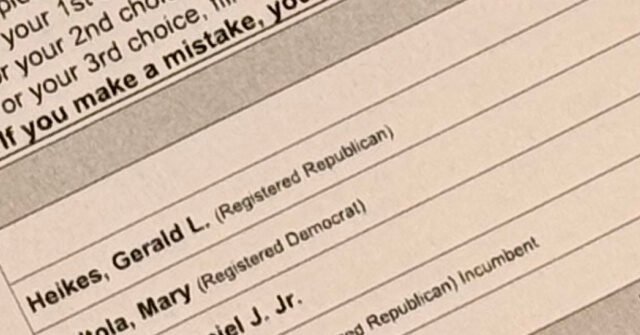
Alaska Democratic Party Chair Eric Croft has waded into the debate surrounding ballot stacking allegations in the state’s U.S. Senate race, offering a full-throated defense of aggressive political tactics during a Friday appearance on CNN’s “Situation Room.”
When pressed about the controversy surrounding multiple candidates with similar names appearing on the ballot, Croft pushed back against suggestions the strategy constituted dirty politics, insisting there was “no legal issue” and that Alaskans have a fundamentally different perspective on political combat.
“We know to bring a gun to a gunfight,” Croft told CNN, using the colorful metaphor to describe Alaska’s political culture. “And, so, if the criticism is, hey, the person running for this may use foul language, may really take a fight seriously and bring a fight — Alaskans’ biggest concern, usually, is that we’re going to get forgot.”
Alaska’s Fight for Representation
The Democratic chair framed the aggressive tactics as a natural response to Alaska’s geographic and political isolation. He noted that the state is frequently omitted from maps and argued that residents want elected officials willing to push boundaries to ensure their voices are heard in Washington.
“Half the maps…leave us off the map,” Croft explained. “And so, we kind of want [an] elected representative to push hard and use every tool they’ve got. So, I’m just not hearing that level of outrage that you’re talking about.”
His comments suggest a belief that traditional political norms may not apply in Alaska, where voters prioritize effectiveness and tenacity over adherence to conventional campaign etiquette.
Pressed on Specific Tactics
CNN co-host Pamela Brown pressed Croft on whether he explicitly supported the ballot stacking tactic, asking directly: “So, do you support this move, then? Is that — do you support this tactic?”
Croft’s response revealed a more nuanced position than his initial comments suggested. He acknowledged limits to acceptable campaign behavior, drawing a sharp distinction between different types of political maneuvers.
“No, I think it’s funny, I don’t — running somebody who’s in jail in New York for threatening to blow up elected officials, I think, is disgusting,” Croft said, apparently referencing a separate controversial candidacy. “Having somebody with the same name run, most Alaskans, I think, think is — yeah, it would just — I don’t have that level of outrage.”
He characterized the same-name candidate situation with a casual tone, suggesting it had become something of a local joke rather than a serious electoral concern. “For us, around a coffee table, it’s, did you hear Ohio Dan’s trying to kick Petersburg Dan off the ballot, isn’t that funny?” Croft added.
National Attention on Alaska Politics
The ballot stacking controversy has drawn national scrutiny to Alaska’s Senate race, raising questions about electoral integrity and the limits of permissible campaign tactics. While Croft maintains that Alaskans view such strategies through a different lens than voters in the lower 48 states, critics argue that any tactic designed to confuse voters undermines democratic principles.
Alaska’s unique political culture, shaped by its geographic isolation and relatively small population, has long produced unconventional campaigns and candidates. The state’s open primary and ranked-choice voting system, implemented in recent years, was designed to reduce partisanship and give voters more choice — though it has also created new opportunities for strategic candidate recruitment.
Croft’s defense of aggressive tactics reflects a broader tension in American politics between playing by traditional rules and doing whatever is necessary — and legal — to win. His “gun to a gunfight” framing suggests Democrats in Alaska see themselves as responding to hardball tactics from opponents rather than initiating them.
The controversy is likely to continue as the Senate race progresses, with national political observers watching to see whether Alaska voters ultimately reward or punish candidates associated with ballot stacking strategies. Croft’s comments indicate the state Democratic Party has calculated that voters care more about results than process, a bet that will be tested at the ballot box.
Source: www.breitbart.com — https://www.breitbart.com/clips/2026/10/31/alaska-dem-party-chair-on-ballot-stacking-people-want-officials-to-use-every-tool/