
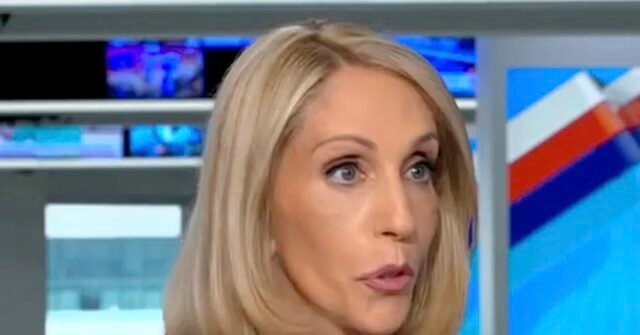
A newly released poll of Michigan voters showing that 45% would not consider voting for a Muslim candidate drew a blunt reaction Thursday from CNN anchor Dana Bash, who called the finding “just gross” during a panel discussion on “Inside Politics.”
Bash was walking through the results of a Washington Post survey of the state’s electorate, which put Democratic Senate candidate Abdul El-Sayed at 48% and Republican Mike Rogers at 45% — a gap she noted falls within the margin of error.
“With the margin of error, it’s a statistical dead heat,” Bash said, according to a clip flagged by Breitbart News.
The Numbers Behind the Segment
The survey also asked voters about their preference for control of the U.S. Senate, with Democrats drawing 53% and Republicans 45% in the Michigan sample. But it was a different question that Bash returned to repeatedly during the segment: a list of religious identifications respondents said they would not consider supporting for president.
According to the figures Bash read on air, 46% of Michigan voters said they would not consider voting for an atheist candidate, 45% said the same of a Muslim candidate, 20% ruled out a Jewish candidate, and 7% said they would not vote for a Christian.
“These are Michigan voters, the people who are going to go to the polls to decide between Rogers and El-Sayed,” Bash said. “45%?”
She returned to the figure a second time after Bloomberg columnist Nia-Malika Henderson weighed in.
“To have respondents from this poll, 45% say they would not consider voting for a Muslim — first of all, it’s just gross,” Bash said. “Let’s just say what it is, it’s just gross.”
A Historical Parallel
Henderson, a Bloomberg opinion columnist who regularly appears on CNN’s political programming, responded by pointing to the 2008 presidential campaign, when Barack Obama faced persistent false claims that he was Muslim.
“Barack Obama had to deal with this, right?” Henderson said. “I mean, he had to deal with the reality that some people in 2008 were not comfortable voting for a black man for president, a black man that people thought was Muslim, and all that kind of stuff.”
The exchange comes as El-Sayed, a former Michigan gubernatorial candidate and onetime public health official, seeks a Senate seat in a state that has become one of the most closely watched battlegrounds of the cycle. Rogers, a former congressman, is the Republican standard-bearer.
The Washington Post poll places the race essentially even, meaning the contest could hinge on small shifts among the voters who make up the state’s electorate — the same group in which nearly half told pollsters they would not consider a Muslim candidate.
Bash’s segment is one of several in recent days where cable news hosts have paused to react to polling questions that measure not candidate preference but voter attitudes about identity. The framing of such questions has itself become a subject of debate, with pollsters arguing that the responses offer a window into the electorate’s willingness to support candidates of various backgrounds.
What the numbers do not show is how many of the respondents who said they would not consider a Muslim candidate would ultimately vote for El-Sayed on other grounds, or how many of the 45% are likely voters in the Senate race. The question as posed concerned a hypothetical presidential candidate, not El-Sayed directly.
Where the Race Stands
Michigan has drawn heavy national investment this cycle, with the Senate contest sitting alongside other statewide races in a state that has swung between parties in recent elections. Both parties have signaled that Michigan’s results could shape the balance of power in Washington, a reality the Washington Post survey sought to capture with its question on which party voters want controlling the Senate.
Bash did not suggest any political strategy tied to the religious-identity finding, instead returning to it as a standalone observation. Her repeated use of the word “gross” — delivered twice in the same sentence — underscored how unusual the figure registered on set.
Henderson’s reference to Obama was the only attempt during the segment to place the number in a longer historical context. During the 2008 primary and general election campaigns, Obama’s campaign and surrogates repeatedly pushed back on rumors about his religion, and polling at the time showed a persistent share of voters believed the false claim that he was Muslim.
The episode lands at a moment when Michigan voters are being asked to weigh a Senate matchup that polls describe as a coin flip. If the Washington Post survey holds, the outcome could be decided by margins far smaller than any single demographic group — making the attitudinal data Bash highlighted more of a backdrop than a forecast.
It also illustrates a recurring tension in political coverage: polls that measure what voters say about categories of candidates can draw more attention from television panels than the horse-race numbers they accompany. In this case, the 48-45 Senate margin and the 45% religious-identity figure arrived in the same survey and were discussed within minutes of each other.
Neither Bash nor Henderson offered a prediction about how the religion question would affect the El-Sayed-Rogers race. Bash’s closing note on the subject was simply that the number, as she read it aloud, was hard to describe any other way.
Source: www.breitbart.com — https://www.breitbart.com/clips/2026/09/17/cnns-bash-just-gross-45-of-mi-electorate-wont-vote-for-a-muslim/