

The Pentagon is considering withdrawing roughly 25,000 U.S. troops from Europe — about a third of the American force currently stationed on the continent — along with aircraft, ships and weapons systems, according to an NBC News report citing seven current and former U.S. and Western officials.
The reported proposal emerged from a six-month review of the U.S. military’s European posture, and preliminary findings are expected to reach Defense Secretary Pete Hegseth in the coming days. The Gateway Pundit’s Paul Serran reported on the NBC account, noting that the sourcing falls into the category of anonymous-official reporting that should be weighed accordingly.
How big could the cut be?
NBC’s sources put the potential reduction at roughly one-third of U.S. troops in Europe — around 25,000 personnel. But the report also says the number could climb higher. One U.S. official and another person familiar with the deliberations told NBC the cut could reach as much as half the force in Europe, or up to 40,000 troops.
If executed, that would represent the most significant scaling back of the U.S. military presence in Europe since the aftermath of the Cold War in the 1990s, when the American footprint on the continent contracted sharply after the Soviet collapse.
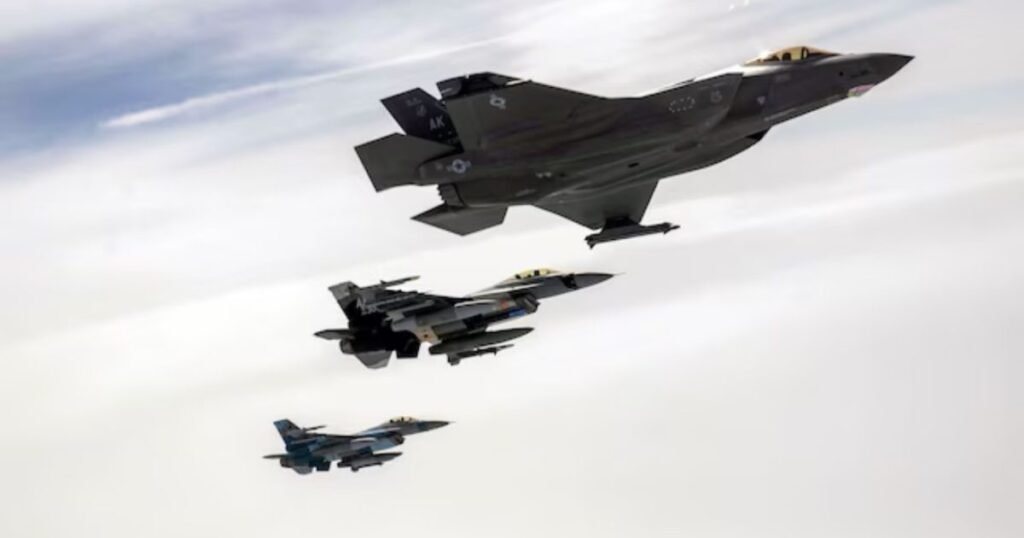
The United States currently maintains more than 81,000 military personnel in Europe, a figure that fluctuates as troops rotate through the continent for deployments and exercises, according to government audits and congressional testimony cited by Reuters.
Which countries are most exposed
Germany, Italy and Spain would likely be the countries most affected by any withdrawal, according to three U.S. officials, a Western official and a former U.S. official familiar with the matter. Those three nations host the bulk of American troops in Europe.
All three have also clashed with President Donald Trump over the war with Iran, according to the report. Since the start of his second term, Trump and his deputies have argued that Europe should take the lead in its own defense — backed by America’s nuclear arsenal — while U.S. forces are redirected toward what the administration describes as more urgent threats from China, Iran and drug cartels in the Western Hemisphere.
Germany alone could lose as many as 5,000 troops under the reported plans.

Trump, who has long questioned the value of the NATO alliance, has in recent months sharply criticized European partners over their refusal to join the United States in its war against Iran.
A review built around ‘America First’
The force review was directed by Hegseth, who tasked the Pentagon with ensuring that U.S. posture in Europe “aligns with President Trump’s commonsense, America First strategy,” a senior Defense Department official said in a statement.
Hegseth is due to receive a final recommendation on Nov. 6, which would then be presented to the president. Any withdrawals would come after that point, meaning the timeline stretches well beyond the initial review window.
The Pentagon has kept quiet about the review’s contents, but in August it prepared a document containing 57 questions for allies aimed at measuring their military, financial and ideological commitment to the United States, according to a copy of the memo reviewed by Reuters. One of those questions asks whether a country has been “publicly supportive of U.S. foreign policy priorities.”

Three people familiar with the matter said one possible outcome is that Hegseth could propose the same figure he wanted to announce in June: a 25,000-troop cut. That number had apparently been shelved at the time but remains on the table as the review concludes.
The White House has said the six-month review will “ensure irreversible momentum toward a European-led defense of Europe.” Neither the Pentagon nor Hegseth responded to written requests for comment, according to NBC. A senior Pentagon official did tell Reuters that the process is “a serious review, designed to be rigorous, consultative and empirical.”
What it means for the wars in Ukraine and Iran
A drawdown of this scale would scramble the geopolitical board at a moment when two active conflicts — the war in Ukraine and the war with Iran — are shaping U.S. force posture worldwide. Removing up to 40,000 troops, along with planes, ships and weapons, would reduce the assets available to reassure NATO allies along the alliance’s eastern flank while Washington concentrates on other theaters.
The administration’s argument is that the United States cannot be everywhere at once, and that Europe — with its combined economic weight — should carry more of the burden for its own territorial defense. Critics of the approach argue that a rapid pullback invites miscalculation by Russia and undermines the credibility of U.S. commitments that have underpinned European security for more than three decades.
The reported proposal has not been finalized, and NBC’s account relies on unnamed officials describing internal deliberations. The final recommendation Hegseth receives on Nov. 6 could differ in scope from what has been described. But the direction of travel — fewer American troops in Europe, more responsibility shifted to European capitals — fits a pattern the administration has signaled since the start of Trump’s second term.
For now, the review remains ongoing, and the Pentagon has declined to confirm any of the specific figures reported.
Source: www.thegatewaypundit.com — https://www.thegatewaypundit.com/2026/09/report-pentagon-may-cut-third-us-forces-europe/