
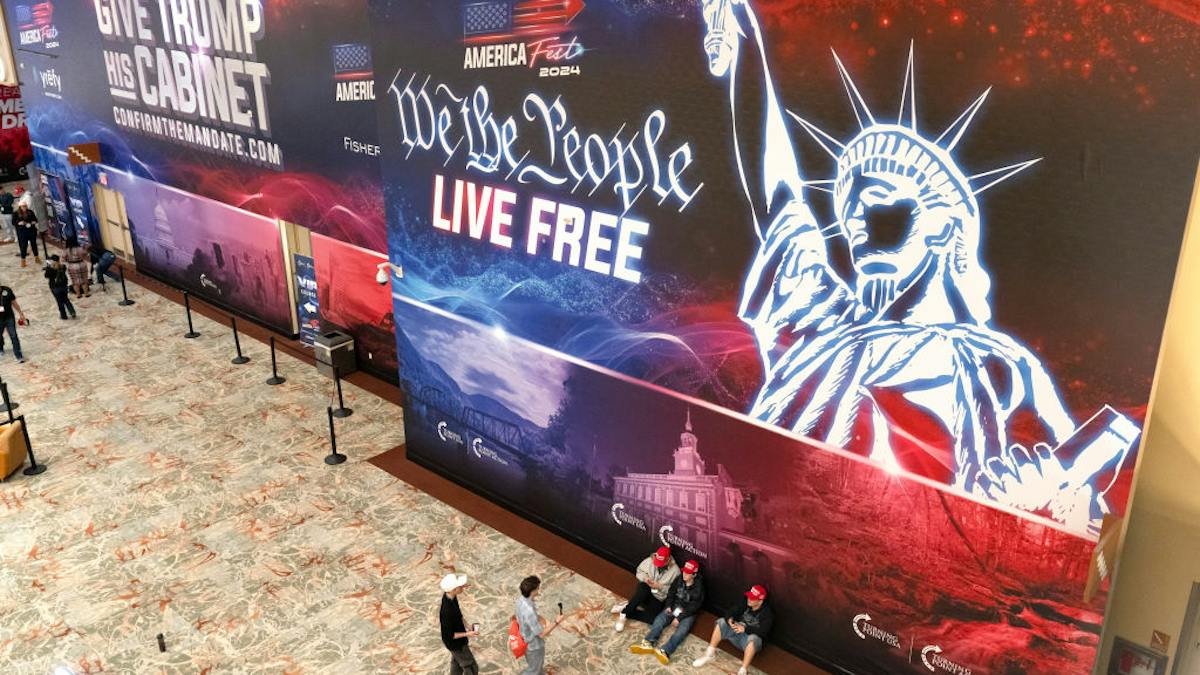
Young men, the voting bloc that Donald Trump’s political movement relied on most heavily, have become the most politically unsettled group in the country, according to a Yale Youth Poll cited in a new Daily Wire essay on patriotism and national identity.
The poll found that young men are now splitting close to evenly on the 2026 ballot, with a meaningful share saying neither major party has earned their support. The Daily Wire piece, written by Washington, D.C., restaurant owner Bart Hutchins, frames the finding as the consequence of a patriotism that was sold to a generation as loyalty to a man rather than love of a country.
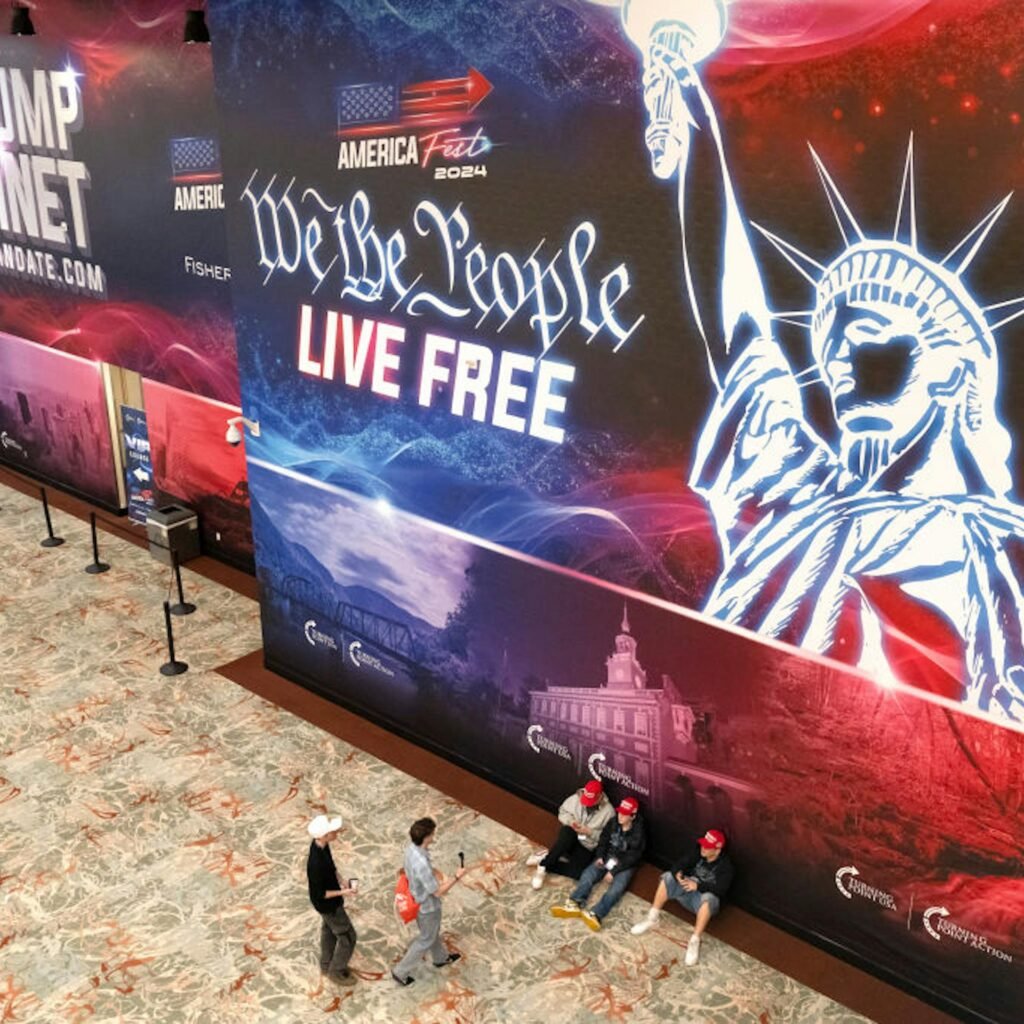
According to Hutchins, the disaffection isn’t producing a clean party switch. Some of these voters are drifting toward the Democrats, he writes, while others are moving further to the right, into “something colder and more online,” a politics even less attached to the word patriotism than the one they’re leaving. A large share, he adds, are simply checked out.
From domestic agenda to foreign entanglements
The essay argues that the drift has a concrete explanation: the conversation that once centered on the country, its borders, and its people has been overtaken by foreign policy again. Hutchins points to the president’s handling of Iran and to rising prices for gas, diesel, and groceries at home. What breaks through to voters, he suggests, is a president focused on remaking Washington in his own image — a ballroom, an Arc de Triomphe — rather than on the concerns of young men with no use for ballrooms.

Hutchins, who describes himself as a former young liberal who was suspended in the 11th grade for decorating his U.S. history textbook cover with a crude anti-Bush slogan, writes that his own patriotism took a hit under George W. Bush as the wars in Afghanistan and Iraq dominated the national conversation. He argues that same dynamic is now repeating itself under Trump, with the domestic agenda getting absorbed into foreign policy fights.
“Two years into his second term, tangled in the same foreign traps that swallowed Bush and Carter and most leaders before him, the mission has gone slack,” Hutchins writes.

Democrats and the DSA step into the gap
Into that gap, he argues, have stepped the Democrats and the Democratic Socialists of America, which he describes as a splinter cell of the party. He points to a Monday appearance by New York Mayor Zohran Mamdani at a U20 mayors summit, where Mamdani told the crowd that the Left had ceded “quality of life,” “efficiency,” and “fraud and waste” to the Right — a message Hutchins calls a direct lift from the president’s own playbook, aimed at the very voters who feel Trump’s mission lost the plot.
With 42 days remaining until the midterms, Hutchins writes that the outlook is bleak for the president and his party, and that every poll suggests young men are about to sit the election out. He acknowledges the outcome may have been earned by a national focus that drifted “from republic to empire” and expresses hope that someone will read the tea leaves and enter 2028 with a message about this particular country and its particular, great people — and mean it.
A question of national self-image
The essay also raises a broader cultural argument about how Americans measure greatness. Hutchins contrasts a 2025 YouGov poll asking Americans to name the greatest American — which returned only politicians and political activists, including Washington, Martin Luther King Jr., and Trump — with similar polls in older nations. England’s version, he notes, put Churchill on top but ranked an engineer, a scientist, and a playwright close behind: Brunel, Darwin, Shakespeare. France’s 2005 poll crowned de Gaulle, then followed with a chemist, a slum priest, a physicist, a comedian who fed the poor, and a novelist: Pasteur, Abbé Pierre, Curie, Coluche, and Victor Hugo.
Hutchins writes that a young country may not yet have learned how to brag about itself in any language but politics, and that when a nation’s pride runs mainly through its politicians, a politician’s failure becomes the nation’s failure. That, he suggests, is what makes the current moment particularly dangerous for young men who were told that patriotism meant loyalty to a man — and who are now deciding what it means instead.
The Yale Youth Poll referenced in the essay adds to a growing body of survey data suggesting that the coalition Trump assembled in 2024 may be harder to reassemble for a midterm election, particularly among younger male voters who turned out for him at higher rates than previous Republican nominees. Whether that erosion shows up at the ballot box in 2026, or produces something less predictable, remains an open question with just weeks to go.
Source: www.dailywire.com — https://www.dailywire.com/news/on-patriotism-and-starving-the-soul-of-a-republic