
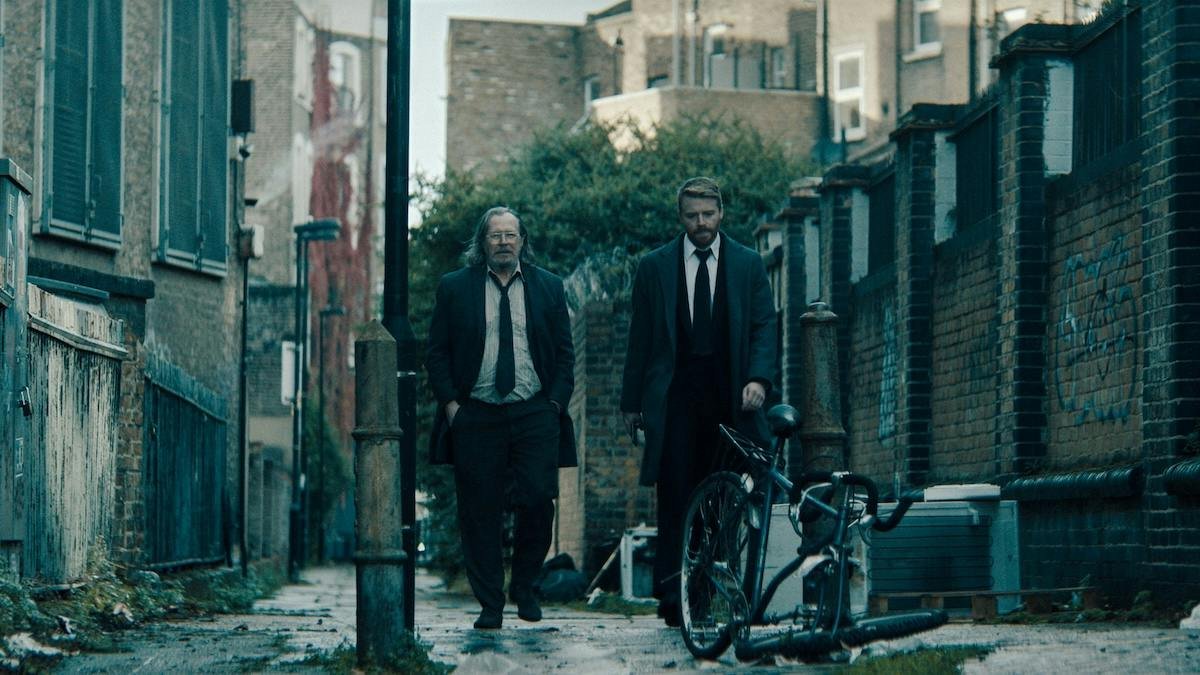
Apple TV’s “Slow Horses” has returned for a sixth season — and with it, renewed praise for what one critic calls “brilliant TV” that still falls short in a crucial way. In a column for The Daily Wire, the reviewer argues that the show’s avoidance of Islamic terrorism as a plotline reveals a deeper cowardice, however boundary-pushing its dialogue may be.
A Show About Britain’s Worst Spies
Based on Mick Herron’s novels, “Slow Horses” follows a group of disgraced MI5 agents exiled from the agency’s Regent’s Park headquarters to a rundown office block called Slough House. The name is a play on Slough, a town outside London that the reviewer describes as a national joke for all things tatty and unappealing — a place poet John Betjeman once invited friendly bombs to fall upon. The show shares cultural DNA with “The Office,” functioning as a black comedy about working in the office from hell, albeit with national security stakes.
Gary Oldman stars as Jackson Lamb, the flatulent, alcoholic, junk-food-devouring supervisor who is not actually a failed spy but a burned-out hero of the Cold War who has chosen to mothball himself. The reviewer notes that one of the show’s funniest jokes is that Lamb remains an incredibly good spy, and whenever he sobers up long enough to do actual spying, he tends to save the day.
The cast includes Kristin Scott Thomas as Diana Taverner, a senior MI5 official who serves as the perfect dramatic foil to Lamb. The reviewer praises the chemistry between Oldman and Scott Thomas, noting that Oldman has described fellow cast members as “actors that you can play tennis with.” Jack Lowden plays River Cartwright, a once-promising officer who was framed and banished to Slough House after stumbling upon a secret involving a senior member of the Park. Lowden is currently a front-runner to be the next James Bond, according to the reviewer.

The Missing Threat
Each season follows a similar arc: the Slow Horses bumble around getting into scrapes while a genuine national emergency or terrorist threat slowly emerges, eventually foiled in chaotic fashion. But according to the reviewer, two seasons have featured far-right white supremacists as the villains, while no plotline has dared to touch what he calls the U.K.’s biggest genuine security threat: Islamic terrorism.
Season 6, the reviewer notes, appears to involve two mysterious white characters systematically bumping off retired Slow Horses. Season 5 did feature a group of disaffected Libyans, but their motives were financial, not ideological. Yet the biggest terrorist plots the U.K. has faced during the 21st century, the reviewer writes, have all been from Islamic extremism — a list he describes as depressingly long.

The reviewer expresses some sympathy for the showrunners, imagining they would not want to receive death threats or automatic accusations of Islamophobia were they to realistically depict the nation’s biggest security threat. But he argues that this omission not only makes the show feel hollow but also reeks of cowardice, however boundary-pushing the dialogue may be.
A Contrast with Wartime Courage
The reviewer contrasts “Slow Horses” with “Masters of the Air,” another Apple TV show that depicts the young airmen of the 100th Bombardment Group during World War II. Those pilots and aircrew, he writes, did not choose the luxury of denial but instead named their era’s existential enemy and confronted it, irrespective of the cost.
By contrast, he concludes, “Slow Horses” is a brilliant show that is brave enough to offend everyone in the room except the ones posing the actual threat. It remains top-notch television, he writes, but one that leaves a crucial part of Britain’s reality unexamined.
The reviewer’s critique raises a broader question about the limits of satire and the responsibilities of storytellers in an era of heightened sensitivity. While “Slow Horses” has built a devoted following for its sharp dialogue and unflinching portrayal of bureaucratic dysfunction, its silence on a sensitive subject is, for this critic, a notable blind spot.
Whether audiences agree or not, the debate underscores the tightrope that creators walk when depicting real-world threats. For now, “Slow Horses” continues to release new episodes weekly, inviting viewers to judge for themselves whether its refusal to name certain enemies is a savvy narrative choice or, as the reviewer suggests, an act of creative cowardice.
Source: www.dailywire.com — https://www.dailywire.com/news/slow-horses-is-brilliant-tv-so-why-is-it-too-cowardly-to-name-britains-real-enemy