
Since Kamala Harris’s defeat in the 2024 presidential election, a familiar explanation has circulated on the left: America simply will not elect a woman. But in a Daily Wire essay published this week, a practicing psychotherapist argues that explanation says more about the people offering it than about the country’s voters.
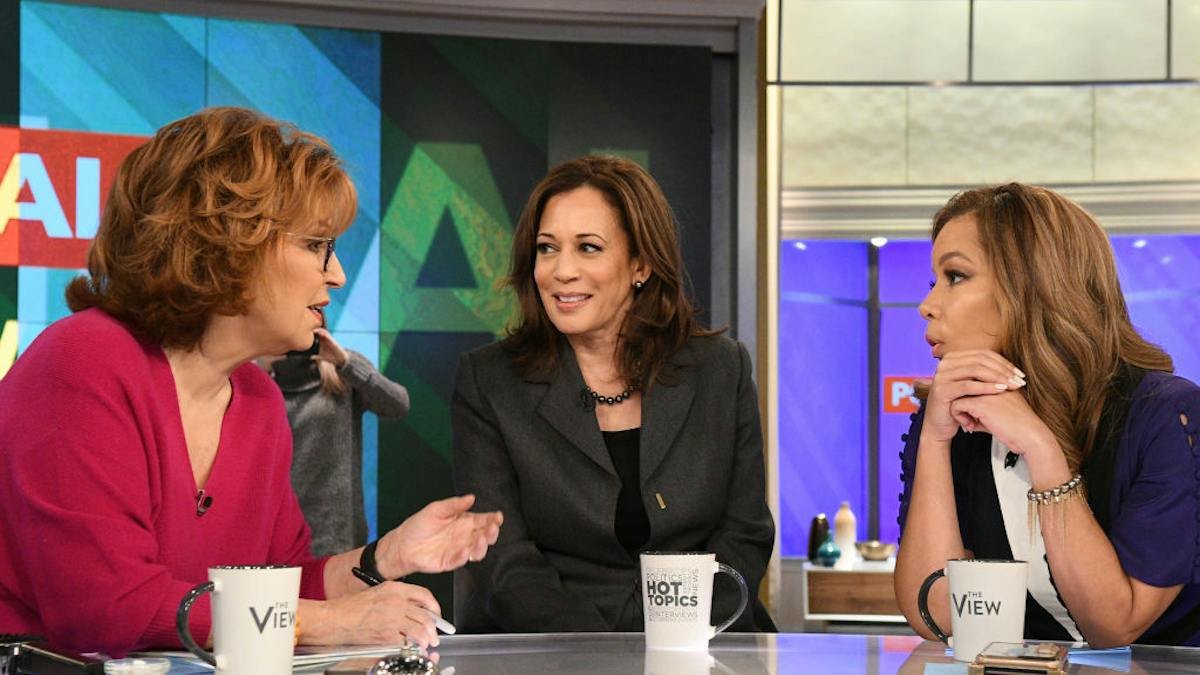
Jonathan Alpert, a psychotherapist based in New York City and Washington, D.C., and author of “Therapy Nation,” opens his piece by pointing to recent comments from “The View” co-host Joy Behar, who said this week that the country would vote for “an obese, Jewish, Black, homosexual before a woman.” For Alpert, that sweeping claim is a case study in how people latch onto convenient explanations after painful losses — not a serious diagnosis of American politics.
A tempting explanation that asks nothing of the candidate
Alpert, writing from his perspective as a therapist, acknowledges that the sexism explanation carries a certain emotional logic. When something painful happens, people naturally reach for an account that makes sense and — crucially — leaves the rest of their worldview intact. Blaming sexism for Harris’s loss, he writes, offers exactly that protection.

If sex is the primary cause, Alpert argues, Democrats avoid having to ask whether voters disliked Harris’s policies, doubted her record, rejected the party’s direction, or simply concluded she was not the right person for the job. In that telling, the candidate doesn’t change, the party doesn’t change — the voters do. Defeat becomes evidence of the electorate’s failings rather than an invitation to self-examination.
That’s not to say sexism played no role. Alpert is explicit that sexism exists and that it would be foolish to pretend no voter was influenced by Harris’s gender. But he draws a sharp distinction between that concession and treating sexism as the explanation for her defeat. Once a theory can absorb every piece of contrary evidence — a woman loses because of sexism; she underperforms with a demographic because of sexism; voters prefer another candidate’s positions, perhaps because of unconscious sexism — it stops operating as an explanation and starts operating as a defense.
Alpert compares the pattern to what he sees in his clinical practice: breakups blamed on the other person’s inability to be intimate, missed promotions blamed on a threatened boss, ended friendships blamed on a toxic friend. Sometimes, he allows, those explanations are accurate. But sometimes they also prevent the harder question — is there something here I don’t want to see? — from ever being asked.

New polling cuts both ways
The essay also engages with fresh data. A Pew Research Center survey conducted in July and released this month found that 37% of Americans think it is “not too” or “not at all” likely the U.S. will elect a female president in their lifetime — up from 26% in 2023. That finding, Alpert notes, is likely to be cited as evidence for the sexism theory.
But the same survey, he points out, complicates that reading. Two-thirds of respondents said either that electing a woman wasn’t personally important to them or that the president’s gender simply didn’t matter. Perhaps those voters meant what they said. Alpert argues that Hillary Clinton’s defeat at Donald Trump’s hands doesn’t disprove it, and neither does Harris’s.
His broader point is methodological. Presidential candidates lose for any number of reasons: their policies, their records, their messaging, their personalities, the political environment, the strength of their opponents. Figuring out how much each factor contributed takes evidence, and two women losing to the same man doesn’t, on its own, tell us how much sexism mattered in either race.

Two women, one opponent — and an unanswered question
Alpert also raises a concern that cuts against the instinct to frame a female candidate primarily through her sex. Doing so, he writes, risks transforming her from a political actor who made choices and took positions into a passive victim of forces beyond her control — and it makes it harder to learn anything from the loss.
He describes one of the basic goals of good therapy as helping people tolerate explanations they don’t particularly like: that the breakup wasn’t entirely the other person’s fault, that the boss isn’t merely jealous, that criticism contains something worth hearing. That isn’t a call for reflexive self-blame, he stresses — it’s a call to resist the explanation that demands the least.
Applied to politics, Alpert frames the distinction this way: after an election, there is a meaningful difference between asking “What’s wrong with the people who didn’t vote for us?” and asking “Why didn’t they vote for us?” The first begins with a judgment about the voter. The second begins with a question.
His conclusion is that sexism should be confronted when evidence supports it, but it should not become an explanation so elastic that it shields candidates and parties from examining themselves. Clinton and Harris were the first two women to head a major-party presidential ticket, and both lost to the same opponent. Why, Alpert writes, is a question worth examining. Saying their sex explains the outcome doesn’t answer it — it may only make the answer less uncomfortable.
The essay reflects a broader post-election debate on the left over how to interpret Harris’s loss and what it means for the party’s future, with some Democrats urging a hard look at policy and messaging while others emphasize structural barriers facing female candidates. Alpert’s intervention, published by The Daily Wire, comes from a psychotherapist rather than a political strategist, but its central argument — that the most comforting explanation is often the least useful — is aimed squarely at that internal conversation.
Source: www.dailywire.com — https://www.dailywire.com/news/why-blaming-sexism-says-more-about-kamala-harriss-loser-mentality-than-americas-voters