
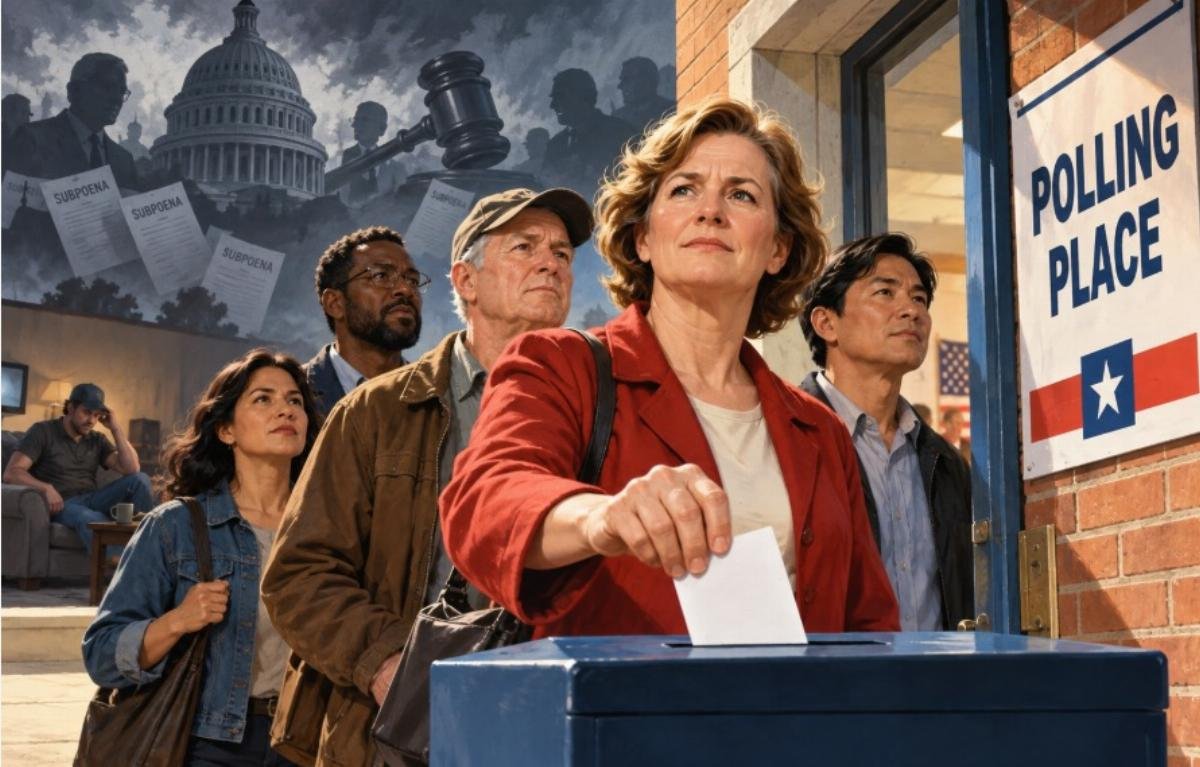
A new essay published in American Thinker makes an unapologetic case that conservative disenchantment is not a winning strategy for the 2026 midterms — it is a gift to the Democratic Party. Writing under the headline that Republicans “cannot afford to be purists about voting,” contributor Craig DeRoche argues that the only thing worse than an imperfect Republican majority is a Democratic one.
The piece, dated September 25, 2026, leans heavily on commentary from Joseph Ford Cotto, invoking his formulation that elections are decided by who shows up rather than who complains online. From that premise, the essay builds a blunt warning: stay home in November, and you do not punish the GOP’s shortcomings — you elect socialists and hand the gavel to a Democratic Party that has been pulled toward its most radical elements.
The Disappointed Base — and the Other Side’s Discipline
DeRoche acknowledges genuine grassroots frustration among conservatives. The list of grievances he catalogs is specific: supporters wanted more border wall, faster deportations, fewer half-measures, fewer self-inflicted errors, more confidence in election integrity, and a cleaner break from the entrenched habits of Washington that he says survive even when Republicans hold the White House. Some wanted a different tone from the president; others a different timetable. A few, in his framing, wanted purity above all else.
His objection is not to the complaints themselves but to the conclusion some conservatives are drawing from them. Compared to Republicans, DeRoche writes, Democrats do not treat voting as a reward to be issued once a leader meets every demand. They vote when they dislike their nominee, when the economy is bad, and when their own leaders embarrass them. They treat the ballot as a weapon, not a mood — and that asymmetry, the essay contends, is what determines midterm outcomes.
That framing sets up the essay’s central claim: winning the House and Senate is not merely something to brag about. It is the dividing line between a president who can still govern and one who spends his final two years under subpoena.

Impeachment as the Real Stakes
DeRoche is explicit about what he thinks a Democratic majority would mean for Donald Trump. A Democrat-led Congress, he argues, will not “check” the president in the conventional sense of restraining extremes. Its stated goal, as he puts it, is to stop him outright. With the majority, he predicts, Democrats would freeze nominees, starve enforcement, repeal tax cuts already in workers’ paychecks, reopen the border fight Trump has been winning, and manufacture the next impeachment once the votes exist. Borrowing Cotto’s warning again, the essay calls sitting out the cycle an act of choosing “America-last” rather than neutrality.
The essay treats impeachment not as a hypothetical but as a well-established tool. House Democrats, DeRoche writes, have already used it as theater and as turnout fuel, and he argues the articles would essentially write themselves — immigration, energy, appointments, whatever headline keeps the coalition together.
Even where the math does not favor conviction, DeRoche says the process is the point. A two-thirds Senate majority remains a high bar, but investigations alone drain a presidency, diverting staff, unsettling markets, testing allies, and inviting adversaries to probe for weakness. The administration’s remaining two years, in his telling, would become a legal siege rather than a governing agenda.
The Vance Scenario
DeRoche goes one step further into the hypothetical: if Trump were driven from office, J.D. Vance would take the oath. He concedes that is the constitutional order — then argues it would be a hollow inheritance. A president without a congressional majority, the essay contends, cannot pass a budget on his own terms, confirm judges and agency heads at speed, or force the appropriations that turn policy into reality. Vance would get the title, in this reading, without the working majority that makes a Republican program possible.
That disconnect, DeRoche argues, is what purists refuse to see. He describes the post-2024 “Republican experiment” not as a personality cult around Trump but as a test of whether a governing coalition could secure the border, restore energy dominance, cut taxes on work, confront hostile regimes, and push back against what he calls cultural projects that treat sex, citizenship, and speech as optional. Democratic priorities, he insists, will not pause because conservatives are angry about a Trump post — once Democrats hold the majority, they accelerate.
The Record He Points To
To make the comparison concrete, the essay runs through a series of votes it attributes to Cotto’s documentation. Every Democrat in Congress, DeRoche writes, opposed the largest tax cut in American history and fought ending taxes on tips, overtime, and Social Security checks. He also lists Democratic votes against denouncing socialism, requiring proof of citizenship to register to vote, keeping men out of women’s sports, detaining criminal illegal aliens, and funding the agencies that enforce immigration law.
In DeRoche’s account, Democrats have treated ICE as an enemy and government shutdowns as leverage to force taxpayers to fund benefits for illegal aliens. His conclusion is that the two parties are not simply prioritizing differently — they have a different country in mind.
On issue after issue that matters to the conservatives now threatening to stay home — the border, crime, energy prices, the downstream costs of inflation, schools and girls’ sports, Israel and Iran, the courts, the First Amendment, and the idea that citizens come first in their own country — the essay argues a Democratic Congress would be worse. It is possible to dislike the pace of Republican delivery, DeRoche writes, and still recognize that the alternative is not a more virtuous conservatism. He characterizes the Democratic activist core as openly discussing packing the Supreme Court, abolishing the Senate, and treating the West as a thief to be drained.
A Choice Between Two Machines
DeRoche concedes that no administration is a finished cathedral, borrowing the well-worn phrase about not letting the perfect be the enemy of the good. In his framing, this midterm is not a performance review of Trump’s temperament but a choice between two machines: one that, however flawed, still tries to deport criminals, cut taxes on work, and keep the constitutional structure standing, and another pulled by people who call that structure the obstacle.
There is also a mechanical argument underneath the polemic. Because most Americans sit out midterm elections, DeRoche notes — again crediting Cotto — the outcome is decided by the most passionate partisans. Seniors show up. Activists show up. The disappointed stay on the couch and then act surprised when the other side writes the laws.
His prescriptions are deliberately unsentimental. If you think Trump has been imperfect, vote anyway. If you think Congress has been too slow, vote anyway. If you think some Republicans are cowards, replace them in primaries next time — but do not hand Democrats a majority out of anger at Trump. Protest that stays home, the essay concludes, is not strategy. It is surrender with extra steps.
The warning closes on the prospect of what comes after a Democratic sweep: Democrats take the lesson and take the House, then try to take the rest. The Republican experiment, DeRoche writes, does not end because Trump is mortal or imperfect. It ends if the people who wanted that experiment decide the work of voting is beneath their disappointment — because America does not owe conservatives a perfect instrument, but conservatives owe the country the votes that keep the worse instrument out of power.
Source: www.americanthinker.com — https://www.americanthinker.com/articles/2026/09/republicans-cannot-afford-to-be-purists-about-voting-in-the-midterms/