
With the 2026 midterms approaching, American Thinker contributor Silvio Canto Jr. is siding with Karl Rove’s cautionary question: “What if much of what we think we know about the midterms is wrong?”
In a piece published September 26, Canto argues that the conventional playbook for measuring midterm elections may be outdated, and that 2026 could prove to be the exception rather than the rule. He points to the 2016 and 2024 presidential races as examples of outcomes that the experts and conventional wisdom failed to foresee, writing that he remembers being there when those surprises unfolded.
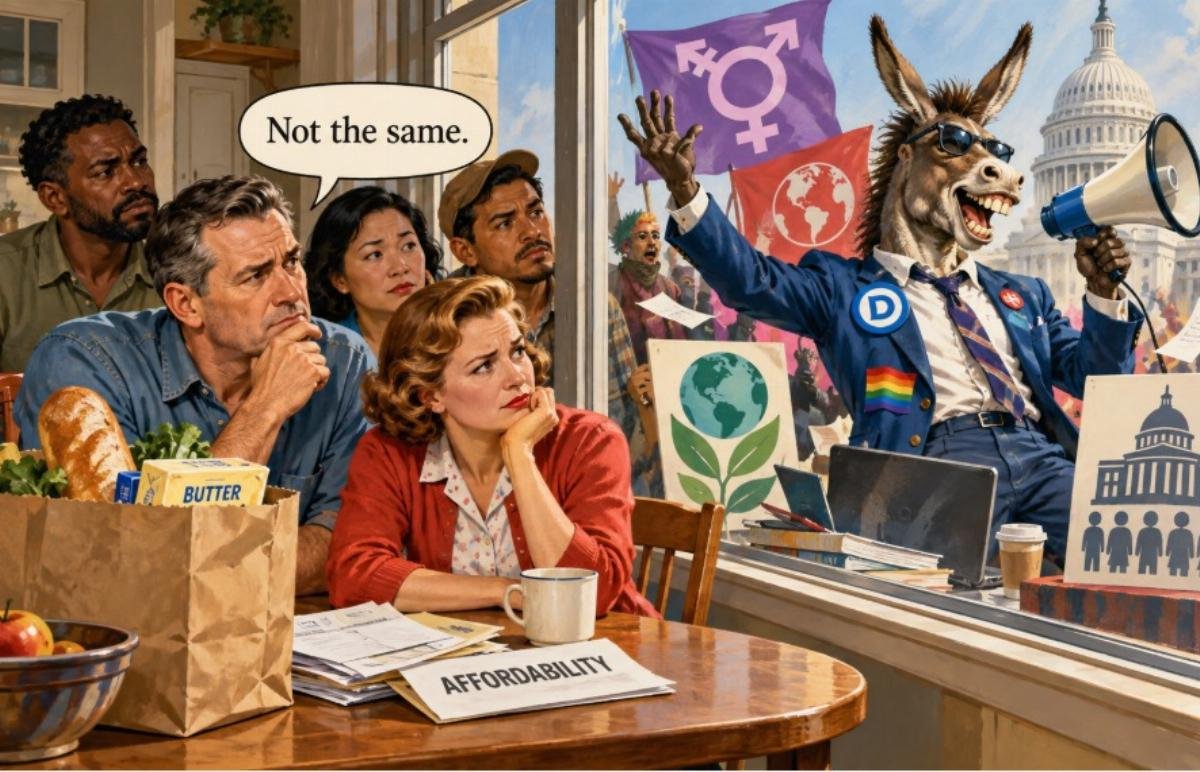
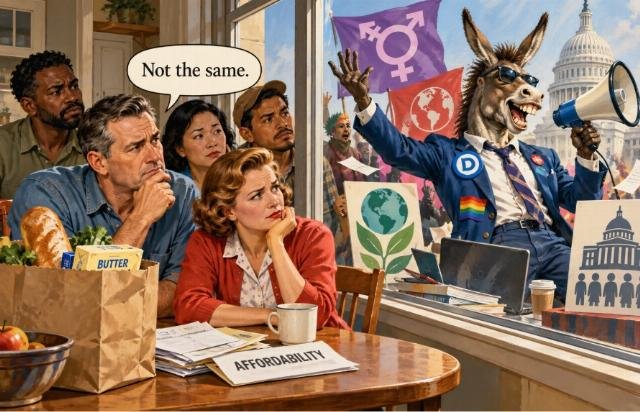
The core of Canto’s argument is not about polling or economic data. Instead, he frames the coming election as a referendum on what he describes as a fundamental transformation of the Democratic Party, invoking a Beatles lyric — “I’m looking through you; you’re not the same” — to capture the idea that today’s Democrats bear little resemblance to the party he says Americans once debated and then went out for pizza with.
‘These People Are Crazy’
Canto quotes approvingly from a passage he says he read at a site called Jupplandia, which asserts that everything the Democratic Party encourages, pursues and represents amounts to extremism. That quoted material claims the party’s endorsed attitudes are at odds with stable governance and even with the psychological wellbeing of the populace, and goes on to allege vast misappropriation of public funds funneled into client groups, private bank accounts, and a network of NGOs and activist groups. The passage further alleges that this money ultimately funds radical causes and extremism “up to and including domestic terrorism,” while also contributing to the national debt. Even so, the quoted text argues, the economic harm is more containable, more reversible, and more manageable than the ideological effects the spending produces.
The Jupplandia excerpt also asserts that the Democratic Party, working with aligned media — first mainstream outlets and then purchased alternative media — has engaged in what it calls the deliberate destruction of the minds of American citizens.
Canto endorses that characterization with a blunt “That’s about right,” and then draws his own contrast: these are not the Hubert Humphrey Democrats who spoke about the minimum wage and labor legislation to protect workers. In Canto’s telling, today’s Democrats want government to control the means of production and to tax productive people out of existence.
He also takes aim at cultural and social issues, criticizing what he calls mindless indoctrination of children on gender, and referencing a dispute over how Democrats answer the question of what a woman is, which he ties to a remark he attributes to someone named Talarico about neighbors with a uterus.
The ‘Affordability’ Question
Canto’s piece is a direct response to the prevailing expectation that affordability — the cost of groceries, everyday goods, and household necessities — will doom Republicans at the polls. He acknowledges that affordability “won’t help” the GOP, but insists it won’t be the decisive factor. In his view, Democrats have made the election about something larger than the price of butter.
The framing Canto offers is stark: this election will be about “the insane and the sane,” and he places his bet on the sane.
The piece closes with a brief postscript directing readers to Canto’s blog for posts, podcasts, and videos, followed by the outlet’s standard appeal for reader donations to support its staff and keep its ideas heard.
What the Argument Leaves Aside
What Canto does not do is engage with polling data, district-level analysis, or the specific mechanics that typically drive midterm outcomes. His case rests on a broad cultural claim — that the Democratic Party has severed its ties to normalcy — and on the premise that voters will respond to that perceived break rather than to their own household budgets.
Whether that premise holds is, by Canto’s own admission, unknowable in advance. He opens by conceding he doesn’t know if 2026 will be the exception, and he leans on the unpredictability of recent elections as evidence that the experts could be wrong again. It is an argument built less on forecasting than on a judgment about what the Democratic Party has become, and on the conviction that voters will see it the way he does.
For readers who follow midterm coverage closely, Canto’s essay is a reminder that not everyone expects the usual rules to apply. Rove’s question — what if much of what we think we know about the midterms is wrong? — is one that Canto answers with a firm yes, and with the claim that the stakes this time are not about prices but about something he considers far more fundamental.
Source: www.americanthinker.com — https://www.americanthinker.com/blog/2026/09/i-m-looking-through-you-you-re-not-the-same/