
Israel has revoked the credentials of Dutch diplomats stationed in Ramallah and ordered them to surrender their documentation and leave the country within seven days, retaliation for a new Dutch ban on goods originating from Judea, Samaria, East Jerusalem and the Golan Heights, according to reporting by The Daily Wire.
The Dutch government, under Minister Sjoerd Sjoerdsma, moved to prohibit travelers from bringing any items into the Netherlands that originated in what the source describes as the Biblical heartland. Israel answered by withdrawing the diplomatic standing of Dutch representatives operating in the West Bank city of Ramallah.
Sa’ar: ‘Israel will not let moves intended to harm it pass without response’
Israeli Foreign Minister Gideon Sa’ar framed the expulsion as a direct and deliberate response to the Dutch policy. “Israel will not let moves intended to harm it pass without response,” he said. “Any country that acts in a hostile and one-sided manner against Israel will lose its influence and relevance in the region.”

Sa’ar went further, linking the trade measures to a broader concern about anti-Jewish hostility in the Netherlands. “I also reiterate the urgent need to address the growing antisemitism and incitement openly seen on the streets of the Netherlands,” he said. “Not only are this antisemitism and incitement not being seriously addressed, but the anti-Israel policies of the Dutch Government are fueling them.”
Reports of targeted customs checks on El Al passengers
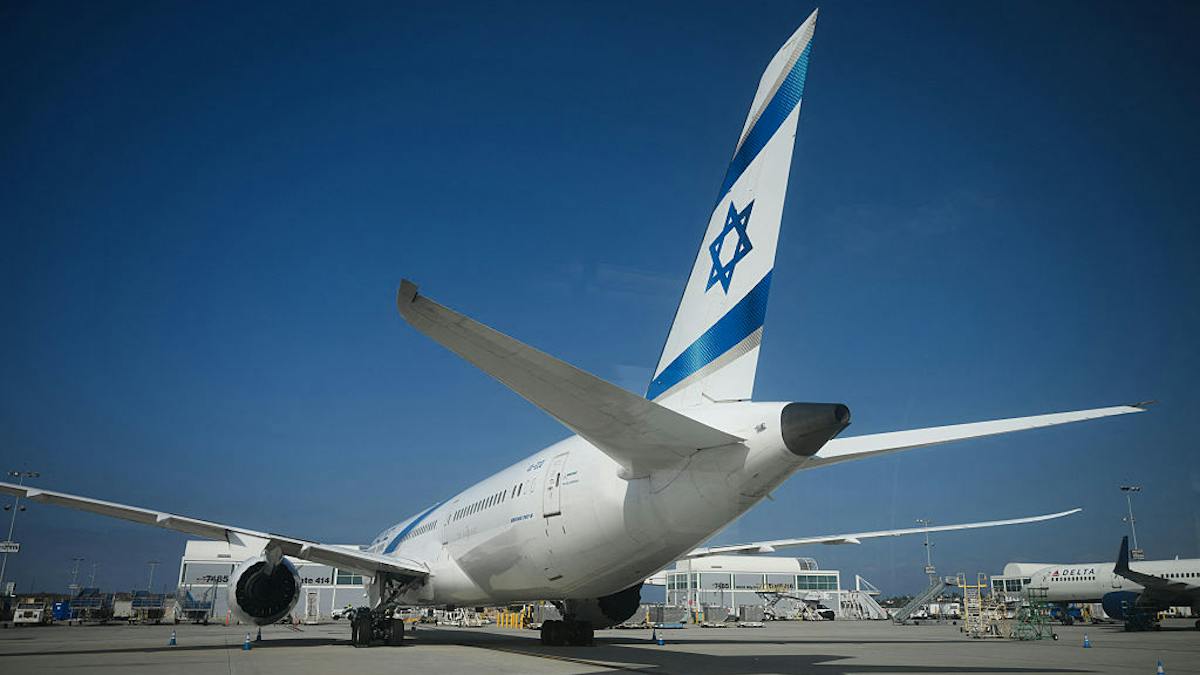
According to the account, the practical effect of the Dutch ban became visible at the airport almost immediately after it took effect. Customs officers reportedly began singling out travelers arriving on El Al flights from Tel Aviv, pulling them into separate lines and requiring their luggage to be opened for secondary inspections aimed at finding prohibited goods — wine, dates, and olives among them.
Witnesses described the scene as a targeted operation rather than a routine enforcement procedure. When passengers asked why they were being singled out for additional screening, one airport official reportedly responded with profanity, shouting at the crowd to be quiet and wait.

The treatment drew sharp criticism from Dutch commentator Sivan Behr, who questioned whether the scrutiny was being applied evenhandedly. “Is this scrutinized additionally by customs officers? Do Russian travelers get the same sh*t thrown at them?” Behr wrote. “Or is your witch hunt targeting only Jews?”
Holocaust survivors describe painful echoes
For some elderly travelers, the experience carried a weight that went well beyond customs inconvenience. An 82-year-old man told the outlet that the experience stirred memories he had spent a lifetime trying to keep at a distance. “I was born during the war, went into hiding,” he said. “Even then, Jews were set apart. Now it is happening again!”
He added that he feared he would not make it through the customs process safely.

The historical context the source invokes is among the most painful in modern European history. During World War II, the Netherlands recorded the highest proportion of Jewish deaths of any country in Western Europe, with 75 percent of its Jewish population murdered — Anne Frank among them. The source attributes the scale of the catastrophe in part to the complicity of Dutch institutions: a civil service operating under an SS-led administration headed by Arthur Seyss-Inquart, Dutch police who took part in roundups, and Dutch railways that ran deportation trains to Westerbork and Auschwitz.
The source further notes that the mistreatment did not end with liberation. After 1945, the post-war Dutch government stripped deported Jews of their citizenship while they were still in camps and refused to cover the cost of transporting them home.
A diplomatic signal from Jerusalem
The revocation of credentials is being presented as more than a tit-for-tat response to a specific trade measure. By requiring Dutch diplomats in Ramallah to hand over their documentation and depart within a week, Jerusalem appears to be staking out a principle: that countries which take punitive action against Israeli-held territory should expect to lose their diplomatic foothold on Israeli soil.
Whether the Netherlands will reciprocate or seek a negotiated off-ramp remains unclear from the source material, and no statement from the Dutch government responding to the expulsion is included in the account. What is evident is that a dispute that began as a question of what travelers may carry in their suitcases has escalated into a direct diplomatic confrontation, with the Dutch representation in Ramallah now facing a seven-day clock.
The episode also underscores how quickly trade and customs policy can acquire a human dimension. Wine, dates, and olives are ordinary souvenirs; the inspections that followed the ban were not experienced as routine by the travelers subjected to them, particularly by those old enough to remember a time when being set apart at a checkpoint carried the gravest possible meaning.
Israel’s message, as articulated by its foreign minister, is that the cost of targeting the country will be borne by those who represent the targeting government inside Israel — a stance that leaves little room for the quiet diplomacy that might otherwise have followed a dispute over customs enforcement.
Source: www.dailywire.com — https://www.dailywire.com/news/dutch-target-travelers-with-items-from-bibles-heartland-israel-fires-back