
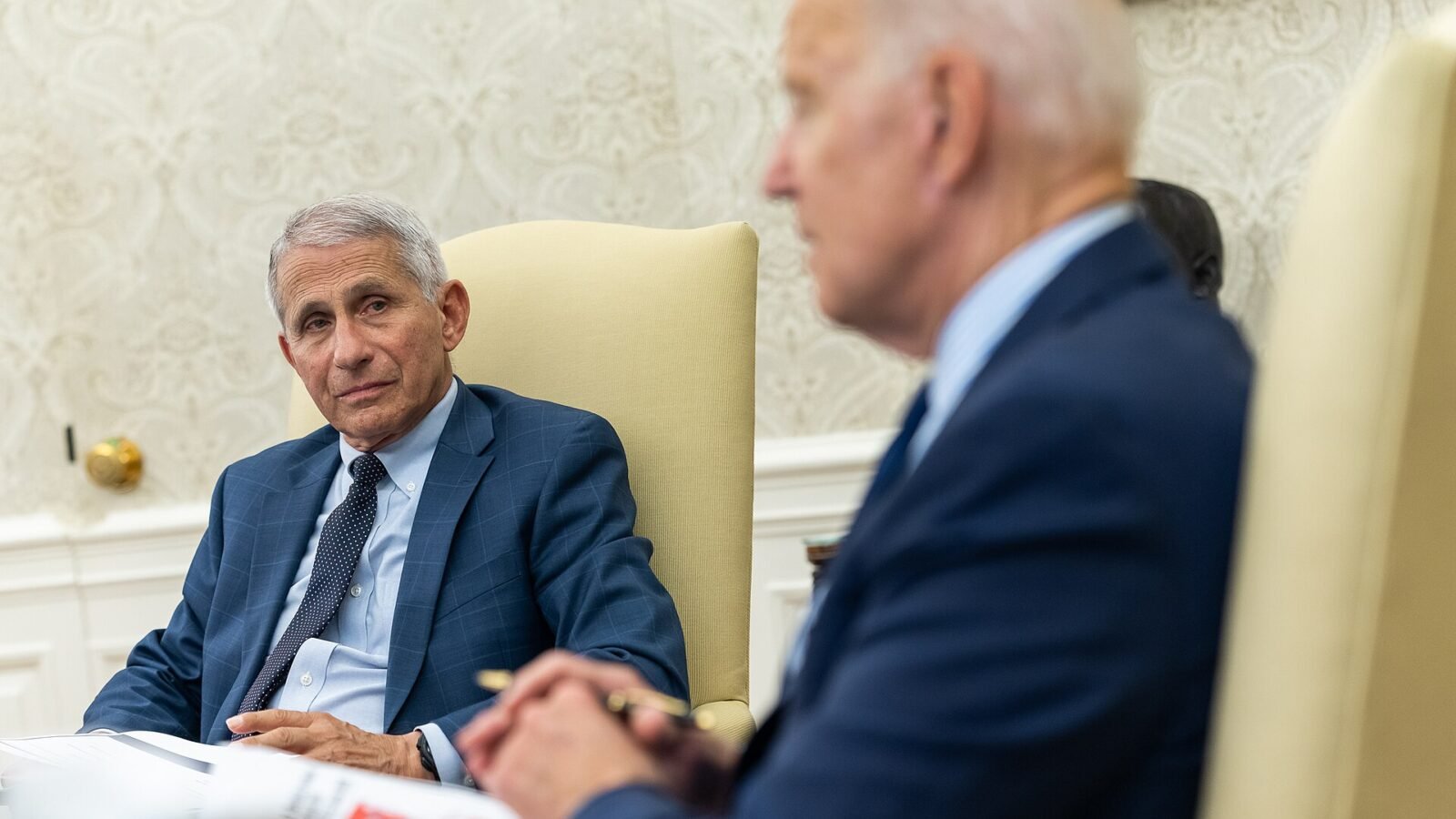
A Senate committee has voted to hold former White House Covid czar Anthony Fauci in contempt of Congress following his refusal to answer questions about his conduct and statements during the Covid-19 pandemic, marking a significant escalation in congressional oversight of the government’s pandemic response.
The Senate Homeland Security and Governmental Affairs Committee voted 8-5 along party lines Thursday to hold Fauci in contempt, with all Democrats opposing the measure. Committee Chair Rand Paul, the Kentucky Republican who has been a persistent critic of Fauci’s pandemic policies, emphasized the gravity of the action.
“Holding a witness in contempt is a serious thing, and it should be rare,” Paul said at the hearing. “But the contempt power exists for precisely this circumstance.”
Fauci’s Fifth Amendment Invocation
The contempt vote stems from Fauci’s testimony before the committee last week, during which he invoked his Fifth Amendment right against self-incrimination more than 100 times. The former director of the National Institute of Allergy and Infectious Diseases declined to answer questions covering a range of topics related to his role during the pandemic.
Among the questions Fauci refused to address were those concerning his role in funding gain-of-function research in China, his treatment of the lab leak theory as a potential origin of the virus, his public statements about Covid-19 vaccines and their risks, and his positions on potential treatments, according to The Federalist.
According to Fox News reporter Bill Melugin, Democrats on the committee attempted procedural maneuvers to block the contempt vote, moving to table the resolution and suggesting that Fauci be granted immunity from Department of Justice prosecution in exchange for testimony. Both motions failed.
Debate Over Pardon’s Scope
The contempt proceedings have sparked legal debate about the validity of Fauci’s Fifth Amendment claims in light of a sweeping pardon he received from former President Biden. That pardon covers an 11-year period of Fauci’s government service.
Senator Josh Hawley, a Missouri Republican, argued during the hearing that the Fifth Amendment privilege only applies when a witness has a reasonable fear of future prosecution, and that Fauci’s blanket refusal to answer questions suggests he was not exercising the privilege in good faith.

“The fact that he wouldn’t answer questions about the tie he was wearing or the color of the carpet or the day of the week — Sen. Paul asked him about, ‘Did he have a folder in front of him?’ He wouldn’t answer that — betrays the fact that his invocation of the Fifth Amendment wasn’t tailored to anything,” Hawley said. “It was a predetermined, premeditated design to evade this committee’s questions on any subject, including emphatically, those for which he has a pardon.”
Legal scholars have debated whether a presidential pardon eliminates the legal jeopardy that would justify invoking Fifth Amendment protections. The question centers on whether Fauci could still face prosecution for matters covered by the pardon, and thus whether he has legitimate grounds to refuse testimony.
Next Steps
Paul told CBS News that he plans to refer the contempt resolution directly to the Justice Department rather than bringing it to a vote on the full Senate floor, departing from the typical procedure for congressional contempt citations. This approach would place the decision of whether to pursue criminal contempt charges with federal prosecutors.
The contempt vote comes one day after The Wall Street Journal reported that a Senate subcommittee chaired by Wisconsin Republican Ron Johnson had obtained a copy of Fauci’s government-issued cellphone from his time leading the National Institute of Allergy and Infectious Diseases. The acquisition could provide investigators with access to communications from the period when key pandemic policy decisions were being made.

Background
Fauci served as director of the National Institute of Allergy and Infectious Diseases from 1984 until his retirement in late 2022, and became the public face of the federal government’s Covid-19 response as a member of the White House Coronavirus Task Force under both the Trump and Biden administrations.
His tenure during the pandemic drew both praise and criticism. Supporters credited him with providing science-based guidance during a public health crisis, while critics questioned his shifting positions on issues including mask-wearing, the lab leak theory, and pandemic restrictions.
The Federalist also reported that Fauci gave 10 speeches and interviews in 2026 before declining to provide substantive testimony to Congress, a timeline that some lawmakers cited as evidence that he was selectively choosing when to speak publicly about pandemic-related matters.
The contempt citation represents one of the most significant congressional actions taken against a former executive branch official in recent years. Whether the Justice Department will pursue criminal charges based on the committee’s referral remains to be seen, though such prosecutions have historically been rare even when Congress has voted to hold witnesses in contempt.
Source: thefederalist.com — https://thefederalist.com/2026/08/06/senate-committee-holds-fauci-in-contempt-for-refusing-to-answer-for-covid-lies/