
The WNBA is barreling toward one of its biggest playoff nights in years, and almost no one is talking about basketball.
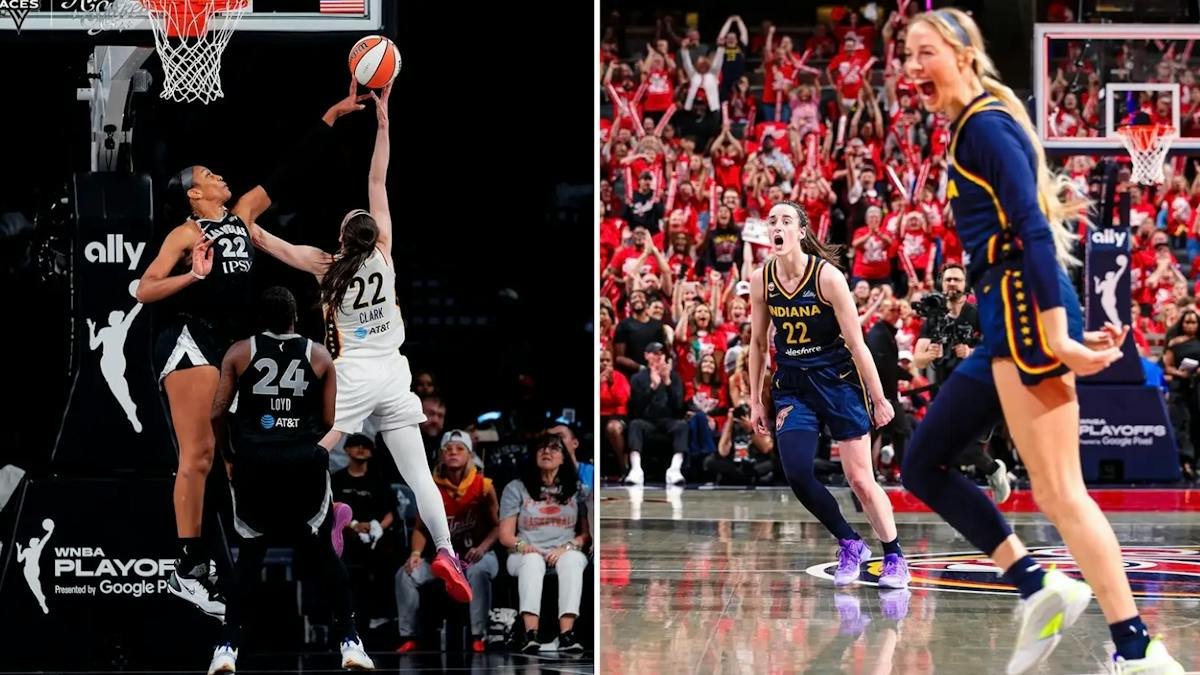
Ahead of Thursday’s deciding Game 3 between the Las Vegas Aces and the Indiana Fever, the league’s most prominent star, four-time MVP A’ja Wilson, remains in limbo over whether she will be allowed to take the floor — with no official word from the league office on any discipline, according to a Sport & State column by Karen Crouse republished by The Daily Wire. A league source later told The Athletic that the WNBA would not punish Wilson or anyone else involved in the incident, which Sport & State noted as a post-publication update to the column.
The silence itself became the story: the leadership vacuum, as the column frames it, left the league’s biggest autumn moment to be defined by what happened in the seats rather than what happened on the scoreboard.
The Moment in Question
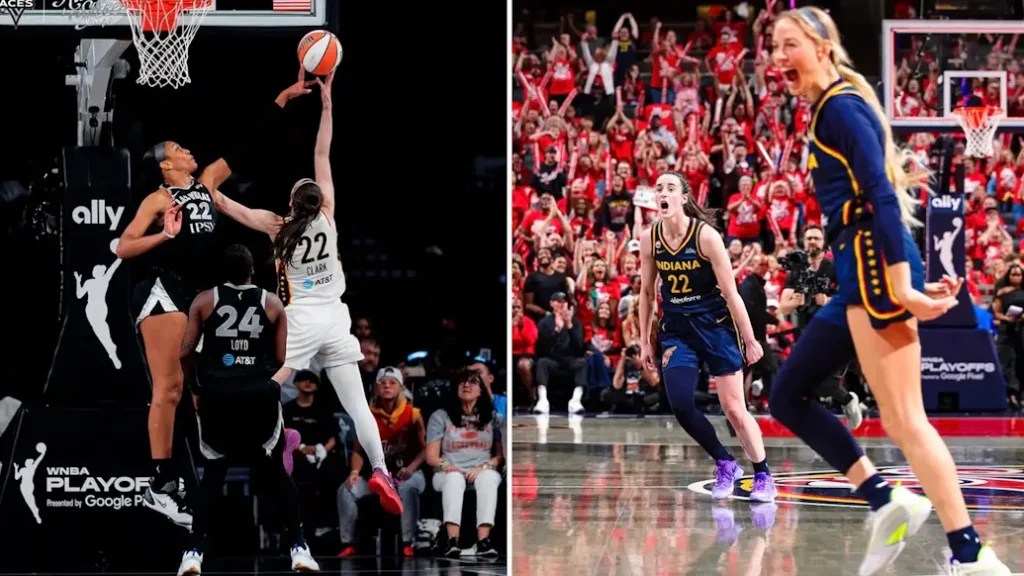
The incident occurred in the fourth quarter of Game 2. Wilson, after barreling over Fever guard Sophie Cunningham — who was whistled for the foul — went into the second row of the baseline seating area and confronted a male fan. According to the account, the fan pointed at her and took a step toward her. He did not throw anything. He did not spill anything. He pointed, and that was enough.
Wilson was assessed a technical foul for unsporting conduct, but stayed in the game and scored eight of her 22 points after the confrontation. Under league rules, a player who deliberately enters the spectator stands faces automatic ejection and a report to the commissioner. The gap between what the rulebook prescribes and what actually happened on the floor has become a flashpoint.
Former NBA player Enes Kanter Freedom was among those calling for stronger action, arguing on social media that Wilson should have been suspended immediately along with any teammates who followed her into the stands. On the other side, much of the commentary blamed the fan — casting the moment as a racial provocation, or as the predictable cost of putting players within arm’s reach of courtside taunts. Everyone, it seemed, had a verdict.

A Season of Spectacle
The Wilson episode lands in the middle of a WNBA season that drew record audiences and produced a spring and summer of off-court storylines that resembled reality television more than a professional sports league, per the column.
In one sequence, Phoenix Mercury forward Alyssa Thomas appeared to press her fist into the neck of Fever guard Caitlin Clark during a scramble that produced no foul. In July, a betting scandal surfaced involving Paige Bueckers and Angel Reese, who made a $400 wager on a game between their teams — a blatant rules violation that was captured on video and, remarkably, posted to the WNBA’s own X account before being deleted. The league’s new collective bargaining agreement gives the commissioner broad authority to fine, suspend, or disqualify players for wagering on league competition. Commissioner Cathy Engelbert chose not to enforce it.
The league has also struggled to define the “W” in its name amid national debate over eligibility standards in women’s sports — a debate that intensified when Minnesota head coach Cheryl Reeve, the reigning Coach of the Year, expressed support for transgender athletes after Cunningham, in an ESPN interview, said she wanted to protect young girls in locker rooms and in sport. Cunningham’s position aligns with that of more than 70 percent of the population according to Pew Research Center data cited in the column, and the backlash against her was intense enough that supporters began organizing rallies outside road arenas.

There was also the matter of green sex toys being thrown onto courts at multiple venues — images that traveled far wider than most highlight-reel plays.
And the ratings followed every bit of it. The column notes ESPN’s 29 WNBA broadcasts this season averaged 1.37 million viewers, a 17 percent jump over 2025. NBC and CBS also posted significantly better numbers than the prior year. The league’s growth is real. The question, raised explicitly in the piece, is what the league is actually being watched for.
Attention, but of What Kind
That tension is the column’s central argument: the WNBA has met the enemy, and it is the WNBA. The league’s dysfunction, not the depth of its talent, is what keeps the public engaged, per Sport & State — and the wall of silence around the Wilson case only reinforced the pattern.
The column’s author, a former New York Times sportswriter, recounts an exchange with an editor there about a proposed longform feature on figure skater Gracie Gold, who entered treatment for an eating disorder months before she was projected to be the face of the 2018 U.S. Winter Olympic team. The editor agreed the story was compelling but suggested the paper needed to find uplifting narratives about female athletes instead of returning to the well of the female athlete as damsel in distress.
The problem: the resulting feature became one of the most-read stories in the sports section that year. Distressed damsels, the column concludes, pique the public’s interest — and a league that functions as a traveling circus, whether by design or by drift, will keep drawing crowds. It just won’t be for the crossover dribbles.
Meanwhile, the Aces and Fever were set to tip off Thursday night, with a first-round upset of the defending champions on the line and no clarity from the league office on who, exactly, would be available to play. Baseball’s postseason is underway, hockey has dropped the puck, and the Raiders are 3-0 — and the biggest argument in sports this week was still about whether a superstar should have been on the floor.
Source: www.dailywire.com — https://www.dailywire.com/news/the-wnbas-dysfunction-not-its-depth-of-talent-is-what-keeps-the-public-engaged