
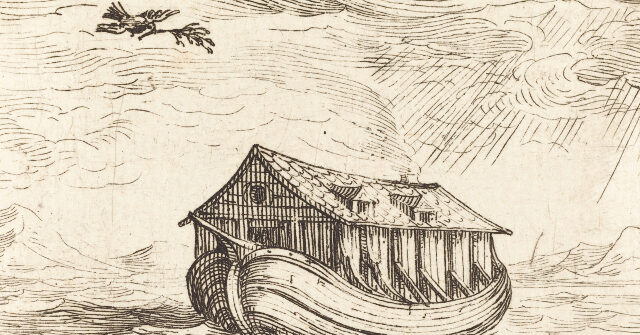
A team of researchers in Turkey has wrapped up a year of drilling at a boat-shaped geological formation near Mount Ararat, collecting hundreds of soil samples that will be analyzed this winter in the continuing hunt for what some believers say could be the remains of Noah’s Ark.
The Noah’s Ark Research Project has spent the past twelve months drilling and collecting samples at the Durupinar site, according to Fox News, which reported on the effort Friday. The project’s vice president, Andrew Jones, told the outlet that the team has been using deep-core drilling in the area for the first time, reaching depths of more than 60 feet to extract material for study.
“That’s what we’ll be testing this winter. Just to see if we can find any type of man-made activity or something that suggests decayed wood,” Jones said, adding that earlier results had shown a difference in the soil and that the team was eager to investigate further.
A Formation That Has Divided Observers for Decades
The Durupinar site has drawn curiosity and controversy in roughly equal measure. Its shape resembles a large vessel, which has fueled speculation among those who connect it to the ark described in the book of Genesis. But some geologists have argued that the formation is a natural feature of the landscape rather than a man-made structure—a position that has not stopped repeated expeditions from testing the area.
Aerial video footage cited in the reporting showed the researchers at work on the site, which sits in eastern Turkey near the mountain traditionally associated with the ark’s final resting place.
The project is not the only group pursuing the question. Noah’s Ark Scans, an American Christian research company, has also made claims about the site, and those assertions have prompted pushback from within the Christian community itself.
Ken Ham: ‘Let’s See the Actual Data’
Ken Ham, the Christian founder of Kentucky’s Ark Encounter attraction and the ministry Answers in Genesis, told World magazine that believers should be careful about embracing claims that the ark has been found. According to the outlet, Ham warned that Christians risk damaging their own credibility when they exaggerate evidence.
In a video addressing the subject, Ham said examining new evidence is a reasonable instinct—but only up to a point. “Let’s see the actual data. After all, good science welcomes careful investigation,” he cautioned.
His stance reflects a broader tension in the debate: enthusiasm for a potentially momentous discovery, set against the methodological standards that scientists and even some religious leaders say should govern how the evidence is presented.
A Long History of Claims and Skepticism
The search for Noah’s ark has captivated explorers, researchers, and the faithful for generations, with numerous expeditions attempting to locate it on Mount Ararat in Turkey. Over the years, various artifacts and structures have been presented as evidence—wood-like formations, ancient remains, and unusual geological features among them. Many of those findings have met with skepticism and have lacked rigorous scientific validation.
Conditions in the region complicate the work. Harsh weather, political instability, and the sheer difficulty of distinguishing credible evidence from hoaxes and misinterpretations have all posed obstacles. Despite the excitement that potential discoveries generate, no conclusive proof of the ark has ever been established, and the scientific community has remained cautious about claims related to its existence.
According to Answers in Genesis, the ark occupies a central place in the biblical narrative: it was the vessel by which God spared a righteous man, Noah, and his family from judgment against humanity’s wickedness, built to specific proportions so that Noah, his family, and the animal kinds aboard could repopulate the earth once the flood ended.
For now, the question of whether the Durupinar formation holds anything more than interesting geology rests with the samples now sitting in a laboratory. Jones and his team say the winter testing will look for signs of worked material or deteriorated wood—markers that, if found, could sharpen a debate that has run for decades without resolution.
Source: www.breitbart.com — https://www.breitbart.com/middle-east/2026/10/02/video-researchers-use-deep-core-drilling-search-noahs-ark/
Source: www.breitbart.com
Related coverage
- Security Guard Shoots Armed Suspect Dead After Rampage at Florida Citibank Campus
- Nvidia Stock Plummets 10% as Board Weighs Firing CEO Jensen Huang Over Alleged Affairs, China Spy Scandal
- Melania Trump-Brokered Kherson Ceasefire Expires as Ukraine War Grinds Into Fifth Year
- Trump Signs Order to Rebuild U.S. Shipbuilding, Open Door to Foreign Partnerships