
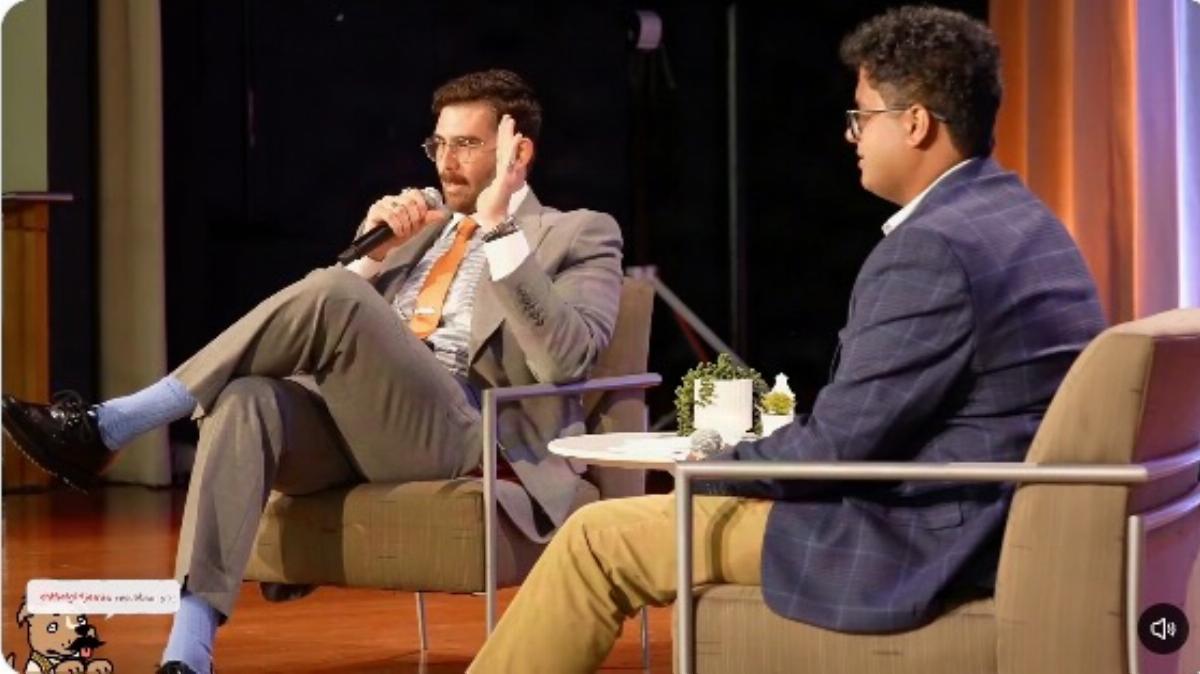
The Texas Senate race between incumbent Attorney General Ken Paxton and state Rep. James Talarico has saturated local airwaves, and at least one conservative commentator thinks the campaign ads are the best political theater in the country right now. Writing in American Thinker, Silvio Canto, Jr. says he plans to vote for Paxton but admits the spots are “entertaining” — particularly Talarico’s efforts to cast himself as a regular Texan who enjoys a steak and a beer while painting billionaires as his adversaries.
Canto’s argument, though, is not really about the advertising. It’s about what he calls an attempt to “turn a freak into a normal guy” — and he believes a recent interview with progressive streamer Hasan Piker proves the rebranding isn’t working.
The quote at the center of the fight
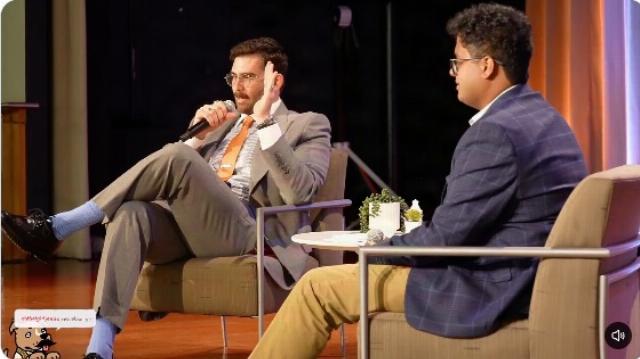
According to the American Thinker piece, Piker said in a recent interview that if Talarico wins, progressives intend to hold him to their agenda. The commentary quotes Piker directly: “After James Talarico wins…we have to remind him that…we are the force that allowed him to win this seat of power, and if he wants to maintain it he’s got to play ball.”
The post includes a clip of those remarks, and Canto treats them as the decisive piece of evidence in the case against Talarico’s moderate framing. Piker, he writes, is “the harmless streamer” — a phrase heavy with sarcasm — reminding viewers that Talarico is “under his thumb” and will, in Canto’s telling, return to “the land of six genders and neighbors with a uterus” once elected.
That last line is Canto’s own derisive shorthand for the more expansive left-wing positions on gender identity and reproductive rights that he associates with Piker’s audience and the progressive online ecosystem. It is a rhetorical flourish, not a policy citation, and it signals the piece’s broader claim: that Talarico’s pitch to Texas voters is a costume rather than a conviction.
A gerrymandering charge from the commentary
Canto offers a second line of attack, arguing that the rebranding effort is transparently fraudulent because Talarico has condemned gerrymandering while, in Canto’s account, having run in Illinois — a state where Democrats drew district lines to produce a 14-to-3 advantage. The commentary presents that contrast as evidence that Talarico’s stated principles are situational.
Whether that framing lands with Texas voters is, of course, the open question. Canto’s stated hope is that Paxton’s advertising keeps reminding voters that Talarico is a “Texas version of Piker” — a comparison designed to do the heaviest lifting in the closing stretch of the race.
What the commentary is really arguing
Strip away the insults and the argument has a recognizable shape, one that Republicans have deployed against Democratic candidates in red and purple states for years: a candidate can run as a moderate, but the activists who fund, amplify, and turn out for him will expect a return on their investment. Canto seizes on Piker’s language — “we are the force that allowed him to win” and “he’s got to play ball” — as an unusually blunt version of that transaction being described out loud.
The implication is that voters should treat Talarico’s campaign-trail persona as a lease rather than a deed: borrowed for the duration of an election, with the real owners waiting to reclaim it afterward. It’s a familiar theme in down-ballot races where a statewide candidate has to appeal to a general electorate while depending on highly motivated ideological activists for money and volunteers.
For his part, Canto frames the whole thing as an open-and-shut case. “There it is in full living color,” he writes, presenting Piker’s remarks as an admission that no amount of advertising can paper over.
The limits of the case
What the commentary does not do is address any response from Talarico’s campaign or from Piker beyond the quoted clip. Readers looking for a rebuttal, a clarification, or context about when and where the interview took place will not find it in the piece. The post leans on the strength of the quote itself and on the assumption that Texas voters already have a firm impression of Piker and what he represents.
There’s also a structural gap in the argument worth noting for anyone weighing it: a supporter’s stated expectations are not the same thing as a candidate’s commitments. Canto treats Piker’s “play ball” remark as a binding contract, but the commentary supplies no instance in which Talarico has actually agreed to the terms. The case rests on inference — that a candidate who owes his margin to a faction will govern on that faction’s behalf.
That inference may well resonate in a state where the progressive online left is a convenient foil. It’s also exactly the kind of claim that campaigns on the receiving end dismiss as guilt by association, and the American Thinker post doesn’t attempt to preempt that criticism.
Why the piece matters beyond one blog
As opinion writing goes, this is a short, sharp entry in an ongoing fight over how Talarico should be defined before voters cast ballots. Canto is upfront that he is a Paxton voter and that his goal is to keep the Piker comparison alive in the electorate’s mind. The post closes with a plug for his own blog and a fundraising appeal for the publication — a reminder that outlets like American Thinker are themselves participants in the messaging war they’re covering.
What the commentary captures, fairly or not, is a real tension in the race: Talarico’s advertising sells a plainspoken Texan who likes steak and beer, while his most vocal online allies describe his potential victory as their victory. Canto’s bet is that Texas voters will believe the second description over the first. Whether that bet pays off is something only the campaign’s final weeks will settle.
Source: www.americanthinker.com — https://www.americanthinker.com/blog/2026/10/under-my-thumb/
Source: www.americanthinker.com
Related coverage
- Sorry, Talarico, but you are no LBJ: Texas Dems’ leftward march erases a lost legacy
- Why Haven’t Deep-Blue States Passed ‘Medicare for All’? Cruz Says Even California Balked at the Price Tag
- Trump’s quiet win: federal workforce shrinks to historic low
- Florida Learjet Crash Puts Pilot Command Responsibility Under Scrutiny