
In a commentary published October 4 on American Thinker, writer Mike McDaniel argues that the country’s deepening social strife has a single, simple remedy: every American voluntarily honoring the Constitution and the rule of law. The piece, titled “What will it take?”, frames the answer as less a policy agenda than a question of collective character.
McDaniel opens by invoking Rodney King’s 1992 plea — “Can’t we all just get along?” — and answers it bluntly. Roughly a generation later, he writes, reasonable people would have to conclude that we can’t. What separated the first two centuries of the American experiment, in his telling, was a broad, if informal, agreement to live under the same rules. That agreement, he argues, has dissolved.
He sets up the contrast between blue and red cities as evidence: the ability to walk unmolested at any hour is, in his account, closer to the norm in red cities than in blue ones. Rather than treat that as a scheduling or policing problem, he asks where the hatred comes from — both the real kind and the kind he says is manufactured for political advantage.
The founding idea, and what he says it implies
At the core of the essay is a familiar originalist reading of the founding documents. The Declaration of Independence and the Constitution, McDaniel writes, rested on the radical premise that rights are given by God at birth, not granted by government. Government therefore holds limited powers rather than rights of its own, exists to serve the people rather than rule them, and keeps its authority only so long as it acts within constitutional limits. That arrangement, he contends, produced the freest and most prosperous nation in history — and he warns it is now in imminent danger of being lost.
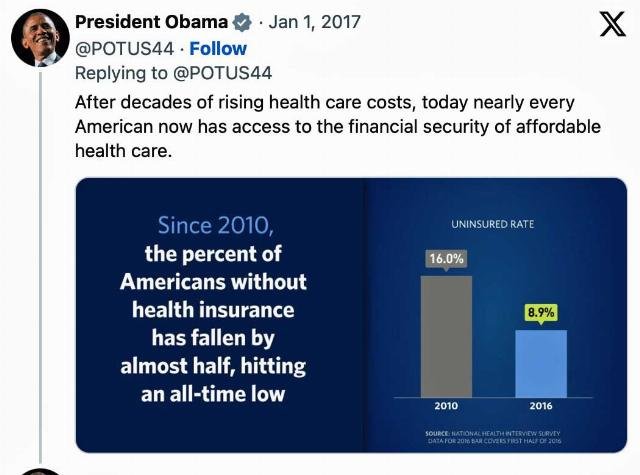
Such a society, McDaniel says, requires a high degree of trust among citizens, and he believes that trust has largely been squandered. He places much of the blame on Barack Obama, whom he describes as a president who promised to unite the country but who, in McDaniel’s view, tore it apart across eight years. Before Obama’s rise, McDaniel asserts, racism had been largely eliminated; afterward, he argues, racial entitlement became commonplace.
Yet he also argues that the supply of genuine racism cannot meet demand. Because real racism is scarce, he writes, organizations on the left must manufacture it, and race hoaxes — even when exposed — keep the racial pot stirred. He cites as a positive sign what he sees as Obama’s growing irrelevance, singling out the former president’s library project for mockery.
The reason real racism is so limited, McDaniel suggests, is that most Americans of every race simply want to be left alone and are willing to extend the same courtesy. They don’t treat slights, real or imagined, as attacks on themselves or their group, he writes, and most don’t belong to a tribe at all because they understand tribal loyalty to be destructive. Their loyalty, in his formulation, belongs to the Constitution, to America, and to Americans — a nod to Lincoln’s call for charity toward all and malice toward none.
Opportunity, not results
From there, McDaniel draws what he considers the constitutional implications for equality. The founding framework, he writes, guarantees equality of opportunity, not equality of result, and it creates no right to an equal outcome. Merit matters, along with hard work, intelligence, education, goodwill, delayed gratification, and simple attentiveness.
That is why, in his view, DEI programs are so destructive. He characterizes them as permanent grievance — the normalization and even celebration of resentment toward people whose ability and productivity earn them material and social rewards. When companies and institutions such as colleges drop DEI, he claims, they promptly begin to prosper and achieve the results they were founded to deliver.
He then turns to economic and social rights. Demands for a right to housing, to good food, to free medical care, to government-provided everything, he writes, describe no actual rights. Those who make such claims are unknowingly describing government power — the power to take from the productive and give to those he calls unproductive. Government has no money of its own, he notes; every dollar it spends comes from the people. Someone always pays for the free lunch.
His individual rights, McDaniel insists, obligate no one else. They require nothing of others beyond a shared willingness to honor the Constitution itself. Government, he argues, is not empowered to seize the fruits of one person’s labor to hand them to someone who refuses to work — and yet, he laments, many want exactly that.
McDaniel concedes the topic is book-length, but returns to his single conclusion: willingly honoring the Constitution and the rule of law is the whole of it. The essay closes not with a program but with a posture — a demand that Americans choose the founding compact over grievance, and that the choice be voluntary rather than enforced.
The piece sits squarely within American Thinker’s editorial lane, blending constitutional originalism with a broad critique of identity politics and the administrative state. Whether its prescription is plausible is another matter. McDaniel’s argument rests on the premise that most Americans already agree on the underlying rules and simply need to act on that agreement. His critics would counter that the disagreement is precisely about what the Constitution requires — and that a document interpreted in radically different ways by different camps cannot, by itself, settle the fights he describes. The essay’s value is less as a blueprint than as a statement of one side’s first principles, offered at a moment when the country’s divisions show little sign of easing.
Source: www.americanthinker.com — https://www.americanthinker.com/blog/2026/10/what-will-it-take/