
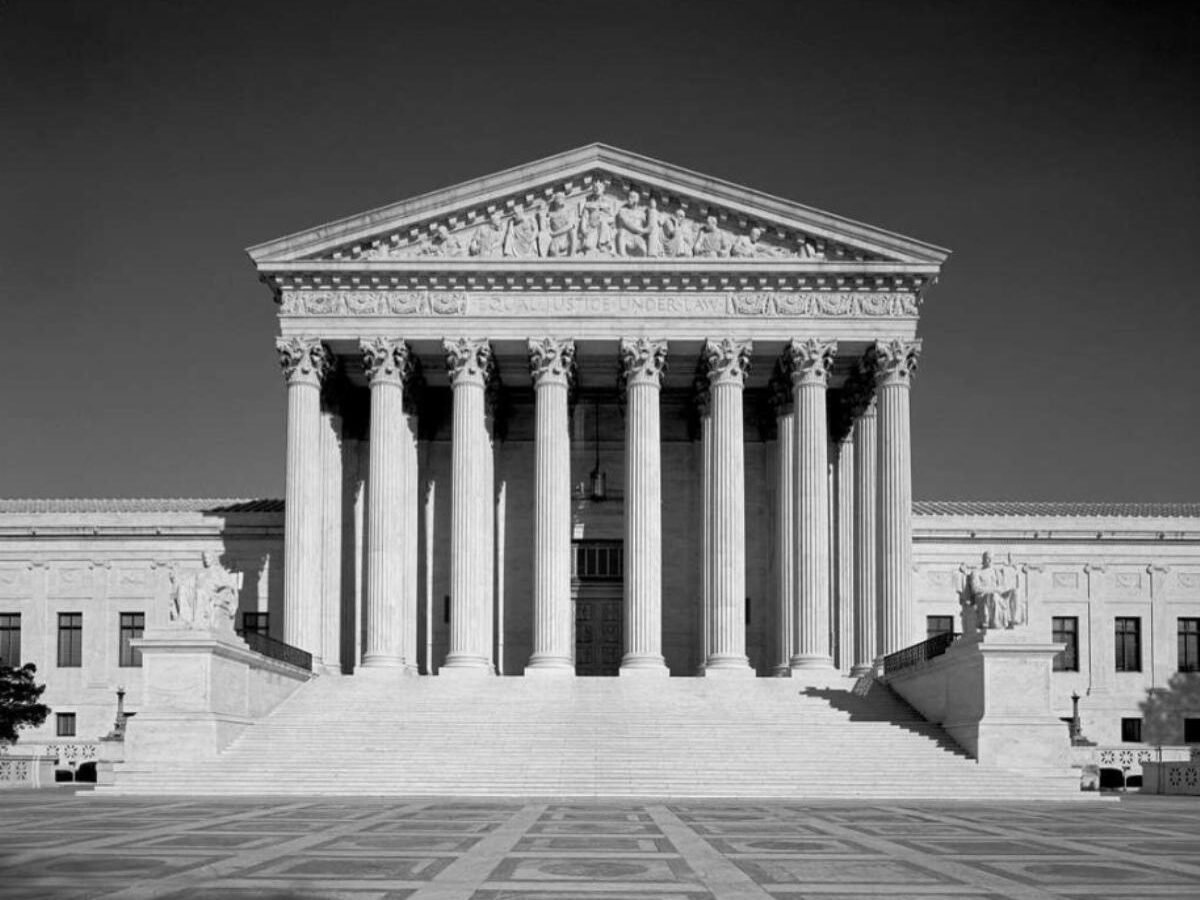
The Supreme Court’s recent decision in Trump v. Barbara has ignited fierce debate over the constitutional foundations of birthright citizenship, with conservative legal analysts arguing the ruling relies on internally contradictory reasoning that may have lasting consequences for American sovereignty.
According to American Thinker contributor Tom G.K. Swift, the November 2026 decision constitutionally requires for the first time that children born in U.S. territory to illegal immigrants and birth tourists be recognized as natural-born citizens. But Swift contends the Court’s logic contains a fundamental philosophical flaw: the child’s citizenship simultaneously depends on the parents being under only “partial jurisdiction” while the child somehow gains “complete jurisdiction” status at birth.
“Two contradictory things determine the child’s American citizenship,” Swift writes. “Something’s very wrong.”
The Jurisdiction Problem
At the heart of Swift’s critique lies a distinction between two types of legal jurisdiction. Foreigners such as temporary visitors fall under partial jurisdiction—they must obey American laws and receive certain protections, but lack the full rights and obligations of citizenship. Complete jurisdiction, by contrast, encompasses not only legal obligations and protections but also privileges like voting, receiving Social Security benefits, and full civic participation.
The Court’s decision, Swift argues, attempts to transform partial jurisdiction into complete jurisdiction through the medieval common law principle of jus soli, or “right of the soil.” This doctrine, rooted in feudal monarchy, established a reciprocal relationship between a king’s protection and a subject’s allegiance. But according to Swift, that symmetry made sense only in an era without mass migration.
“In medieval times, the symmetry between protection and allegiance as the basis of jus soli was guaranteed by the absence of mass migration, which is what made jus soli comprehensible and rational in the first place,” he explains. “Today, the asymmetry of protection and allegiance makes it necessary to distinguish partial and complete jurisdiction.”
A Tale of Two Theories
To illustrate the logical tensions, Swift presents two competing frameworks he labels “Whig” and “Tory” (names chosen for convenience rather than historical accuracy). The Whig view aligns with the Supreme Court majority’s position: children born on U.S. soil to non-citizen parents gain automatic citizenship. The Tory view holds that such children should not receive automatic citizenship.
The Whig framework appears consistent on its face, Swift acknowledges. But he argues it suffers from a deeper problem: incoherence. The theory requires believing that jus soli somehow possesses the power to “transmute” partial jurisdiction into complete jurisdiction—a transformation Swift compares sarcastically to “the Holy Spirit turning communion wine into blood.”
“Jus soli lacks the metaphysical chops to turn partial jurisdiction into complete jurisdiction,” he writes.
The Tory framework, while containing what Swift admits is an inconsistency regarding children’s allegiance, at least avoids logical contradiction. He uses the hypothetical example of “baby Juan,” born in Kansas to undocumented immigrants, who might later serve honorably in the U.S. Army. Such future allegiance counts for something, Swift suggests, creating genuine tension between border control and recognizing loyalty—what philosopher Isaiah Berlin called a “conflict of incommensurable values.”
Policy Over Philosophy
This kind of value conflict, Swift argues, cannot be resolved through legal principles alone. Instead, it requires public policy decisions that prioritize complete jurisdiction over jus soli, understanding the common law tradition “in the light of modern sovereignty.”
The current Court majority’s approach, led by Chief Justice John Roberts with what Swift calls a “misleading” emphasis on “jurisdiction in its ordinary sense,” produces what he characterizes as an almost comical result. Children simultaneously exist under partial jurisdiction through their parents—which supposedly enables their American birth status—while also supposedly possessing complete jurisdiction by birthright.

“The Barbara Court meandered down the hapless road of ‘spooky metaphysics,'” Swift writes.
Alito’s Alternative
Justice Samuel Alito’s dissent, according to Swift, offers a more coherent path by rejecting the common law of jus soli entirely for citizenship purposes. This approach would eliminate the inconsistency in the Tory framework altogether by removing the medieval doctrine from modern constitutional interpretation.
Swift contends the majority’s decision amounts to choosing incoherence over mere inconsistency—a choice with profound implications. By making birthright citizenship “depend on irrationality,” he argues, the Court has undermined the rule of law and America’s future sovereignty.
The analysis also touches briefly on implementation flexibility, noting that public policy decision-making need not treat all cases identically, though Swift’s cryptic reference to “everything in a democracy being deformed by sharia” remains unexplained in context.
Broader Implications
The Trump v. Barbara decision represents a significant moment in ongoing debates over immigration, citizenship, and constitutional interpretation. While the Supreme Court’s majority evidently viewed birthright citizenship for children of unauthorized immigrants as constitutionally mandated, critics like Swift see the ruling as resting on philosophically unstable foundations.
Whether the decision proves durable may depend less on its internal logical consistency than on how future courts and policymakers balance competing values: recognizing the contributions and allegiance of those born on American soil against maintaining meaningful distinctions between citizens and non-citizens, between complete and partial jurisdiction, in an era of unprecedented global mobility.
For now, the constitutional landscape appears settled—at least until the Court’s philosophical contradictions, if they exist, force a reckoning in some future case. Swift’s warning is clear: a legal framework built on logical incoherence may not withstand the pressures of changing circumstances and sustained critical scrutiny.
Source: www.americanthinker.com — https://www.americanthinker.com/articles/2026/11/the-folly-of-em-trump-v-barbara-em/