
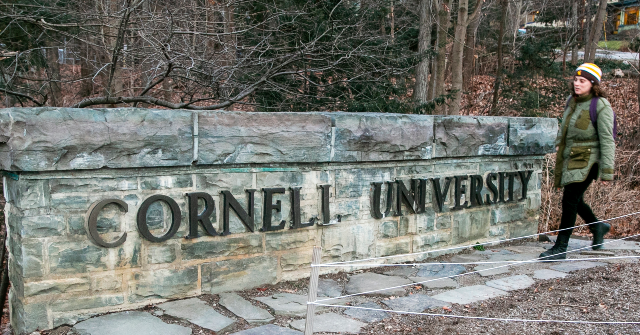
Breitbart Editor-in-Chief Alex Marlow used his weekday radio program to wade into the Cornell University sexual assault case, raising a question that has unsettled campus adjudications and criminal courts alike: if intoxication nullifies a person’s ability to consent, what happens when both parties are intoxicated?
Speaking on “The Alex Marlow Show,” which airs on Salem Radio Network stations, Marlow argued that the consent framework commonly applied to such cases cuts in more than one direction. “Then the question is could she initiate when she was intoxicated?” Marlow said. “Well, that goes two ways. Can a male initiate if they’re too intoxicated? That’s another issue. If we’re going to talk about consent all the time, were the men consenting?”
The comments, flagged by Breitbart’s own clips section, come amid an ongoing uproar over a reported “gang rape” at the Ivy League school that has become a flashpoint in the broader national argument over campus sexual misconduct, due process and the meaning of consent.
A question with legal and political weight
Marlow’s framing is unusual in the heated debate over campus assault, where the intoxication of an accuser is typically the central question — whether she was too impaired to give meaningful consent. He inverted it, asking whether the accused men’s own drinking could be relevant to a consent analysis. The implication is not that an intoxicated man cannot commit a crime, but that applying a strict intoxicated-means-incapable standard symmetrically produces uncomfortable conclusions.
The argument is likely to be contested. Rape Shield laws in many states, along with Title IX guidance and campus codes, are designed to focus findings on the accused’s conduct rather than to treat a defendant’s intoxication as a defense to sexual assault. Even where voluntary intoxication is relevant, courts have generally rejected the notion that it excuses predatory behavior. Advocates for survivors argue that the “both parties were drunk” argument is a familiar deflection that shifts scrutiny away from the person accused of assault.
Yet the inverse question Marlow raised has been a genuine puzzle in criminal law for decades. Jurisdictions differ over whether and how a defendant’s level of intoxication affects mens rea — the mental state required for a criminal conviction — and whether an accuser’s own initiation of sexual contact while impaired should carry any weight in a case.
Why Cornell became a national story
The Cornell case has drawn intense attention because it touches on several sensitive questions at once: elite-campus sexual culture, the handling of allegations by university administrators, and the intersection of criminal investigation with Title IX proceedings. Such cases often proceed along two tracks — a police inquiry governed by evidentiary and constitutional standards, and a campus disciplinary process governed by a lower burden of proof — which critics say can produce contradictory outcomes and leave both accusers and the accused without real resolution.
Conservatives have seized on the case as an example of what they describe as a rush to judgment in campus proceedings, while victims’ advocates warn that skepticism toward accusers discourages reporting and emboldens offenders. Marlow’s segment fits that broader conservative critique of how consent is defined and adjudicated in the post-#MeToo era.
The show, which broadcasts coast to coast from noon to 1 p.m. Eastern on Salem Radio Network stations, also airs at 9 p.m. Eastern on the Salem TV news channel. Marlow’s podcast, “The Alex Marlow Show Presented by Breitbart News,” is released weekdays at 9 p.m. Eastern and is available on YouTube, Rumble, Apple Podcasts and Spotify.
Breitbart.tv promoted the clip through its X account, @BreitbartVideo, where the remarks circulated among the outlet’s audience.
It remains to be seen whether the argument Marlow advanced will gain traction beyond his audience, or whether it will be treated as an outlier position in a debate that has only grown more polarized. What is clear is that the Cornell case has once again forced the question of what consent means — and who gets to ask it.
Source: www.breitbart.com — https://www.breitbart.com/clips/2026/10/04/cornell-gang-rape-saga-raises-uncomfortable-questions-about-consent/