
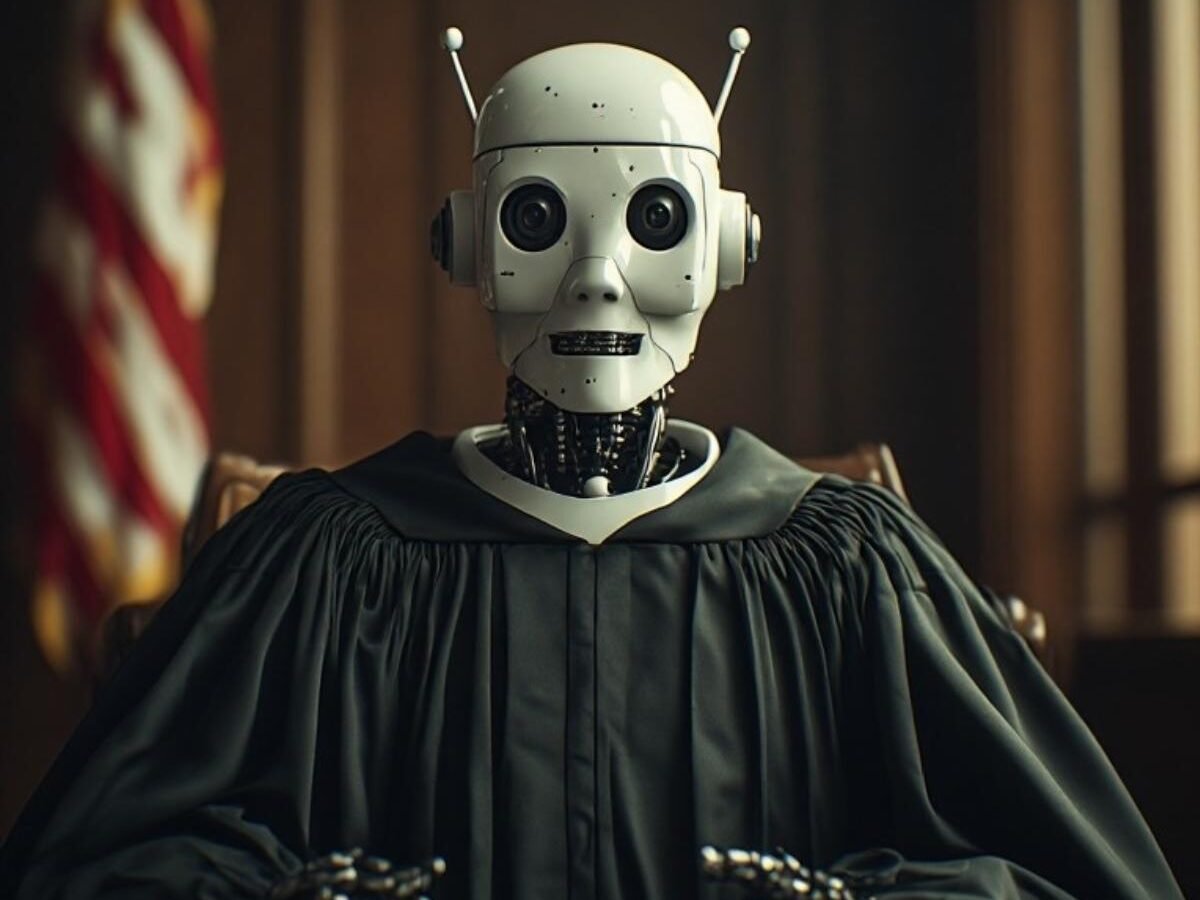
The Arizona Court of Appeals has thrown out a 10-year manslaughter sentence after the judge who imposed it watched an AI-generated video in which a dead man appeared to forgive his killer, according to reporting by American Thinker. The appellate panel concluded that the clip “so prejudiced Horcasitas as to render the sentencing procedure fundamentally unfair,” and vacated the sentence with an order for resentencing.
The case centers on Gabriel Paul Horcasitas, who was sentenced in Maricopa County Superior Court for the 2021 shooting of Christopher Pelkey in what the outlet describes as a road-rage incident. Judge Todd Lang handed down the maximum penalty of 10 years. Before doing so, he watched a video statement purporting to show Pelkey — the victim — offering forgiveness to Horcasitas and describing the toll the killing took on his family.
The problem: Pelkey did not make that statement. The video was generated by an AI program, prompted by what Pelkey’s sister believed her brother would have said under the circumstances. It was, as American Thinker puts it, not a genuine message from the deceased but “the product of an AI program prompted with what Pelkey’s sister ‘believed’ he would have said.”
What the Judge Said in Court
Judge Lang, for his part, maintained that the video played no role in his decision. Yet his own words from the bench complicate that claim. According to the outlet’s account, Lang told the courtroom he “loved that AI. Thank you for that, and as angry as you are and justifiably angry as the family is, I heard the forgiveness and I know Mr. Horcasitas appreciated it, but so did I.”
He went further, describing the clip as “genuine, that his obvious forgiveness of Mr. Horcasitas reflects the character I heard about today.” That characterization is difficult to square with the video’s origins. The forgiveness on display was not Pelkey’s — it was an algorithm’s rendering of what a grieving family member imagined he might say.
The appellate judges saw it the same way. They wrote that “the AI video presents a depiction of the victim and his thoughts created from the imaginings of the victim’s sister.” In their view, the clip had “crossed the line” and was plainly prejudicial — prejudicial enough, evidently, to require a do-over on sentencing.
A Question the Law Already Answers
The ruling has already prompted commentary that this is uncharted territory, that AI moves faster than the legal system can keep up, and that courts will be left scratching their heads about how to handle synthetic evidence. American Thinker’s J.R. Dunn isn’t persuaded by that framing. His argument is that the legal position here is actually straightforward — and that speed is not the same thing as wisdom.
Dunn reaches back more than a century for a comparison, noting that mediums once made comfortable livings preying on grief-stricken survivors with claims that they could channel dead relatives. To his knowledge, none of them ever tried it in a courtroom — at least outside of Kurosawa’s Rashomon. A sentence built on that kind of performance, he suggests, was begging to be thrown out, and he credits the Appeals Court for stepping in.
The outlet’s broader point is less about procedure than about what the episode reveals. If artificial intelligence is genuinely scheming to take over, Dunn writes, all it has to do is depend on sheer human dumbness and we’ll be doomed. The Arizona courtroom becomes Exhibit A: a judge praising a synthetic ghost as “genuine” while insisting it changed nothing about a man’s liberty.
Where It Goes From Here
Horcasitas’s manslaughter sentence has been vacated and the matter remanded for a new sentencing proceeding. The practical effect is that the defendant, who had been given the maximum term, will face a judge again — this time without an AI rendering of the victim’s forgiveness as part of the record. Whether the new proceeding produces a materially different outcome is now up to the trial court.
What the appellate decision leaves unsettled is the broader question of synthetic victim statements in criminal proceedings. Courts across the country are only beginning to confront what happens when grieving families bring AI recreations of the dead into sentencing hearings, victim-impact statements, and other moments where a judge’s discretion is at its widest. The Maricopa County case offers one clear data point: when a court can’t be sure whether the person on the screen is speaking or merely being imagined, the risk of unfairness is high enough to undo the sentence.
Dunn’s closing note is a familiar one for the outlet’s readership — that the ability to speak our minds freely matters more than ever to the republic. Read alongside the Arizona case, it carries an ironic edge. A family used technology to give voice to a man who could no longer speak for himself, and an appeals court concluded that the voice it produced was not his at all.
Source: www.americanthinker.com — https://www.americanthinker.com/blog/2026/10/dead-man-testifying/