
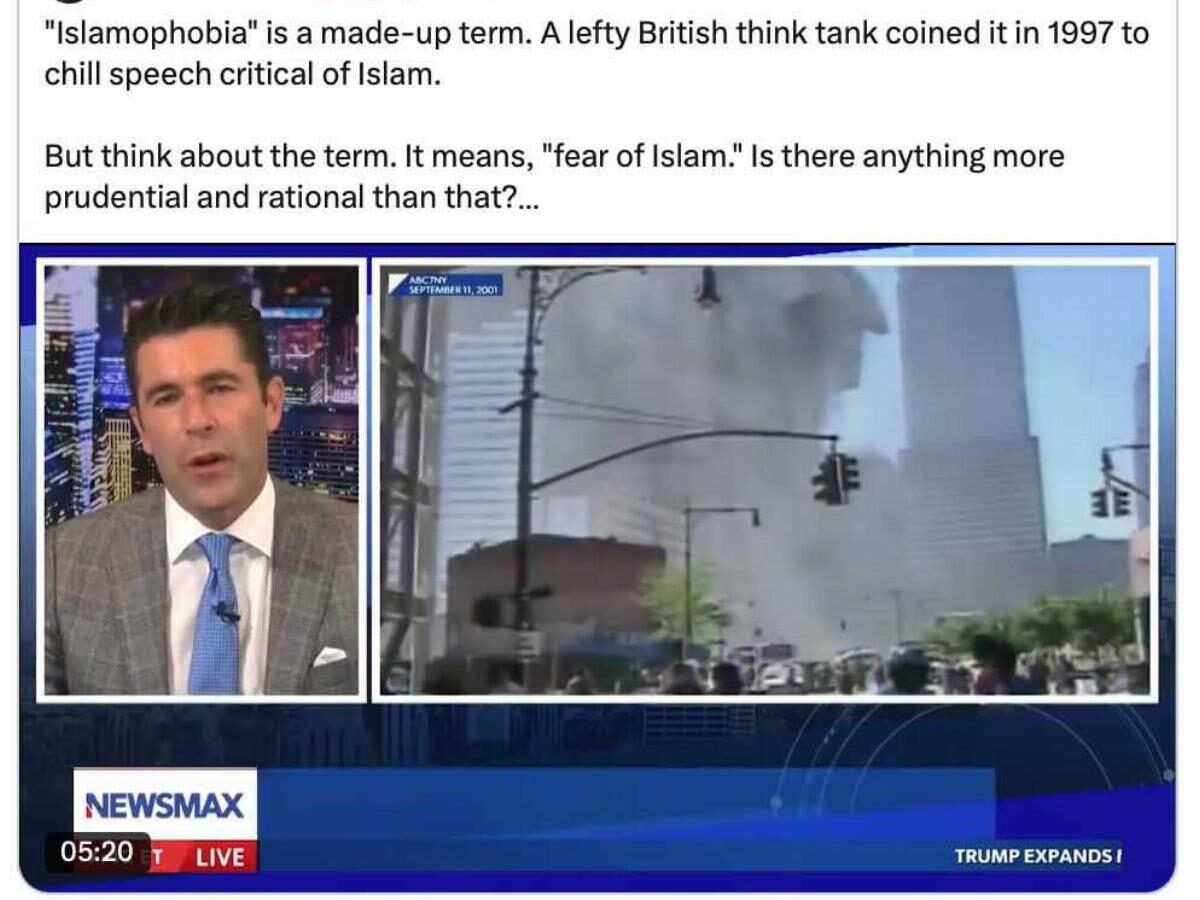
In a commentary published by American Thinker, writer Mike McDaniel argues that Western hesitation to confront Islamist violence is not merely misguided but self-destructive. The piece, titled “Is self-defense against Islamists wrong?,” contends that concerns about provoking accusations of Islamophobia, or about killing would-be attackers only to create more terrorists, amount to “suicidal idiocy.”
McDaniel anchors his argument in two recent events he describes as examples of the threat. He points to what he calls an “apparent trial-run for an attack on our B-1 bombers in England” and to a “failed attempt by an Islamist co-pilot to turn a 737 into a 9-11-like guided missile.” These incidents, in his telling, are part of a steady stream of examples of the nature of Islam that the public is “constantly treated to.”
Quranic Verses and Cultural Claims
The bulk of McDaniel’s evidence rests on selected Quranic verses. He quotes several passages that he says make the faith’s intent clear: Surah 25:48, which urges believers not to listen to non-believers but to “strive against them with all your might”; 25:53, which calls the Kafir (non-believer) an ally of Satan; 47:4, instructing fighters to “cut off their heads until you have thoroughly defeated them”; 33:60, which states that non-believers “will be cursed, and wherever they are found, they will be seized and murdered”; 9:29, directing war against Jews and Christians until they “submit and pay the poll tax and they are humiliated”; and 2:191, which commands believers to “kill the unbelievers wherever you find them.”
McDaniel acknowledges that there are Muslims who do not want to kill non-believers. Yet he adds a caveat: “the suggestion that they want other Muslims to do it may not be unreasonable.” What he calls “unquestionably true” is that such relatively peaceful people, in his view, are not living according to the text and intent of their faith.
From there, McDaniel lists what he describes as culturally apparent results of those Quranic demands—practices and attitudes he says are so foreign to Westerners that they are dismissed as hyperbolic. His list includes the treatment of women as chattel property, widespread pedophilia and bestiality, and the execution of LGBTQ+ individuals under barbaric methods. He also cites an “absolute lack of freedom of religion,” antisemitism rooted in The Protocols of the Elders of Zion, wholly corrupt governments where bribery is standard, extreme tribalism in which “tribe trumps truth and justice, always,” and the treatment of “Third Country Nationals” in Gulf Arab countries as virtual slaves. He adds what he calls an “absolute confidence that Islam will violently conquer the rest of the world” and an acceptance of lying as necessary and proper.
A Muslim Reformer’s Account
To explain why Westerners, particularly Americans, struggle to grasp this, McDaniel turns to Majid Rafizadeh, described as a Muslim raised in Syria and Iran writing at Gatestone. McDaniel suggests that because people around the world consume American movies, music, and clothing, Americans assume they must be like us—and like us. Rafizadeh’s account, as quoted in the American Thinker piece, challenges that assumption directly.
Rafizadeh writes that Islamist politicians and influencers in the United States “will never place their first loyalty with America,” and that people should not even entertain the thought. He explains that growing up under Islamist teachings means identity is not national. “It is not ‘American’ or ‘German’ or any other geographic label,” he writes. “It is entirely the particular version of Sharia and Islamic doctrine you were taught.” Citizenship papers, the Constitution, and the flag are secondary—tools, in his words, “to be used to protect and expand this primary identity.”
He also describes a doctrine of exclusive truth: believers are raised to think their path is the only correct one, and that everyone else is destined for hell. “The loyalty of these individuals remains solely to Islamist rule and their version of Sharia,” Rafizadeh writes. “It will never transfer to America.”
McDaniel summarizes Rafizadeh’s broader argument as an explanation of why observant Muslims so often become Islamists—jihadists—and will never adopt Western ways of thinking. He notes that some few Muslims do convert to what he calls “non-barbarism,” but says that by merely explaining the Muslim way of thinking, Rafizadeh has painted a target on his back—one McDaniel claims many fellow Muslims would be delighted to strike, just as they would be delighted, and consider themselves morally justified, to kill all Westerners.
The Central Claim
The piece closes by returning to its opening premise. “Thinking we dare not defend ourselves because it would anger our killers plays into the hands of those who very much want to kill us,” McDaniel writes. The implication is that the fear of being labeled Islamophobic, or of creating new enemies through defensive action, is itself a form of surrender—one that benefits those he identifies as committed to violence.
McDaniel’s bio, appended to the piece, lists him as a USAF veteran, classically trained musician, fencer, lifelong athlete, firearm instructor, retired police officer, and former high school and college English teacher. He is a published author and blogger. The American Thinker commentary is an opinion piece, and its characterization of Islam, the Quran, and Muslim communities reflects the author’s views rather than a neutral survey of the faith or its adherents. The piece also promotes the outlet’s newsletter and solicits donations at its close.
Source: www.americanthinker.com — https://www.americanthinker.com/blog/2026/10/is-self-defense-against-islamists-wrong/