
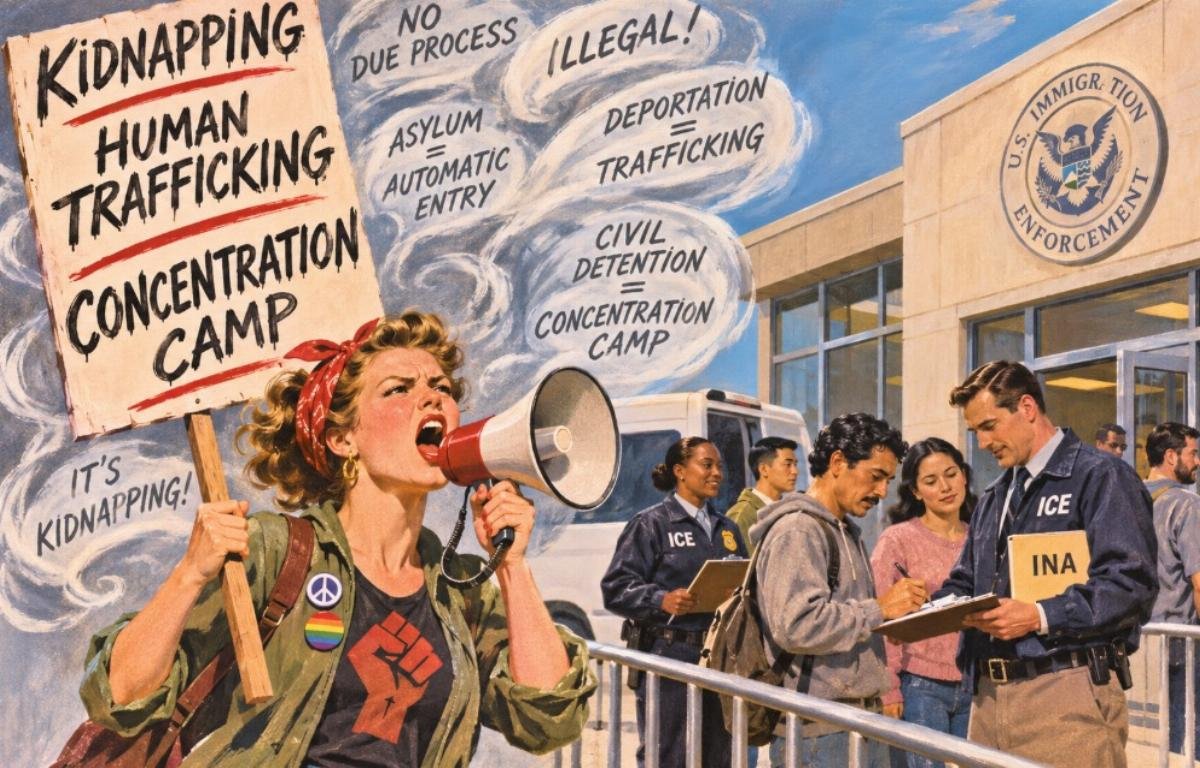
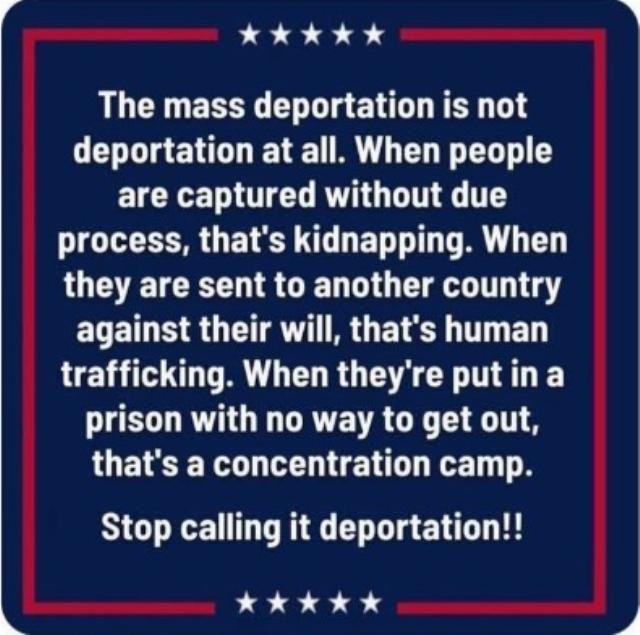
A conservative writer has taken aim at what she describes as widespread legal ignorance fueling opposition to immigration enforcement, dissecting a viral Facebook post that compares deportation procedures to kidnapping, human trafficking, and concentration camps.
Andrea Widburg, writing for American Thinker, confronted claims circulating among her left-leaning Facebook connections — claims she argues demonstrate a fundamental misunderstanding of how U.S. immigration law actually works. The post in question equated immigration arrests to kidnapping, deportations to human trafficking, and detention facilities to concentration camps.
According to Widburg, each comparison collapses under legal scrutiny.
The Kidnapping Claim: Authority Under Immigration Law
The viral post argued that “when people are captured without due process, that’s kidnapping.” Widburg counters that immigration officers operate under explicit statutory authority granted by the Immigration and Nationality Act, which has governed U.S. immigration policy for more than 70 years.
Under Title 8 of the U.S. Code, immigration officers possess legal authority to question individuals about their immigration status, temporarily detain them when reasonable suspicion exists, and arrest them when probable cause indicates immigration law violations. The law requires only probable cause — not proof — and reasonable belief that the person might flee before a warrant could be obtained.

Widburg draws a parallel to standard police procedures: “If officers see someone who matches what they know about a bank robber, they may temporarily stop that person, ask questions, and investigate,” she writes, noting that no one seriously challenges this process in criminal law enforcement.
The immigration arrest procedures, she argues, mirror these established criminal justice protocols. While defense attorneys might challenge whether probable cause existed in specific cases, the underlying legal process itself remains constitutionally sound.
Deportation as Human Trafficking? Not Legally
The second claim addressed involves characterizing deportations as human trafficking because individuals are “sent to another country against their will.” This comparison, according to Widburg’s analysis, misconstrues both immigration law and the legal definition of human trafficking.
Federal immigration statutes explicitly authorize the Attorney General to remove individuals who have received removal orders. The law provides options for destination countries, including countries the person selects, their country of citizenship, countries where they previously resided, their birth country, or any country agreeing to accept them.
The only restriction prevents deportation to countries where the person’s life or freedom would be threatened based on race, religion, nationality, membership in a particular social group, or political opinion. Widburg notes this protection has led to claims of persecution that sometimes strain credulity, mentioning that men from countries hostile to LGBTQ individuals frequently claim gay identity to avoid deportation.
Human trafficking, by legal definition, involves exploitation for commercial sex or forced labor through prohibited means. Deportation following illegal entry doesn’t meet this threshold, regardless of the individual’s preferences about remaining in the United States.
Detention Facilities Versus Concentration Camps
Perhaps the most emotionally charged comparison — equating immigration detention centers with concentration camps — receives Widburg’s sharpest rebuke. She argues the comparison trivializes actual historical atrocities while misrepresenting the nature of immigration detention.
Concentration camps, she explains, historically refer to facilities where conquering enemies confine civilian populations during wartime. Immigration detention represents civil detention authorized by federal statute while authorities determine whether individuals should be removed from the country.
Federal law explicitly authorizes immigration officials to detain certain non-citizens during removal proceedings. This detention includes administrative procedures allowing detainees to challenge their confinement — though Widburg notes that most individuals in the country illegally lack grounds for successful challenges.
The alternative approach, which she suggests the previous administration demonstrated, allows people to disappear into the general population rather than appearing for removal proceedings.
The Purpose Behind the Misinformation
Widburg’s broader argument suggests the viral post’s inaccuracies aren’t accidental but strategic — designed not to inform but to mobilize opposition to immigration enforcement. She points to street protests where activists physically confront immigration enforcement vehicles as evidence that misinformation has real-world consequences.
The commentary references an incident where a protester confronted Immigration and Customs Enforcement vehicles, resulting in what Widburg describes as predictable outcomes when civilians interfere with federal operations. She characterizes such confrontations as resulting from deliberate misinformation campaigns that obscure the legal framework governing immigration enforcement.
A Broader Pattern of Legal Misunderstanding
What concerns Widburg most isn’t individual factual errors but what she sees as systematic ignorance about American legal processes among those opposing current immigration policies. As someone who previously identified as a Democrat, she claims the current opposition represents something qualitatively different from past liberal positions on immigration.
Her analysis suggests that critics of immigration enforcement often operate from premises that wouldn’t withstand basic legal scrutiny — confusing lawful civil detention with extrajudicial imprisonment, statutory authority with vigilante action, and administrative procedures with human rights violations.
The debate highlights the chasm between how immigration advocates and enforcement supporters understand the same legal framework. Where critics see violations of fundamental rights, supporters see lawful execution of duly enacted statutes that have withstood decades of legal challenges.
This disconnect extends beyond abstract legal interpretation into concrete policy disagreements about how to handle millions of individuals residing in the United States without legal authorization. The viral post Widburg critiques reflects one side of that debate — a side she argues rests on legal foundations far shakier than its proponents realize.
Whether one agrees with current immigration enforcement priorities or not, Widburg’s detailed legal analysis underscores that the debate would benefit from greater clarity about what the law actually says, rather than what activists wish it said. The question isn’t whether immigration law is just or should be reformed — it’s whether current enforcement practices operate within existing legal boundaries, a question she believes the evidence answers clearly.
Source: www.americanthinker.com — https://www.americanthinker.com/blog/2026/11/the-ignorance-guiding-leftist-opinions-on-immigration/