

President Donald Trump’s confrontation with China has defined his trade and foreign policy agenda, but a potential wrinkle is emerging from an unexpected ally: South Korea. According to a new analysis published by The Gateway Pundit, Seoul’s recent actions and signals suggest it may be drifting in a direction opposite to Washington’s hardline stance.
The piece, written by a guest contributor, argues that while Trump has ramped up pressure on Beijing—through tariffs, export controls, and diplomatic rhetoric—South Korea appears to be hedging its bets. The analysis points to South Korea’s deepening economic ties with China as a key factor, noting that Beijing remains Seoul’s largest trading partner even as the U.S. seeks to decouple its own economy from Chinese supply chains.
Economic Interdependence vs. Strategic Alignment
The article highlights the tension between South Korea’s security alliance with the United States and its economic dependence on China. It notes that South Korean exports to China, particularly in semiconductors and consumer goods, remain a critical pillar of the country’s economy. This interdependence, the author suggests, is pulling Seoul toward a more accommodating posture toward Beijing.
While the specific policy moves or statements from South Korean officials are not detailed in the piece, the implication is clear: South Korea may be seeking to avoid outright confrontation with China, even as the Trump administration escalates its own. The analysis frames this as a potential divergence in strategy that could undermine the broader U.S.-led effort to contain China’s influence.
What This Means for the U.S.-South Korea Alliance
The report raises questions about the durability of the U.S.-South Korea alliance, which has been a cornerstone of regional stability for decades. If Seoul continues to drift toward Beijing—whether for economic necessity or diplomatic calculation—it could complicate Trump’s efforts to present a unified front against China.
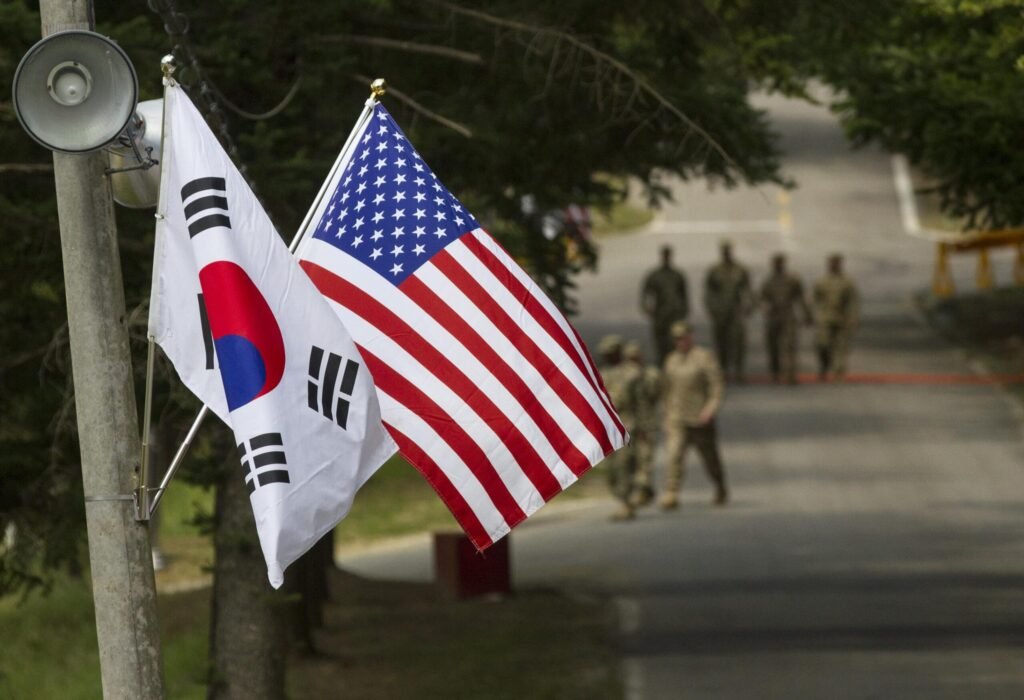
However, the article stops short of predicting a full rupture. It acknowledges that South Korea’s security reliance on the U.S. remains strong, particularly given the ongoing threat from North Korea. The analysis suggests that Seoul is likely trying to balance these competing pressures, but warns that this balancing act may become increasingly difficult as the U.S.-China rivalry intensifies.
Reactions and Implications
The Gateway Pundit piece does not cite specific quotes from South Korean officials or named experts, relying instead on a broader assessment of trends. It characterizes South Korea’s moves as a subtle shift rather than a dramatic break, but argues that the direction is noteworthy given the stakes involved.
For Trump, who has made confronting China a centerpiece of his second term, any sign of allied hesitancy could be a source of frustration. The analysis suggests that Washington may need to press Seoul more forcefully to align with its approach, or risk seeing a key regional partner adopt a more neutral—or even sympathetic—stance toward China.
As the situation evolves, all eyes will be on South Korea’s next policy moves, particularly regarding trade agreements, semiconductor export controls, and diplomatic engagements with Beijing. Whether Seoul ultimately follows Washington’s lead or carves its own path remains to be seen, but the uncertainty itself is a notable development in the ongoing geopolitical struggle.
This article is based on reporting from The Gateway Pundit, which published the original analysis under its Politics section.
Source: www.thegatewaypundit.com — https://www.thegatewaypundit.com/2026/08/as-trump-confronts-china-is-south-korea-moving/