
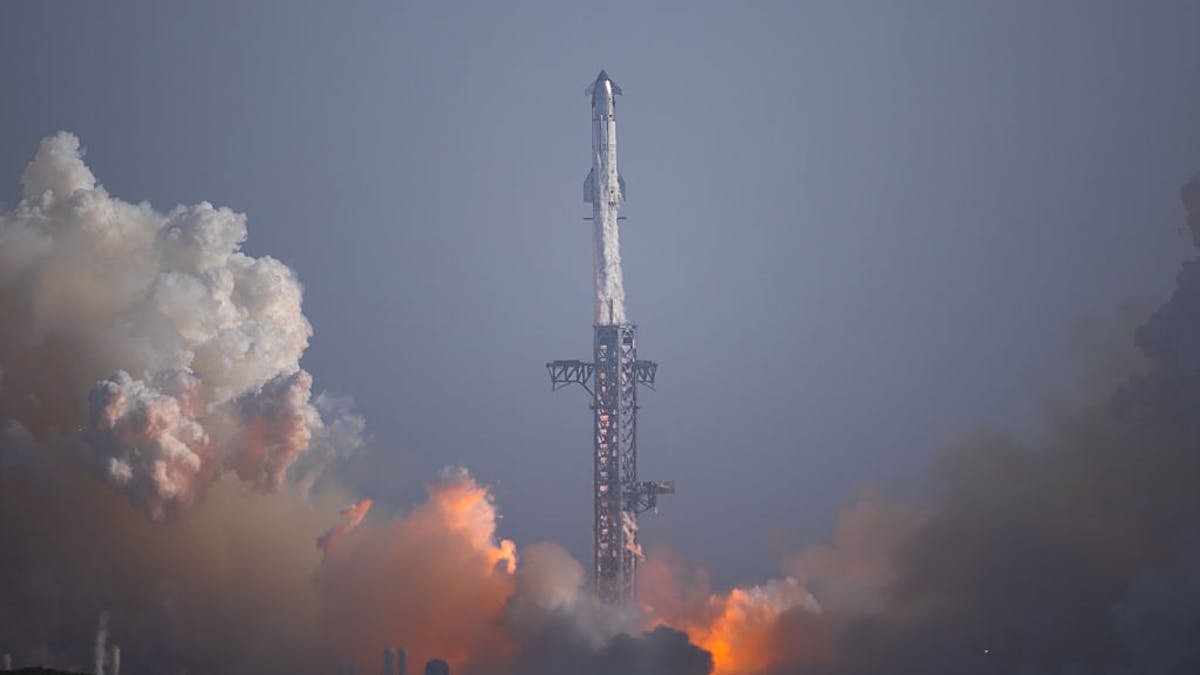
SpaceX reached a pivotal milestone in its spaceflight program when its Starship rocket completed what the company called its “softest splashdown ever” in the Indian Ocean, marking the first time the vehicle survived ocean contact with its heat shield largely intact.
Unlike previous test flights that ended in fireballs upon water impact, the July 24 mission saw the massive rocket flip into vertical landing position and gently touch down before tipping over and floating on the ocean’s surface — a stark departure from the explosive conclusions of earlier attempts.
“That is a first,” Dan Huot, communications manager for SpaceX, said during the company’s livestream. “That is the softest splashdown we have ever had with the Starship there in the Indian Ocean.”
Historic First for Heat Shield Technology
The successful landing provided SpaceX engineers with unprecedented data about the vehicle’s thermal protection system. Cameras mounted on Starship continued transmitting video after splashdown, offering detailed views of the heat shield’s condition following its fiery reentry through Earth’s atmosphere.
“This is the first time we’ve put an intact Starship in the water,” Huot explained. “This is a dream scenario for the team that’s trying to get this heat shield data.”
The heat shield’s performance represents considerable progress over recent test flights. CEO Elon Musk highlighted the advancement on social media, stating, “Latest heat shield design looks great!” The demonstration came during the second test of Starship’s V3 rocket variant.
Next Steps: Tower Catch Attempt
The landing proved so successful that Musk indicated SpaceX might attempt an even more ambitious recovery method for the next flight. The company is considering using its launch tower to catch the returning rocket rather than settling for ocean splashdown.
“Unless we discover problems after mission data review, SpaceX will attempt to catch the ship with the tower on next flight,” Musk wrote on X.
Flight 13 also marked the first mission to deploy Starlink V3 satellites. The test had been originally scheduled for July 16 but was postponed when some engines failed to start during the countdown.
Implications for NASA’s Lunar Program
The achievement carries significant weight for NASA’s Artemis III mission, which aims to return astronauts to the lunar surface. NASA has partnered with SpaceX to develop a modified version of Starship that will transport crew members from lunar orbit down to the moon’s surface.
NASA Administrator Jared Isaacman praised the successful flight, emphasizing its importance for America’s long-term presence on the moon. “Excited for what will be learned from this mission,” Isaacman wrote on X. “When Starship comes online, its capabilities will be game-changing, not least of which will be ensuring we never give up the Moon again!”
Company Milestone
The test flight represented the first mission since SpaceX completed what the company described as the largest initial public offering in history. The timing underscored the company’s confidence in the Starship program as it transitions to a publicly traded entity.
“Lucky Number 13,” Huot said following the successful splashdown. “Hell of a flight for Starship.”
The recovery team was standing by to retrieve the floating rocket, which bobbed in the Indian Ocean waters in contrast to the dramatic explosions that characterized earlier test attempts. The intact vehicle will allow engineers to conduct detailed post-flight analysis that would have been impossible with the destroyed rockets from previous missions.
SpaceX’s Starship is designed to be a fully reusable launch system, with both the rocket and its Super Heavy booster intended for multiple flights. The company envisions the vehicle eventually carrying both cargo and crew to destinations including the moon, Mars, and beyond. Each successful test brings the company closer to operational missions supporting both commercial ventures and government contracts.
Source: www.dailywire.com — https://www.dailywire.com/news/see-it-elon-musks-spacex-shocks-with-softest-splashdown-ever-of-rocket-into-ocean