
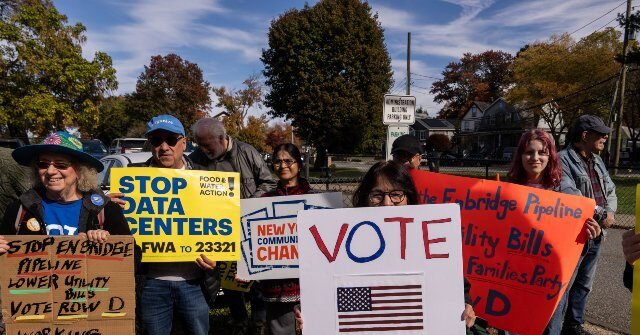
The debate over data centers has exploded into a major political flashpoint in the 2026 midterms, with political advertising on the issue swinging sharply negative across Facebook and Instagram, according to new research from the Pew Research Center.
The shift has been dramatic. At the start of the year, political ads mentioning data centers leaned positive — 42 percent were supportive in January while 31 percent were critical. By October, the picture had completely reversed: only three percent of ads clearly favored data centers, while 57 percent expressed opposition.
Pew Research Center analyzed 20,751 political ads mentioning data centers that ran on Meta’s platforms in the United States between January 1 and October 24. The tone flip came alongside substantial spending, with advertisers pouring almost $12 million into data center-related political ads in just the 90 days between July 27 and October 24.
Where the Money Is Going
The spending breakdown reveals how different political actors are approaching the issue. Roughly 61 percent of the $12 million went toward ads that did not promote specific candidates — the type typically funded by advocacy groups and issue organizations. Among those issue ads, 56 percent opposed data centers while just 13 percent supported them.
The remaining 39 percent of spending backed specific candidates. Democratic candidates dominated that slice of the pie, with 72 percent of candidate-focused ads promoting Democrats compared to 15 percent for Republicans. The rest supported independents or candidates whose party affiliation couldn’t be determined.
Interestingly, pro-data center messaging has virtually disappeared from campaign advertising, showing up in less than one percent of candidate ads. When candidates from either party do address data centers, they’re equally likely to be critical. Democrats simply talk about the issue more often.
What the Ads Are Saying
The content of these ads follows predictable battle lines. Corporate involvement in data center development emerged as the single most common theme, appearing in 30 percent of all ads analyzed. Energy use came next at 24 percent, followed by environmental effects at 17 percent and water usage at 15 percent.
But the emphasis splits sharply depending on which side is running the ad. Nearly half of anti-data center ads — 47 percent — raised concerns about corporate interests, whether from tech companies or utility providers. That’s roughly double the 22 percent rate in pro-data center messaging.
Opposition ads were also more likely to highlight water usage concerns (22 percent versus 26 percent in pro ads) and environmental effects (26 percent versus 13 percent). Tax concerns appeared at similar rates: 21 percent in anti-data center ads compared to 18 percent in supportive ones.
Energy usage and costs showed a narrower divide, with 35 percent of opposition ads mentioning the topic versus 42 percent of supportive ads.
The one theme where pro-data center advertising held a clear advantage was jobs. A quarter of supportive ads mentioned employment impact, compared to just three percent of opposition ads.
Geographic Patterns
States with competitive House, Senate, or gubernatorial races saw higher spending on data center ads. Spending also ran higher on average in states with more operational or planned data center facilities.
Pew counted an ad as targeted to a specific state if 90 percent or more of its audience was located there. The spending figures reflect the midpoint of ranges reported through Meta’s Ad Library API, rounded to the nearest $1,000.
The detailed analysis covered 13,956 ads during the 90-day window from late July through late October, providing a snapshot of how the issue is playing out in the final stretch before voters head to the polls.
The Broader AI Race
The data center advertising battle comes as major technology companies jostle for position in the artificial intelligence race, including efforts to shape potential government regulation of the technology.
The advertising trends align with predictions made earlier this year about how AI-related concerns would emerge as a political wedge issue. As data centers become essential infrastructure for AI development, they’ve attracted scrutiny over their resource consumption, environmental impact, and the concentration of technological power in the hands of a few large corporations.
The Pew findings suggest that opposition to data centers has gained political momentum throughout 2026, with advocacy groups and Democratic candidates leading the charge while supportive messaging has largely faded from the paid advertising landscape on Meta’s platforms.
Source: www.breitbart.com — https://www.breitbart.com/tech/2026/10/31/pew-research-data-centers-emerge-as-flashpoint-in-midterm-ad-spending/