

A conservative commentary published on American Thinker is raising eyebrows with its pointed critique of Western accommodation to Islamic modesty practices, questioning whether non-Muslims should be expected to modify their behavior to help Muslims avoid temptation.
Writer Eric Utter’s piece, which appeared on the opinion site, takes aim at two specific areas where he argues Muslim communities have demanded changes to public behavior: women’s dress codes and eating during Ramadan. The central thrust of his argument challenges the premise that these accommodations should be the responsibility of non-Muslim populations.
The Modesty Debate
According to Utter, the traditional Islamic justification for requiring women to wear burkas, hijabs, and niqabs centers on the argument that without such coverings, men would find women too tempting and couldn’t control themselves. The commentary explicitly questions this rationale, with Utter drawing on his own observations in the Twin Cities to challenge the underlying premise.
The writer describes encountering fully-covered Muslim women in Minneapolis-St. Paul area streets and hallways, using these anecdotal observations to dispute the notion that the garments are primarily about preventing male temptation. His skepticism extends to what he characterizes as a patronizing attitude toward both Muslim men and women implicit in such requirements.
Ramadan Restrictions in the West
The piece also addresses reported instances in parts of Europe and the United States where locals have been asked to refrain from eating in public during daylight hours throughout Ramadan. Utter frames this as another example of accommodation being requested on the grounds of self-control, arguing that the visibility of others eating makes it harder for Muslims to maintain their dawn-to-dusk fast.

The commentary connects these two issues through a common thread: the question of personal responsibility versus collective accommodation. Utter’s rhetorical question cuts to the heart of his argument: if exposure to bare arms or visible food consumption poses such severe temptation that it cannot be resisted, what does that suggest about individuals’ capacity for self-control in other public settings?
Broader Immigration Implications
While framed as a discussion about religious accommodation, the piece touches on wider debates about immigration and cultural integration. Utter’s commentary suggests that if self-control in the face of everyday temptations is genuinely this difficult, it raises questions about cultural compatibility and the wisdom of current immigration policies.
The writer explicitly states his concern about individuals he characterizes as lacking basic self-control being present in beaches, grocery stores, restaurants, and by extension, Western countries generally. This represents a more hardline position on immigration from Muslim-majority countries than is typically voiced in mainstream political discourse.
The Accommodation Question
At its core, the American Thinker piece engages with a question that has divided Western societies: to what extent should secular, pluralistic democracies accommodate religious practices that require behavioral changes from non-adherents? This debate has played out in various contexts, from workplace dress codes to public school policies to neighborhood disputes.
Utter’s approach is deliberately provocative, using blunt language and personal anecdotes to challenge what he views as excessive deference to religious sensibilities. The commentary reflects a strain of conservative thought that views such accommodations as capitulation rather than tolerance, and as evidence of cultural fragmentation rather than pluralistic harmony.
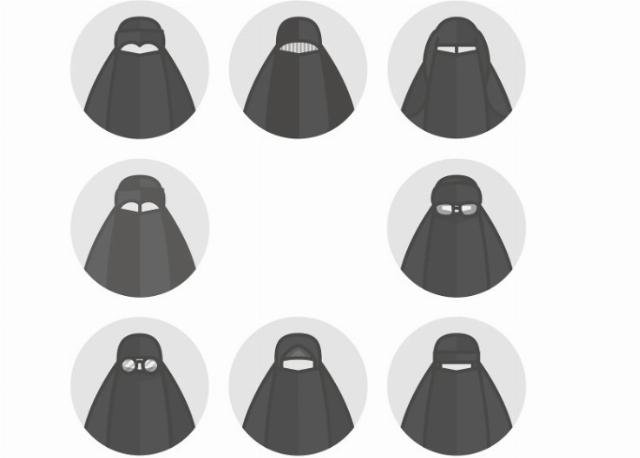
The piece arrives at a moment when European countries in particular have grappled with these issues more directly, with some nations implementing bans on face-covering veils in public spaces, while others have debated whether special accommodations during Ramadan represent reasonable religious tolerance or unreasonable demands on the broader population.
Cultural Clash or Coexistence?
The underlying tension in Utter’s commentary reflects broader anxieties about demographic change and cultural integration in Western nations. His argument essentially posits that requests for accommodation based on temptation avoidance represent an unreasonable imposition on non-Muslim populations, who should not be expected to modify their behavior to help others maintain religious observance.
Critics of such arguments typically counter that reasonable accommodation of religious practices is a hallmark of pluralistic societies, and that minor adjustments to public behavior during religious observances represent basic courtesy rather than capitulation. They might also note that many religious communities, not just Muslims, have historically requested various forms of public accommodation.
Supporters of Utter’s position, however, would likely argue that there’s a meaningful difference between passive tolerance of others’ religious practices and active modification of one’s own behavior to facilitate those practices. From this perspective, being asked not to eat in public during Ramadan crosses a line from the former to the latter.
The American Thinker piece, written in the outlet’s characteristically provocative style, ultimately frames the question as one of principle: should Western societies expect individuals to exercise personal self-control in managing their own religious obligations, or should communities collectively modify their behavior to make such observance easier? Utter’s answer is clear, even if the broader debate remains far from settled.
Source: www.americanthinker.com — https://www.americanthinker.com/blog/2026/11/is-it-our-responsibility-to-deliver-muslims-from-temptation/