
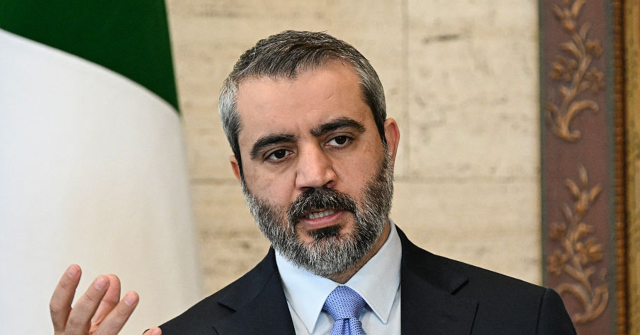
Syria’s new government is exploring membership in Saudi Arabia’s Mecca Alliance, a trilateral security partnership that promised NATO-style mutual defense but has yet to deliver meaningful protection against Iranian-backed threats, Syrian Foreign Minister Asaad al-Shaibani revealed Saturday.
Speaking at the Manama Dialogue security conference in Bahrain, Shaibani confirmed ongoing negotiations about joining the alliance while emphasizing Syria’s broader commitment to regional security regardless of formal membership status.
“Regarding Mecca pact integration, there are some negotiations on this issue and regardless of whether it is in the pact or not, or any other pact, Syria is part of the security of this region and it’ll stand by any organisation that protects the security of this area,” Shaibani stated at the conference.
The Mecca Alliance Under Pressure
The Mecca Joint Defense Agreement, signed in the Saudi holy city on August 7, 2026, established a mutual defense framework among Saudi Arabia, Turkey, and Pakistan. Under the agreement’s terms, the three nations pledged to treat an attack against any member as an attack against all — a structure deliberately echoing NATO’s collective defense principle.
That commitment has faced its first major test in recent months, and the results have been underwhelming. Since September, Iran-backed Houthi insurgents in Yemen have launched near-daily attacks on Saudi oil refineries and airports, including reported threats against Mecca itself, the very city where the defense pact was signed.
Despite these sustained attacks on their Saudi partner, Turkey and Pakistan have yet to take substantive military action in response. Turkish officials have cited the fact that their parliament has not yet ratified the agreement, though they have indicated that even after ratification, Turkey would not conduct offensive operations against the Houthis.
Syria’s Complex Regional Position
Syria’s potential entry into the alliance comes as the country operates under a revolutionary government that seized power in December 2024 by overthrowing longtime dictator Bashar Assad. The new Damascus administration has cultivated what Shaibani described as a “very special” relationship with Turkey, one of the alliance’s founding members.
According to Breitbart, Turkey has been strongly supportive of Syria’s new government, particularly because Syrian authorities have shown willingness to address Turkish concerns about armed Syrian Kurdish militias operating near their shared border.
The foreign minister’s comments in Bahrain revealed Syria’s attempt to position itself as a stabilizing force in the region. “Geography is destiny, and integration is a choice,” Shaibani declared. “We have chosen to make our territory a bridge for prosperity and the exchange of interests, and we stand as a bulwark against turning Syria into a platform for threatening neighbouring countries.”
No Syrian Troops for Yemen
While Syria expressed support for Saudi Arabia and Yemen’s legitimate government at the Manama Dialogue, Shaibani stopped short of indicating Damascus would deploy ground forces to combat the Houthis. This aligns with Syria’s denial in early October of reports claiming Saudi Arabia had requested Syrian troops for the Yemen conflict.
Instead, Shaibani devoted considerable attention to criticizing Israeli airstrikes against what Israel describes as terrorist targets within Syrian territory. “How can calls for border control and placing weapons exclusively under state control be justified while Syrian sovereignty is violated and targeted on a daily basis?” he asked, referring to the Israeli operations.
The foreign minister broadly denounced cross-border attacks during his conference remarks and expressed support for regional stability initiatives like the Mecca agreement.
Syria’s Military Readiness in Question
From Saudi Arabia’s perspective, Syria might appear an attractive defense partner. The country emerged from its prolonged civil war with significant numbers of battle-hardened fighters who gained combat experience during years of grinding conflict. Additionally, Syria’s new government harbors resentment toward Iran for its support of the Assad regime, potentially aligning Damascus’s interests with those of Saudi Arabia, which views Iran as its primary regional adversary.
However, Turkey’s Daily Sabah raised questions about Syria’s actual military capabilities for such a partnership. The outlet noted that Syria’s armed forces “remain in the process of reconstruction and integration after years of conflict,” suggesting the military may lack the “operational capacity and military coordination required for meaningful participation” in active conflicts like Yemen.
The ongoing negotiations over Syrian membership come at a critical juncture for the Mecca Alliance. The pact’s inability to mount an effective response to the Houthi campaign against Saudi Arabia has raised fundamental questions about its practical value. Adding Syria to the alliance could either strengthen the partnership with additional manpower and regional presence, or further dilute its effectiveness by bringing in another member with limited capacity to project force beyond its borders.
As regional security dynamics continue shifting in the Middle East, Syria’s potential accession to the Mecca Alliance represents another attempt to forge new partnerships in a post-Assad era — though whether those partnerships can deliver on their promises of collective security remains an open question.
Source: www.breitbart.com — https://www.breitbart.com/middle-east/2026/11/02/syria-considers-joining-saudi-arabias-mecca-alliance/