
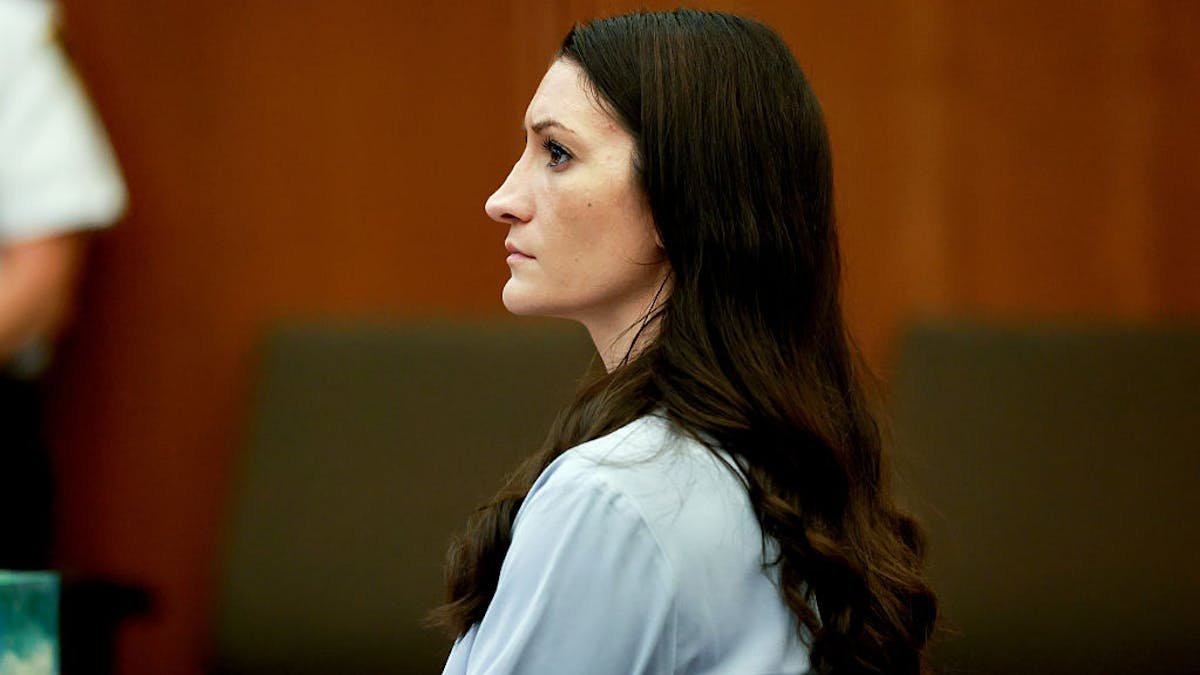
The trial of Lindsay Clancy, the Massachusetts mother who admitted to killing her three children in 2023, has sparked a wave of online conspiracy theories. TikTok sleuths and true-crime enthusiasts are pushing claims that her ex-husband, Patrick Clancy, was the real killer — despite overwhelming evidence to the contrary.
Lindsay Clancy, 34, strangled her children — Cora (5), Dawson (3), and Callan (8 months) — with exercise bands in the basement of their Duxbury home on January 24, 2023. After sending her husband out for takeout and a pharmacy run, she killed the kids, then attempted suicide by cutting her wrists and neck, overdosing, and jumping from a second-story window. She survived, paralyzed from the waist down.
The Evidence Is Clear, the Theories Are Not
Phone and video records place Patrick Clancy at a CVS during the murders. Lindsay Clancy admitted to the killings and has not contested the act. Her defense is focused on her mental state — arguing she was not criminally responsible due to severe postpartum psychosis.
Despite this, online sleuths claim Patrick framed her, pointing to his remarriage to another brunette as supposed evidence. Some have even conducted amateur “experiments” hanging from windows with dish soap to dispute the blood evidence. The theories have no basis in fact, but they’ve gained traction in certain corners of the internet.

The Real Question: Was She Crazy or Cold-Blooded?
The trial is not about who killed the children — it’s about whether Lindsay Clancy was legally responsible. If convicted of first-degree murder, she faces life without parole. If found not criminally responsible, she’ll be committed to a psychiatric facility, likely for life.
Prosecutors must prove she understood the wrongfulness of her actions. Defense lawyers have presented evidence of severe postpartum anxiety, depression, insomnia, paranoia, and evolving psychosis, possibly bipolar disorder. She was on a cocktail of at least a dozen psychiatric medications and had been hospitalized at McLean Hospital three weeks before the killings. She had told her mother and husband she was terrified, that the meds were making things worse, and that she was having thoughts of harming the children.

Online Empathy Gone Wrong
The internet’s reaction has been widely criticized as misguided. A GoFundMe for Lindsay Clancy’s parents has raised nearly a million dollars, while the same crowd often villainizes Patrick Clancy. Critics see this as inverting the moral order — making the perpetrator the underdog and the children afterthoughts.
Some women have publicly said they “see themselves in Lindsay” and were “one step away” from the same act. Commentators have condemned such statements, noting that equating common postpartum depression with rare postpartum psychosis (about 1 in 1,000 births) is dangerous. “If you are one step away from strangling your toddlers because a voice told you to, get help immediately,” one writer said.
The Bigger Picture
The Clancy case has also drawn attention to broader cultural issues, with some noting a selective empathy that treats born children as tragic victims while being indifferent to higher numbers of aborted children. The trial continues, and the jury will have to decide whether Lindsay Clancy’s psychosis was so complete that she was not responsible for her actions.
But for many, the internet’s obsession with conspiracy theories is a distraction from the real tragedy — three innocent children are dead, and a deeply mentally ill mother is on trial. As one outlet put it, “Mental illness may explain it. It does not erase it.”
Source: www.dailywire.com — https://www.dailywire.com/news/the-wine-mom-delusion-of-turning-real-murder-into-internet-content