
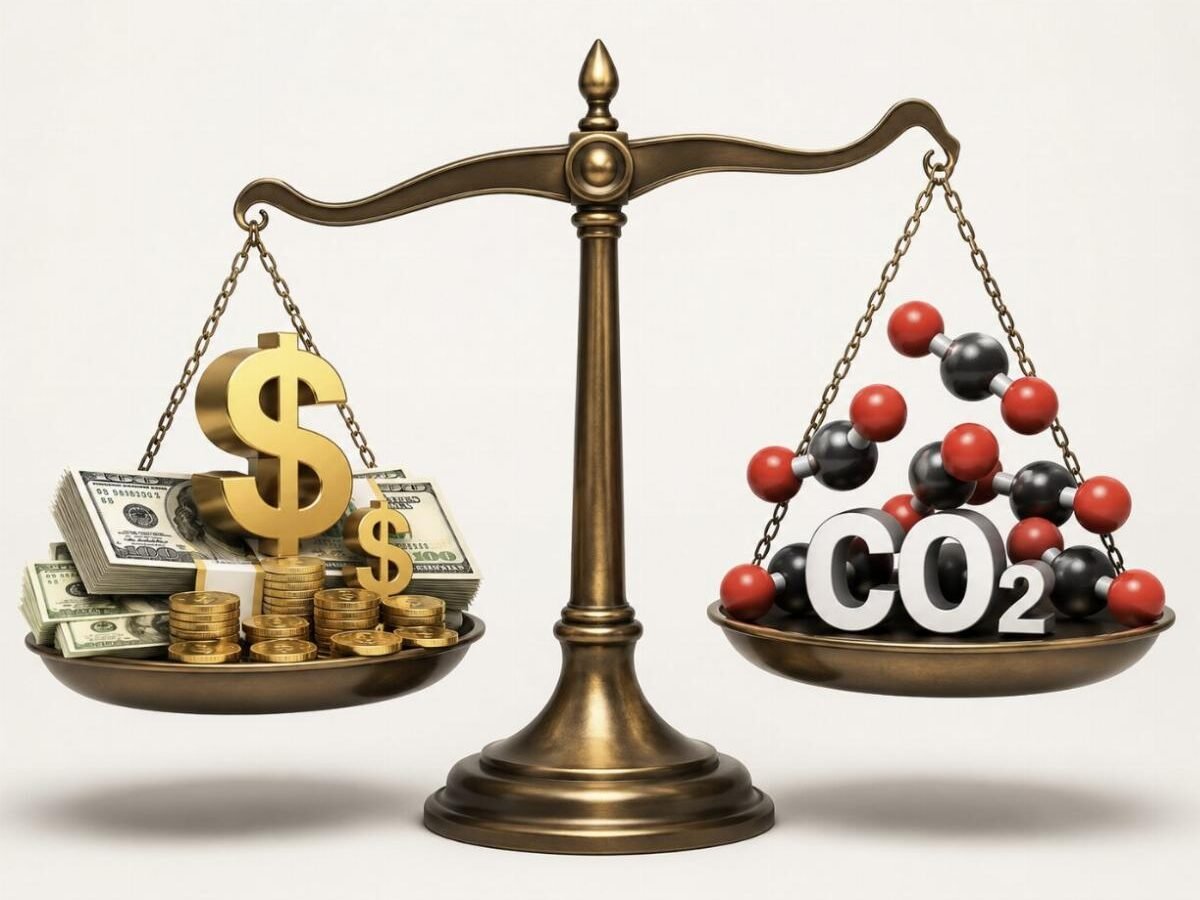
For all the talk about precise emissions targets and rigorous climate modeling, one conservative commentator argues that net zero advocates are surprisingly sloppy when it comes to the basics of accounting.
Writing for American Thinker, Bill Ponton makes a blunt case: when you actually compare the numbers, renewable-heavy electricity systems cost more and emit more than their proponents admit. His piece, published August 21, 2026, takes aim at what he sees as a blind spot in the clean energy movement.
Ponton’s central claim is straightforward. He says it is not difficult to compare the cost of electricity generation on a grid that includes wind, solar, and thermal power against the same grid running on thermal power alone. The key metrics — power capacity measured in gigawatts, annual generation in terawatt-hours, capital costs per gigawatt, and fuel costs — are all publicly known for different regions from Texas to the United Kingdom.
Yet, he says, he has yet to find a single case where a mixed system comes out cheaper than a thermal-only one. “Net zero adherents disagree with me on this rather straightforward point,” he writes, acknowledging the divide.
Carbon accounting’s missing pieces
If fiscal accounting is contested, Ponton suggests the carbon side of the ledger is even more incomplete. Electric utilities committed to net zero often boast about how much CO2 they have avoided by using renewables, pointing to deferred emissions from reduced fossil fuel consumption at their thermal plants.
But, Ponton argues, they ignore something significant: the emissions associated with building, installing, maintaining, and eventually retiring wind turbines, solar panels, batteries, and all the ancillary equipment those systems require.
He understands why utilities might be reluctant to open that conversation. “These activities are energy intensive and consume much fossil fuel,” he writes. The calculation is also genuinely hard — it is far easier to measure fuel reductions at a plant than to trace every ton of CO2 released during mining, refining, manufacturing, and logistics.
Yet Ponton insists there is a way to get a sense of the relative magnitude. And his method is disarmingly simple.
What prices reveal about emissions
His argument: prices are a proxy for energy intensity. Embedded in the cost of any physical product is a measure of how much energy went into making it — and therefore how much CO2 was emitted.
“In comparing the total life cycle cost of renewables operating in tandem with thermal plant against a thermal plant running solo with added fuel consumption, one can infer the relative energy intensity and CO2 emissivity,” he writes.
In other words, if a renewable-heavy system costs more over its full lifespan, that higher price reflects — at least in part — higher energy consumption somewhere along the chain. And higher energy consumption means higher emissions.
“In summary, the price of a system is a measure of how much CO2 it emits over its lifetime relative to another system priced differently,” he concludes. “From this perspective, renewables fail in terms of both fiscal and carbon accounting.”
A contrast of physical and digital
Ponton is careful to distinguish what he is talking about. The massive physical infrastructure of renewable power — the turbines, the panels, the batteries — requires industrial processes that are extraordinarily energy intensive.
“What I am describing are energy-intensive physical processes, not someone just developing software with fuel consumption limited to a can of coke and a bag of potato chips,” he quips, contrasting industrial reality with the work of a software developer who can generate a product with relatively trivial energy inputs.
The construction of large physical machines, whether they produce renewable energy or not, consumes enormous amounts of energy — and emits correspondingly large amounts of CO2 long before they ever start generating a single kilowatt-hour.
A contested debate, not settled science
It is worth noting that Ponton’s claims sit at the center of a long-running and contested policy debate. Lifecycle assessments of renewable technologies have been conducted by scientists across the ideological spectrum, and findings vary widely depending on assumptions about manufacturing location, grid mix, and disposal methods. Some studies suggest that while renewables do have embedded emissions, their lifetime emissions are still far lower than fossil fuels when comparing equivalent energy output.
Ponton does not engage with that scholarship directly. Instead, he leans on the pricing argument as a kind of revealed truth — a market-based shortcut that, in his view, cuts through the complexity that net zero advocates prefer to keep cloudy.
Whether or not readers find his logic persuasive, the piece highlights a recurring tension in the energy transition: the difference between headline emissions reductions and the full lifecycle cost — both financial and environmental — of building a new energy system.
For Ponton, the conclusion is clear. But it is safe to say the debate over how to account for renewable energy’s true costs — and who does the accounting — is far from settled.
Source: www.americanthinker.com — https://www.americanthinker.com/blog/2026/08/carbon-accounting/