
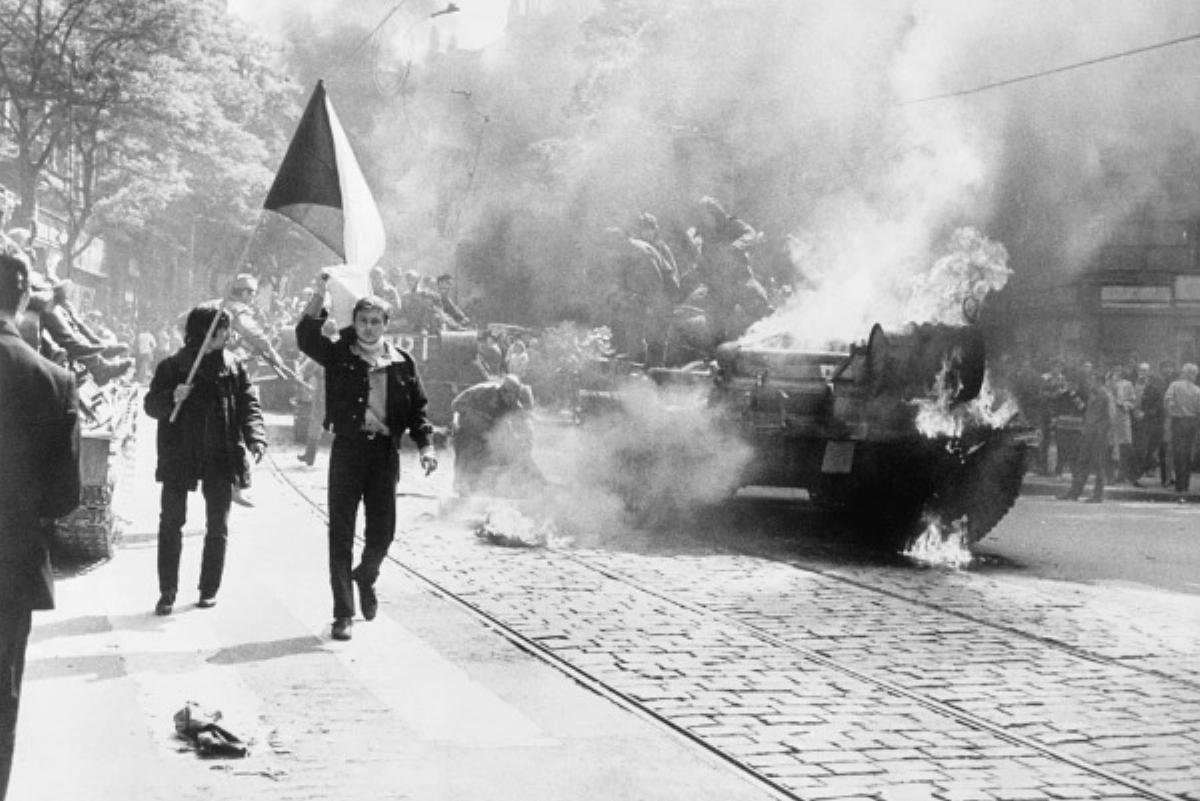
Fifty-eight years ago this week, the world watched as the Soviet Union once again proved that its tolerance for freedom was a myth. On the night of August 20, 1968, approximately 200,000 Warsaw Pact troops and 5,000 tanks invaded Czechoslovakia, crushing what became known as the Prague Spring—a brief, hopeful period of liberalization in the communist state. The invasion was a stark reminder to an increasingly complacent West that the Soviet Union was, in the words of many at the time, a brutal totalitarian regime.
For those who lived through the Cold War, the images of Soviet tanks rolling through the streets of Prague are seared into memory. For younger generations, however, this history is often a footnote—if it is taught at all. As Silvio Canto, Jr. writes in a recent reflection for American Thinker, most people under 40 have no emotional connection to the events of August 1968. They’ve likely never heard of the Berlin Wall, the 1956 Hungarian Revolution, or the atrocities of communism. Prague is now the capital of the Czech Republic, and Slovakia is a separate nation. It all seems like a time so long ago.
Canto, who grew up in a Cuban home, recalls that his parents constantly spoke of communism as “la gran mentira”—the big lie—and warned that it’s easy to forget unless you are reminded often. His mother, he writes, would often speak about her cousin, who was a political prisoner. This personal connection underscores a broader truth: the history of communism is not abstract; it is a story of real people who suffered under its oppression.
The Road to Prague
The seeds of the Prague Spring were sown decades earlier. In 1948, pro-Soviet communists seized control of Czechoslovakia’s democratic government. Under Soviet leader Joseph Stalin, the country was run as a Stalinist state, with no room for dissent or reform. It wasn’t until 1964 that a gradual trend toward liberalization began, but for many Czechoslovaks, modest economic reforms were not enough. By 1966, students and intellectuals were agitating for changes to education and an end to censorship.
First Secretary Antonin Novotny faced mounting opposition, not only from reformers but also from Slovak leaders who accused the central government of being dominated by Czechs. Among those critics were two men who would later play pivotal roles: Alexander Dubcek and Gustav Husak. In January 1968, Novotny was replaced as first secretary by Dubcek, who was unanimously elected by the Czechoslovakian Central Committee. Dubcek, seeking to solidify his power base, appealed to the public to voice support for his proposed reforms. The response was overwhelming—Czech and Slovak reformers took over the communist leadership, and the Prague Spring began.
The reforms were moderate by Western standards—greater freedom of speech, relaxed censorship, and economic decentralization—but they were a direct challenge to the Soviet model of communism. For Soviet leaders, the idea that a communist state could liberalize was a threat to their own authority. They watched with growing alarm as Czechoslovakia moved toward what they saw as a counter-revolutionary situation.
The Invasion and Aftermath
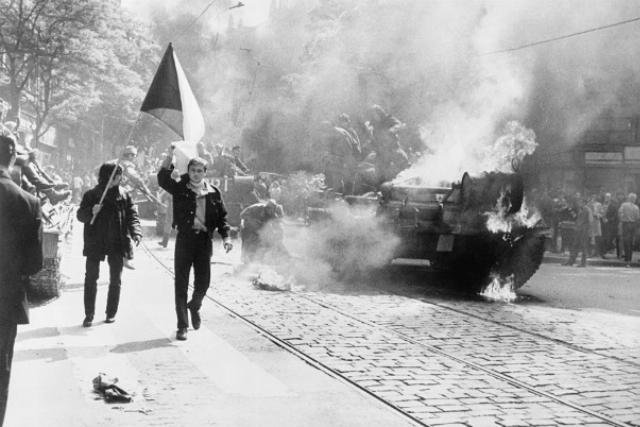
On the night of August 20, 1968, the Soviet answer came. Two hundred thousand troops and five thousand tanks rolled into Czechoslovakia, putting an end to the Prague Spring. Czechoslovaks protested with public demonstrations and other non-violent tactics, but they were no match for Soviet military might. The liberal reforms were repealed, and ‘normalization’ began under Dubcek’s successor, Gustav Husak. The brief window of freedom closed, and Czechoslovakia returned to the fold of hardline communist rule.
Canto writes that the invasion was a dark day for freedom. Like the Hungarians in 1956, the people of Czechoslovakia were given a taste of Soviet ‘tolerance’—and they paid a heavy price. For those watching from the West, it was a moment of disillusionment and sorrow. The Prague Spring had offered a glimmer of hope that communism could reform itself, but the Soviet tanks crushed that hope in a single night.
Even Fidel Castro, Cuba’s communist dictator, defended the invasion, claiming that Czechoslovakia was “heading toward a counter-revolutionary situation, toward capitalism and into the arms of imperialism.” For Canto, who grew up under the shadow of Castro’s regime, this was a particularly painful moment. It was a stark reminder that communism, in all its forms, was fundamentally hostile to freedom.
Why We Must Remember
The Soviet Union and the Warsaw Pact are now history, relics of a bygone era. But the lessons of August 1968 remain as relevant as ever. Canto argues that we must remember the many ugly chapters of communism, not just the Prague Spring, but the Hungarian Revolution, the Berlin Wall, and the countless other atrocities committed in the name of the people. Forgetting history, he warns, is a dangerous thing.
Today, as we reflect on the events of August 1968, we remember the brave Czechs and Slovaks who stood up to Soviet tanks with nothing but their courage and their hope for a better future. We remember all the victims of communism—those who were imprisoned, tortured, or killed for daring to dream of freedom. And we owe it to them to ensure that their stories are never forgotten.
In a world where the memories of communism are fading, and where younger generations may never know the fear and hope of the Cold War, it is more important than ever to keep these stories alive. As Canto writes, “We remember today all the people who stood up to Soviet tanks in Prague. And we remember more victims of communism.”
This article is based on a reflection by Silvio Canto, Jr., published on American Thinker. That original piece is a personal and historical remembrance, and this analysis aims to preserve its message for a wider audience.
Source: www.americanthinker.com — https://www.americanthinker.com/blog/2026/08/august-1968-and-the-history-of-communism/