
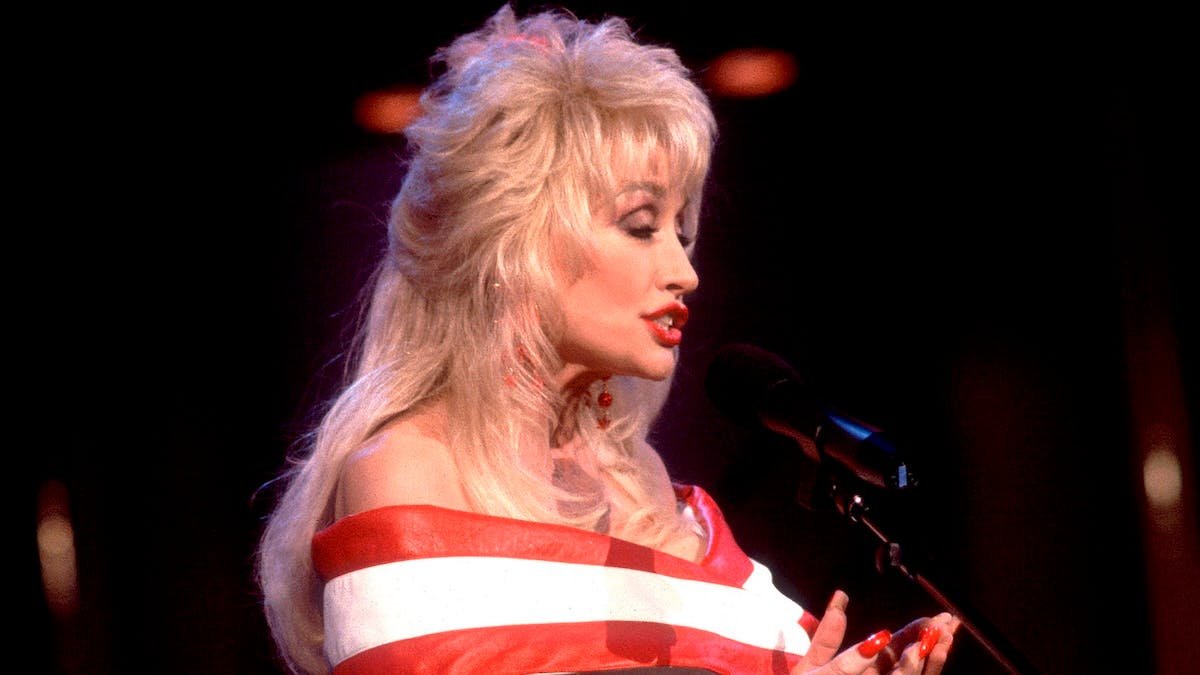
The death of Dolly Parton at age 80 has triggered an outpouring of grief that transcends the usual boundaries of politics, celebrity, and culture. According to The Daily Wire, the country music icon—who died in 2026—has become the subject of thousands of eulogies and epitaphs, with admirers ranging from leftist icons like Jane Fonda to the deeply conservative residents of her native Appalachian region.
Parton, born in 1946 in Sevier County, Tennessee, rose from a one-room cabin without electricity to become one of the most beloved figures in American entertainment. Her life story—from illiterate sharecropper father and a mother who had 12 children by age 35, to global stardom—has resonated with Americans across the political spectrum, according to The Daily Wire essay by Miles Smith IV, an associate professor of history at Hillsdale College.
What made Parton particularly unique, the essay argues, was her deliberate avoidance of partisan politics. At a time when celebrities are increasingly expected to take sides, Parton remained refreshingly apolitical, even when it was popular or commonplace to be otherwise. She maintained friendships across ideological lines, serving as a maternal figure to the deep red denizens of her home region while also being close to noted leftist figures.
From Poverty to Icon
Parton’s early life was marked by a level of poverty that would seem rustic even to those born a century earlier. Born at home, not in a hospital, her father could not afford to pay the missionary doctor who delivered her, instead offering a sack of cornmeal. The family’s circumstances were so dire that even the government-sponsored prosperity of the Tennessee Valley Authority did not lift them out of poverty.
Despite—or perhaps because of—these humble beginnings, Parton developed a fierce commitment to the betterment of her people. The Daily Wire essay compares her to the Roman general Fabius, who was underestimated by those who saw only his superficial traits, but revealed an inexorable firmness of purpose to those who looked deeper. Like Fabius, Parton chose her battlegrounds carefully, focusing on entertainment and literacy rather than open-field political or social battles.
A Legacy Beyond Music
The numbers tell a striking story of Parton’s impact on her home region. Dollywood, her theme park, employs over 20,000 people across East Tennessee and generates nearly two billion dollars annually for the region. Her presence is credited with driving tourism in Pigeon Forge, Gatlinburg, and Sevierville, transforming what was once an impoverished area into a economic powerhouse.

Beyond the economic impact, Parton’s charitable foundations have funded cutting-edge medical research and provided disaster relief. Her literacy programs have touched millions of children across the country. All of this was accomplished while she was also one of the most important singer-songwriters of the last century.
Parton’s intelligence, the essay argues, was her true superpower. Behind the rhinestones, the syrupy flirtation, and the carefully cultivated persona of a country star, was a woman who was far smarter than many gave her credit for. This intelligence allowed her to navigate the entertainment industry and the complex social landscape of America without ever losing her connection to her roots.
A Unifying Figure in a Divided Era
The essay suggests that Parton embodied something Americans desperately wanted to see: an America they could love. Drawing on Pericles’s admonition to Athenians to fix their eyes on the greatness of their city, the essay posits that Parton represented a vision of America that was genuinely great.

Her ability to remain beloved across the political divide, despite originating from a background that modern America might have been expected to disdain—a poor, southern, uneducated hillbilly—is presented as evidence of her extraordinary appeal. The outpouring of grief following her death, the essay argues, resembles the passions reserved for classical heroes and statesmen rather than those typically given to pop stars.
As the tributes continue, Parton’s legacy appears secure. She leaves behind not just a catalog of beloved songs, but a region transformed by her efforts, and a nation united in mourning for a figure who managed to transcend the divisions that have come to define American public life.
In the end, the essay suggests, Parton’s greatest achievement may have been showing Americans a version of themselves they could be proud of. In a time of deep political and cultural division, she offered a model of American identity that was rooted in tradition, open to all, and focused on lifting others up.
Source: www.dailywire.com — https://www.dailywire.com/news/how-dolly-parton-united-a-divided-nation