
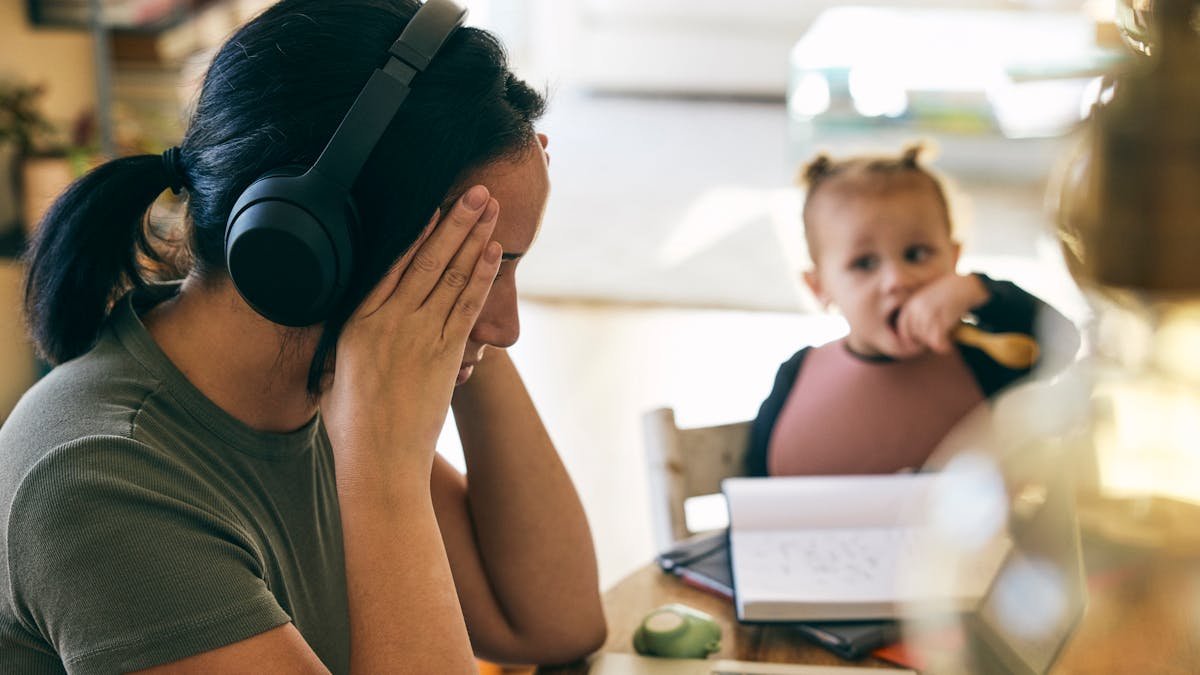
The waiting room at a pediatric psychiatrist’s office is the last place Cassie Blakely expected an epiphany about her own brain. But when her two daughters began the process of being evaluated for attention deficit hyperactivity disorder (ADHD), something clicked—not just about them, but about herself.
“I realized through them … watching both of my daughters struggle kind of felt like my own childhood was being repeated in front of me,” Blakely, who was diagnosed at age 37, told The New York Post.
Blakely’s story is part of a wider phenomenon: more and more mothers are getting ADHD diagnoses right alongside their children, often for the first time in their lives. The number of adults diagnosed with ADHD in the U.S. has nearly doubled from 2018 to 2023, topping 15 million, according to recent data.

A generation of missed diagnoses
Many of these newly diagnosed adults grew up in the 1980s and 1990s—decades when the condition was far less recognized, especially among girls and women. In the 1980s, roughly one in 20 children was diagnosed with ADHD. Today, that figure is closer to one in nine.
Experts point to a mix of factors driving the rise in pediatric diagnoses: greater awareness of the condition, improved diagnostic tools, and a broader understanding of how symptoms can manifest. But for the generation now hitting middle age, that awareness arrived decades too late.
The classic ADHD patient of the 1980s was a boy—typically one who was disruptive enough to land in the principal’s office. Girls, by contrast, often present with what’s called inattentive ADHD. Instead of acting out, they might drift off in class, lose focus during lectures, or seem “spacey.” Rather than being sent to see a specialist, they were often written off with labels like “lazy” or “daydreamer.”

“Everyone said she’s so smart, but she just doesn’t apply herself,” is a refrain that many women diagnosed later in life recall hearing. The underlying issue—executive dysfunction—was rarely recognized as a medical concern. Girls could understand exactly how to complete a task but felt paralyzed when it came to starting it or pushing through to the end.
A different parenting landscape
Part of the reason these signs were missed, experts say, is that parenting culture in the 1980s and 1990s was very different. The Baby Boomer parents of that era had been raised by Depression- and Dust Bowl-era survivors who preached toughness. “Tough it out” was the unspoken motto, and it was passed down to the next generation.
Inattentiveness in a child was often treated as a character flaw rather than a symptom. Physical restlessness might be chalked up to a lack of discipline. And because children back then didn’t have the constant digital stimulation of today’s smartphones and tablets, they had more room to mask their symptoms—either by becoming perfectionists or by procrastinating until an adrenaline surge kicked in.

“A lot of us became master procrastinators,” one newly diagnosed mother told the Post. “You learn to work under pressure, and you think that’s just who you are.”
The relief of a late diagnosis
For proponents of late diagnosis, the benefit is simple: answers. After years of being told they weren’t trying hard enough, many adults can finally understand why their brains operated differently.
“It’s a huge relief,” Blakely said. “You go through your whole life thinking you’re broken, and then you find out you’re not—your brain is just wired differently.”
That moment of realization—often triggered by watching a child go through the diagnostic process—is becoming a familiar one. As more kids get evaluated for ADHD, more parents are seeing their own childhoods in the assessment forms and symptom checklists.
The trend raises a question: Could the current wave of both child and adult diagnoses be a correction for decades of underdiagnosis, especially in women? Many experts believe so, pointing out that ADHD in girls was historically overlooked because it didn’t fit the disruptive stereotype.
Whatever the cause, the effect is clear. More mothers are getting the help they need, and they’re doing so because they finally have a word for the struggle they’ve carried since childhood.
Source: www.dailywire.com — https://www.dailywire.com/news/whats-with-all-the-moms-getting-diagnosed-with-adhd