
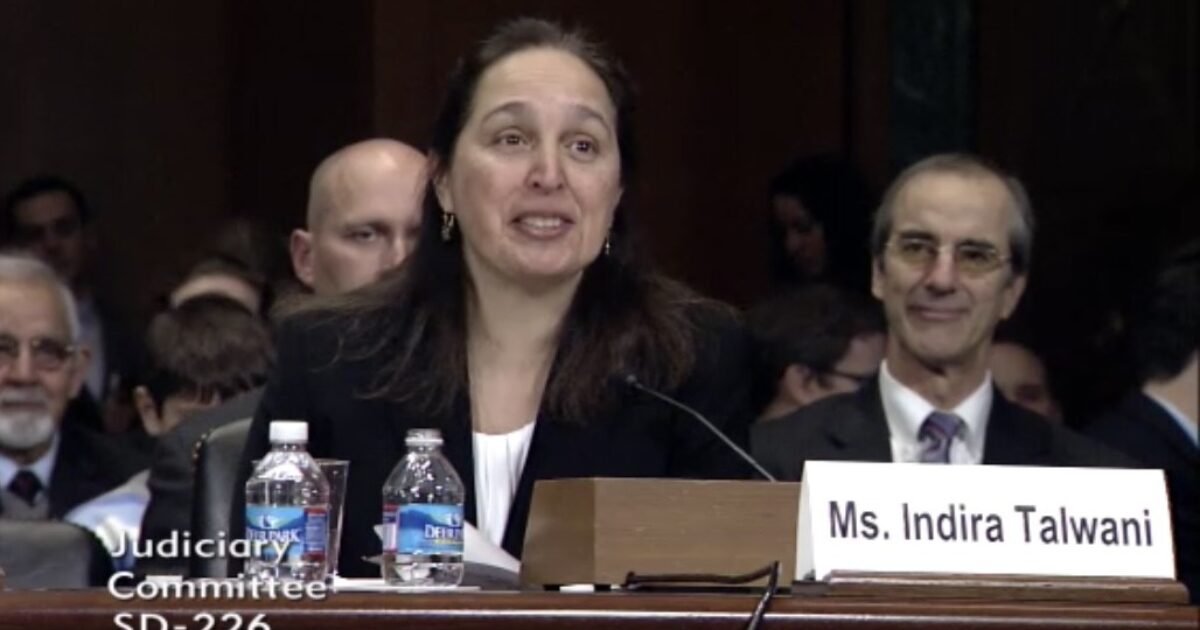
A federal judge has lifted a nationwide injunction that blocked the implementation of new mail-in ballot security measures ordered by the Trump administration, a move that comes just days after the Supreme Court signaled disapproval of similar judicial action.
U.S. District Judge Indira Talwani, an Obama appointee, issued a nine-page order on Wednesday reversing her previous freeze on the U.S. Postal Service’s final rule for handling mail-in ballots in federal elections. The decision follows a Supreme Court ruling on Monday that stayed a related injunction in a separate case brought by Democratic state attorneys general.
According to reporting from The Gateway Pundit, Talwani acknowledged that the plaintiffs—including the League of Women Voters—are now “not likely to prevail as to ripeness” in light of the Supreme Court’s decision in Trump v. California. She said the plaintiffs would need to rewrite their complaint to reflect that the Postal Service had issued a final rule.
The judge did not appear to step back willingly. Reports indicate she described the Supreme Court’s decision as having “compelled” her to lift the injunction, even as she maintained that the president’s directive could cause “chaos.”
The underlying dispute centers on Executive Order 14399, which President Trump signed on March 31. Titled “Ensuring Citizenship Verification and Integrity in Federal Elections,” the order directs federal agencies to ensure that mail-in ballots are not sent to individuals whose citizenship and identity have not been verified against federal records.
The Postal Service subsequently issued a final rule, “Ballot Mail for Federal Elections,” which requires states to use approved envelope standards and to feed mail-in ballots through a Federal Ballot Mail Portal if they want to use the U.S. mail to transport ballots. Ballots that do not meet the standards can be rejected and returned to election officials for correction. The agency says the measures are intended to improve tracking, reduce fraud, and ensure ballots reach the correct eligible voters.
Opponents, including the League of Women Voters, the American Civil Liberties Union, and more than two dozen Democratic attorneys general, have argued that the order and the resulting rule would suppress voting and create confusion.
Talwani’s initial injunction, issued two months ago, blocked the Postal Service from implementing the rule nationwide. But on Monday, the Supreme Court, in a 6-3 decision, stayed a separate injunction she had issued in a case brought by blue-state attorneys general, finding that those states had sued too early and that the freeze was causing harm to the executive branch.
In the days following the Supreme Court’s ruling, Talwani had accused the administration of “feigned complete compliance” with her order, alleging that the Postal Service had violated her injunction by finishing the rulemaking process that the Supreme Court had allowed to proceed. She imposed no new remedy beyond a written admonishment, according to reporting from The Gateway Pundit.
On Wednesday, however, she lifted her block entirely, conceding that the legal landscape had shifted. The Justice Department had asked her to reconsider her decision in light of the Supreme Court’s ruling.
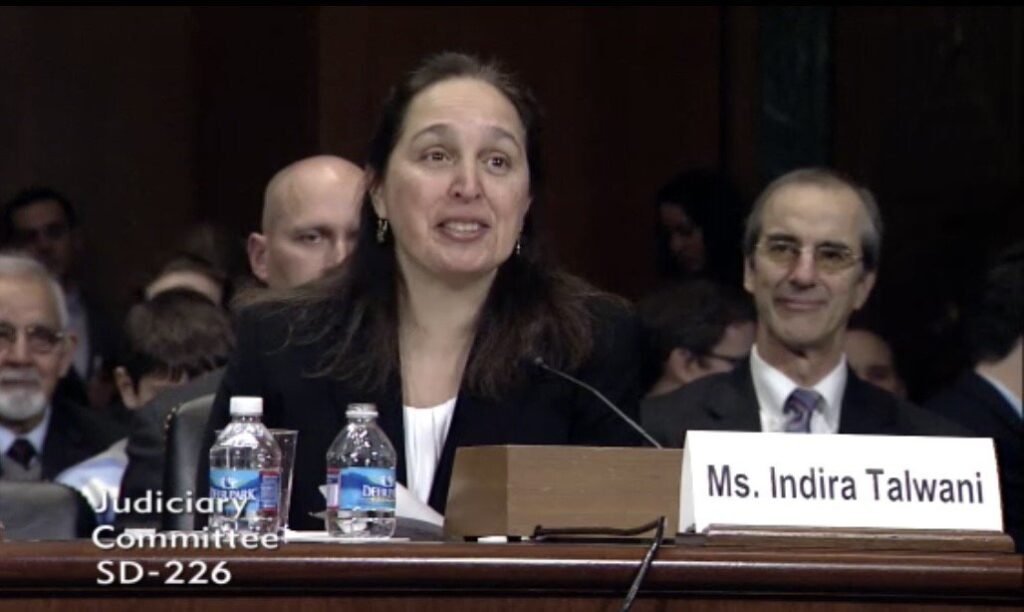
The lifted injunction means that the Postal Service’s final rule can now go into effect, and the Department of Homeland Security can proceed with compiling citizenship verification lists as directed by the executive order.
The executive order also empowers the U.S. Attorney General to prioritize cases against officials who distribute federal ballots to individuals who are not eligible to vote, a provision that has drawn sharp criticism from voting rights advocates.
The Trump administration and its supporters have framed the measures as common-sense safeguards. In the words of The Gateway Pundit’s reporting, the federal government “should not be hauling ballots across the country to names that have never been checked against federal citizenship and identity records.”
Critics, meanwhile, argue that the order and the rule are unnecessary and could disenfranchise voters, particularly in states that rely heavily on mail-in voting.
The legal battle is likely to continue, with plaintiffs potentially filing amended complaints to address the ripeness concerns raised by the Supreme Court. But for now, the immediate effect of Wednesday’s order is that the nationwide injunction is gone, and the Postal Service’s new rules are set to take effect for the 2026 elections.
The Supreme Court’s Monday ruling in Trump v. California was a significant setback for opponents of the executive order. The Court found that the states challenging the order had failed to demonstrate that they were harmed by it at this stage, and that the injunction imposed by Talwani was causing real harm to the executive branch.
Legal experts say the Court’s reasoning likely applies equally to the League of Women Voters case, which is why Talwani felt compelled to lift her injunction. Even so, her own words suggest she remains skeptical of the administration’s motives.
“She didn’t do it happily,” The Gateway Pundit reported, noting that her order still contained language critical of the president’s election-integrity directive.
The dispute over mail-in ballot rules is part of a broader partisan fight over election administration in the lead-up to the 2026 midterm elections. Democrats have increasingly relied on mail-in voting, while Republicans have pushed for stricter verification measures, arguing that they are necessary to protect the integrity of federal elections.
For now, the Supreme Court has spoken, and the lower courts are falling in line—at least for the moment.
Source: www.thegatewaypundit.com — https://www.thegatewaypundit.com/2026/08/breaking-obama-judge-indira-talwani-forced-lift-nationwide/