
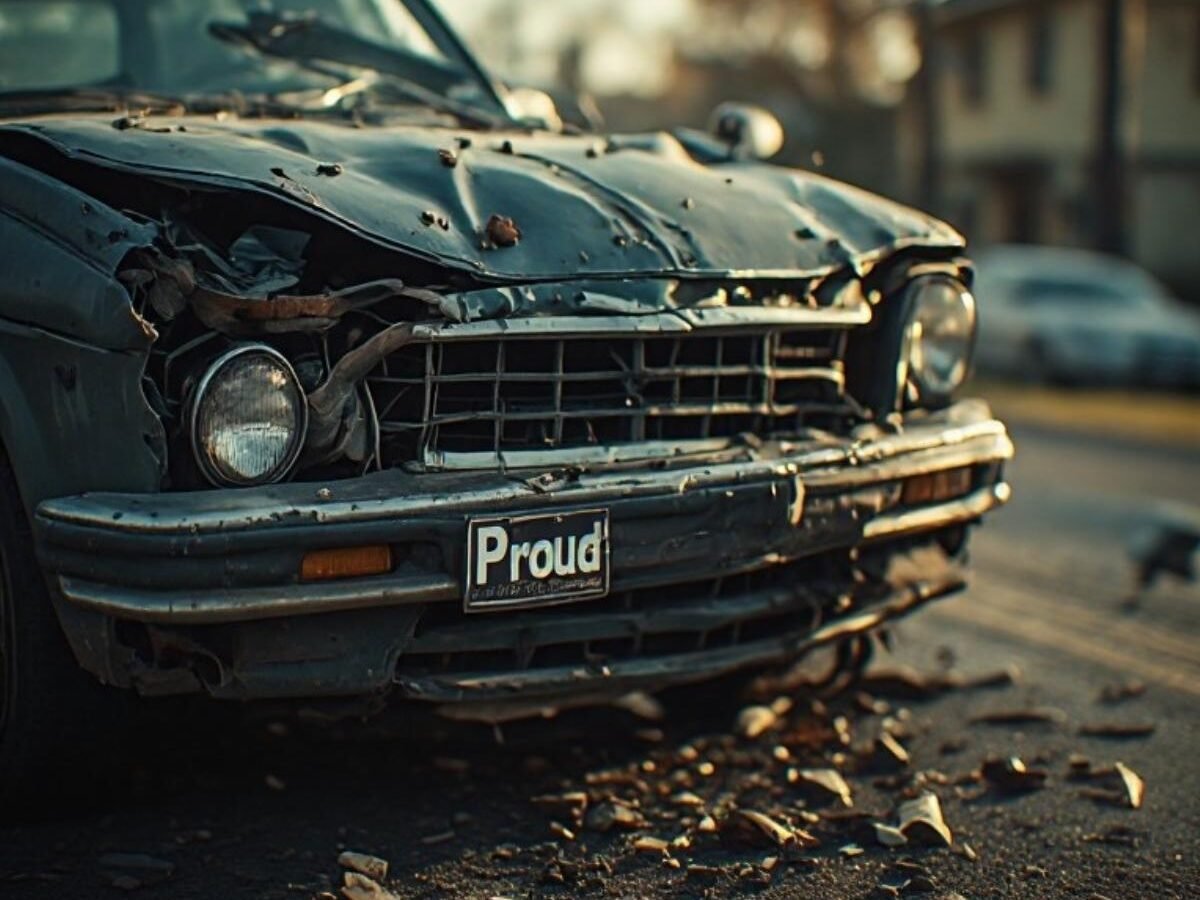
In the summer of 1968, Paul O’Brien was a 10-year-old American boy watching the Olympics, thrilled that Tommie Smith and John Carlos had swept gold and bronze in the men’s 200-meter sprint. But the moment that has endured, he recalls in a new essay for American Thinker, was not the athletic feat but the Black Power salute on the podium — and the exchange that followed when Howard Cosell asked Smith if he was proud to be an American. Smith replied that he was proud to be a black American. Both the question and the answer, O’Brien writes, bothered him.
Now 68, O’Brien, a retired California lawyer living in Eagle, Idaho, uses that memory as the launching point for a deeply personal meditation on the nature of pride — a word he argues has been hollowed out and politicized in American culture since the 1960s. The essay, titled “Because Pride Goeth Before the Fall,” is less a polemic than a confession: a lifetime of wrestling with what it means to be proud of oneself, one’s country, and one’s tribe, and whether any of it makes sense.
The Origins of a Confusion
O’Brien traces his own confusion back to early childhood, when pride was a simple thing. Learning to use the toilet, he asked his parents, “Are you proud of me?” The answer was always yes, and the pride he felt was genuine — if a bit scatological. Later, his parents refined the lesson: it was fine to be proud of his big brother when he was elected student body president, and admirable to be proud of his athletic sister on the softball field. But neither sibling should express pride in themselves for those accomplishments.
By first grade, O’Brien was a thoroughly confused five-year-old. He was big for his age and good at tetherball, and one night he bragged about his schoolyard exploits at the dinner table. His big brother — six-foot-two and in college by then — led him to the backyard tetherball set for a lesson in humility that was, in retrospect, more humiliation. “Unless you’re the future King David,” O’Brien writes, “it’s pretty easy to get over yourself when you face an opponent who’s two feet taller.”
Superficial Pride, From Trojans to Bumper Stickers
In his suburban public high school in the 1970s, O’Brien scratched his head at the pre-game rallies where classmates proclaimed they were proud to be Trojans — and his class was particularly proud to be “The Spirit of ’76.” In college, a dear friend had a “Proud to Be Danish” bumper sticker, which he would have confronted her over if he hadn’t been soft on her. A local car wash sold similar stickers for nearly every nationality imaginable.

Years later, after 9/11, “Proud American” became a popular message on highways across the country. Caught up in the protective, aggressive feelings of the day, O’Brien says he looked on those drivers genially as fellow travelers. But he never bought the sticker.
The pattern, as he describes it, is a culture that has increasingly insisted since the 1960s that one be proud of “this or that superficial quality or demographic label.” Pride in achievement — earned, personal, tied to character — has been replaced by pride in identity: race, nationality, sexuality, ethnicity. The former, he argues, has meaning. The latter is mostly circumstance.
A Father’s Lesson on Character
O’Brien’s own son, now 35, graduated with honors from UCLA and worked as a model in Los Angeles, New York, and Singapore. He was, by his father’s accounting, born with intelligence and good looks. O’Brien says he frequently told his son he was proud of him — but made clear it wasn’t because of his native intellect or physical attractiveness. “You had absolutely nothing to do with those things,” he’d remind him. “It’s your character that counts.”
That distinction — between what we earn and what we inherit — is the crux of his argument. It’s why Cosell’s question to Smith bothered him all those years ago. To be glad to be an American? We should be giddy, O’Brien writes. Fortunate? Blessed beyond measure. Grateful? Tearfully so. Love America? Zealously. But proud? “It sounds somehow impertinent, but I am proud of our founders,” he writes. “I am proud of countless American heroes, military, civic, and some unsung. But I had absolutely nothing to do with the circumstances or geography of my birth, so no.”
He extends the same grace to immigrants. Even those who worked like dogs for their good fortune, he writes, had nothing to do with creating the system — the “miraculously-crafted interweaving of federalism and separation of powers” that recognizes inherent rights cannot be withheld by a government that did not create them. In that, native and immigrant are co-heirs, beneficiaries of a trust that has now lasted a quarter of a millennium.

Greenwood, Pride Flags, and a Saloon Owner’s Folly
O’Brien’s misgivings were reawakened recently upon hearing Lee Greenwood’s “Proud to Be an American” — a song that always assures him he’s with kindred spirits but leaves him hollow. His suggested alternative: “Humbled to Be an American.” The meter is wrong, he admits, but the sentiment is more in keeping with the spirit of 1776.
The essay then turns to today’s conversation, which is lousy with pride: pride flags, pride month, pride marches, pride parades, a Pride Library, pride cable channels. Except for the Texas Rangers, every Major League Baseball team has a pride night each summer. A certain subculture, he notes dryly, is absolutely lousy with pride.
In response, an entrepreneur in O’Brien’s town, Mark Fitzpatrick, tried to fight fire with fire. A couple of Junes ago, the Old State Street Saloon began a tongue-in-cheek “Heterosexual Awesomeness Month.” O’Brien, who might not have patronized the establishment had Fitzpatrick used the word “pride” instead of “awesomeness,” found the invitation irresistible — especially the free beer on Mondays in June for those who weren’t “too proud.”
But the saloon is now for sale. According to O’Brien, Fitzpatrick says regulatory pressure, lawfare, legal threats, and worse have made the business too cumbersome to keep. He doesn’t want it used against him as leverage. “I am sure his foes are proud,” O’Brien writes.
Lewis, the Devil, and the Case Against Pride
O’Brien grounds his argument in theology, quoting C.S. Lewis’s Mere Christianity: “The essential vice, the utmost evil, is pride. Unchastity, anger, greed, drunkenness, and all that, are mere fleabites in comparison. It was through pride that the devil became the devil. Pride leads to every other vice; it is the complete anti-God state of mind.”
He anticipates his critics. Some readers will say he’s taking this anti-pride thing too far. Maybe they had one of those bumper stickers. Maybe they love Greenwood’s anthem. Maybe they think it’s all just semantics. And some, he adds with a wink, are likely blaming his potty training.
The essay ends there, a meditation that has moved from a 10-year-old’s Olympic viewing to a bar in Idaho named for a state street, from toilet training to the devil’s sin. O’Brien’s point, ultimately, is not that America is unworthy of affection — quite the opposite. It is that the language of pride has been so thoroughly co-opted by identity politics that it no longer means what it should. Gratitude, humility, and love are, in his telling, the proper responses to the miracle of American citizenship. Pride, he suggests, is what happens when we forget we had nothing to do with it.
Source: www.americanthinker.com — https://www.americanthinker.com/articles/2026/08/because-pride-goeth-before-the-fall/