
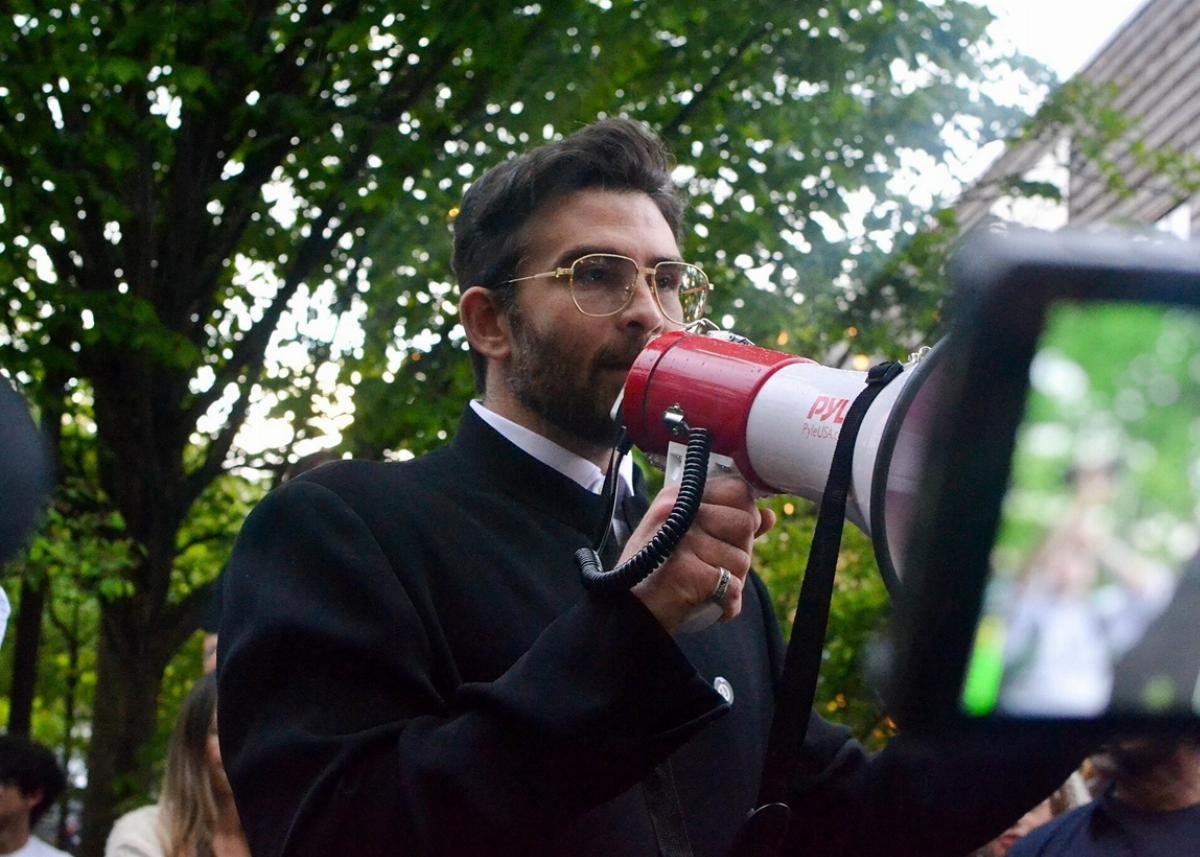
The Democratic Party’s apparent break with controversial streamer Hasan Piker may be less definitive than it seems, according to a new analysis from American Thinker.
J.R. Dunn, writing for the conservative outlet, argues that recent statements from party leaders amount to a half-hearted attempt to create distance from Piker — whom Dunn describes as an “anti-Semitic, anti-American Chairman Mao wannabe” — while keeping his youthful following engaged ahead of the November midterms.
Jeffries’s non-answer
Dunn points to House Democratic Leader Hakeem Jeffries’s interview with CNN’s Wolf Blitzer as the clearest sign that the party is not actually cutting ties. When pressed directly on whether he was severing ties with Piker, Jeffries reportedly launched into a broader discussion of “the rising tide of anti-Semitism,” the security of “our Jewish brothers and sisters,” and insisted that all “ideological perspectives” were implicated — all without naming Piker until Blitzer pushed further.
Jeffries eventually acknowledged his opposition to Piker, insisting he had opposed the streamer “as forcefully as he could.” But Dunn is unconvinced, writing that the response read more like political hedging than genuine repudiation.

Other Democrats’ mixed signals
Dunn also scrutinizes statements from other Democrats who have been publicly associated with Piker or who have weighed in on the controversy. According to the analysis, Elissa Slotkin, Josh Gottheimer, Jackie Rosen, and Ritchie Torres have all offered some form of criticism, but Dunn says their efforts fall short.
Slotkin in particular comes in for criticism. Dunn notes that she started out with a strong condemnation but then veered into what he calls the “now-obligatory pro-Palestinian line” — an inclusion that, in Dunn’s view, undermined the very purpose of a statement meant to condemn anti-Semitism.
Piker’s ally confused by the uproar
The piece also highlights the reaction of Abdul Mohammed Al-Sayed, a Michigan-based operative who has been working closely with Piker’s campaign. According to Dunn, Al-Sayed seemed genuinely puzzled by the controversy, noting that he was focused on his own work helping people get to doctor’s appointments — a stark contrast to the national political firestorm surrounding Piker.
Dunn uses Al-Sayed’s reaction to suggest that the political class’s concern with Piker may not be shared by everyday Americans, and that the controversy is largely a Beltway obsession.
Dingell’s defiant rant
The analysis also takes aim at Representative Debbie Dingell, who emerged to push back against the narrative. According to Dunn, Dingell delivered what he calls a “half-demented rant” blaming the media for the entire controversy, declaring that she was “done” with the subject.
“I am done. Don’t any reporter ask me again about Hasan Piker,” Dingell reportedly said. Dunn dismisses this as a “schoolmarm” tactic, comparing it unfavorably to past Democratic figures like Geraldine Ferraro, Hillary Clinton, and Kamala Harris — all of whom, he argues, also tried to deflect controversy with indignation, without success.
What’s next?
Dunn concludes that the party’s true intentions remain unclear, and he notes that Piker himself has not yet responded publicly. The streamer, who has built a massive following on Twitch and YouTube, has been a polarizing figure in progressive politics, drawing both fervent support and sharp criticism.
“There’s no love lost between the Donks and Hasan,” Dunn writes, using a derogatory term for Democrats, “whose only dilemma regarding the Democrats is whether to liquidate them right away or take them over first and do that later.”
As the summer winds down and the November campaign season heats up, Dunn suggests that the real test of the party’s commitment to distancing itself from Piker is still to come.
“Summer is a goin’ out. Now things will get interesting,” he writes.
Source: www.americanthinker.com — https://www.americanthinker.com/blog/2026/08/dems-we-no-likee-hasan/