
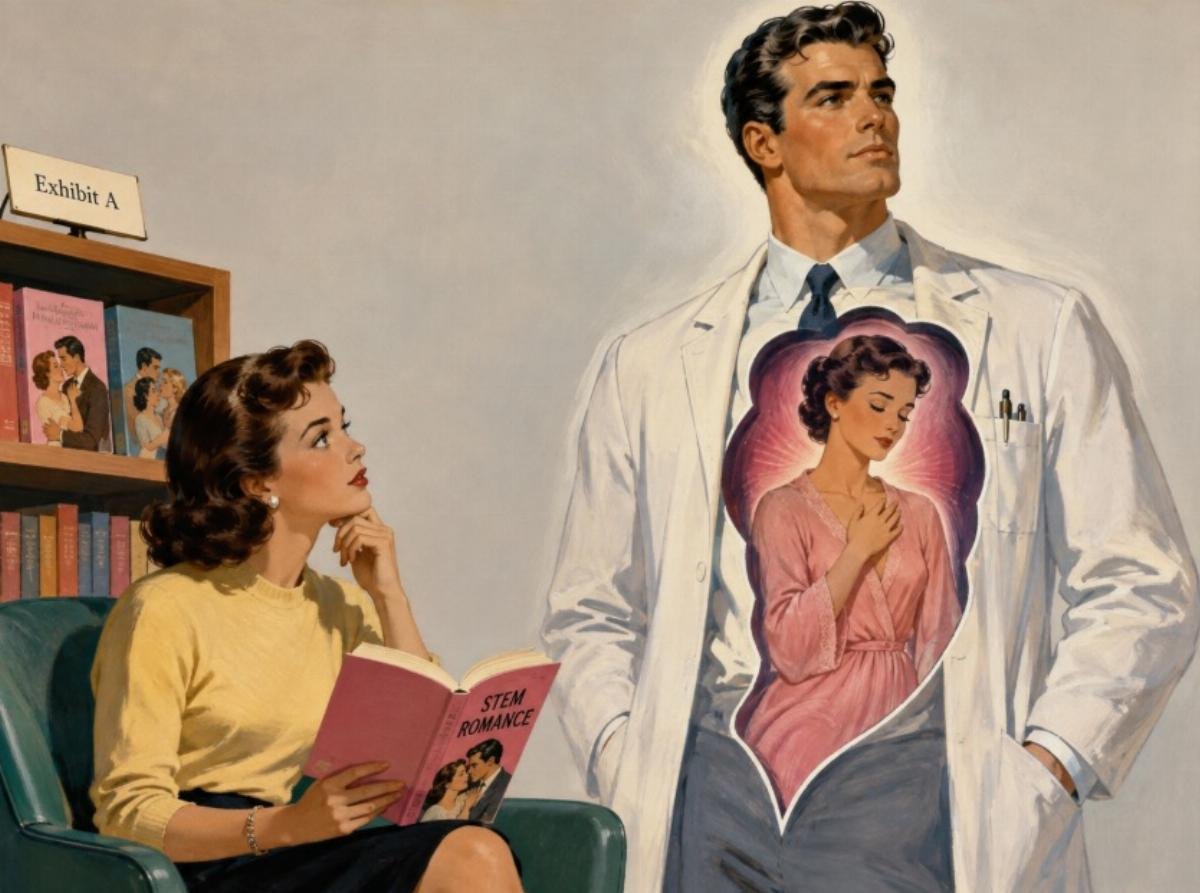
Jane Austen invented the modern romance novel and gave literature one of its most beloved male heroes. If she could see what the genre has become, she might be spinning in her grave, according to a new essay from American Thinker’s Andrea Widburg.
The target of Widburg’s critique is none other than Ali Hazelwood’s Love, Theoretically, a hugely popular “STEM romance” that has sold hundreds of thousands of copies and earned glowing reviews. The book follows Elsie, an overworked adjunct physics professor desperate for a research post at MIT, who discovers that her academic nemesis—Jack, an experimental physicist—is also the brother of the man she’s been fake-dating. It’s Pride and Prejudice updated for the laboratory set, and reviewers have praised it as smart, witty, and groundbreaking.
But beneath the physics puns and enemies-to-lovers plot, Widburg argues, lies a simmering hostility toward traditional masculinity and a steady drip of left-wing ideology aimed squarely at young women.
“Open the book, and you see what reviewers had to say about Hazelwood’s first STEM romance, all promising something smart,” Widburg writes, quoting Entertainment Weekly and Library Journal. “And you know what? Love, Theoretically was smart. Lots of physics jokes and puns, well-developed characters, and a steady hand on the tiller when it came to the plot.”
The problem isn’t the writing, she says. It’s the worldview.
A “fountain of leftism and misanthropy”
Widburg catalogs a series of throwaway lines that she says reveal the novel’s ideological bent. Early on, the heroine Elsie assures readers that while she doesn’t actually sell sex to her fake boyfriends, there’d be nothing wrong with it if she did—sex work is “legitimate work” deserving of respect, she says. Elsewhere, Elsie complains about male graduate students expecting her to make their coffee, and her friend praises her for rising “above the sea of mediocre white men that is theoretical physics.”
The book even includes a joke about wanting to look like Taylor Swift circa 2013—only to correct it to AOC circa 2020. “Yeah,” the friend sighs. “We all were.”
More striking, in Widburg’s reading, is the novel’s depiction of STEM culture itself as a “macho nightmare” populated by “STEMlords” ready to exploit women’s every weakness. Elsie laments that women in science must be “sharp, impeccable, perfect enough to justify your intrusion in a field that for centuries has been ‘rightfully’ male”—while also being warm enough not to be labeled a “stone-cold bitch.”
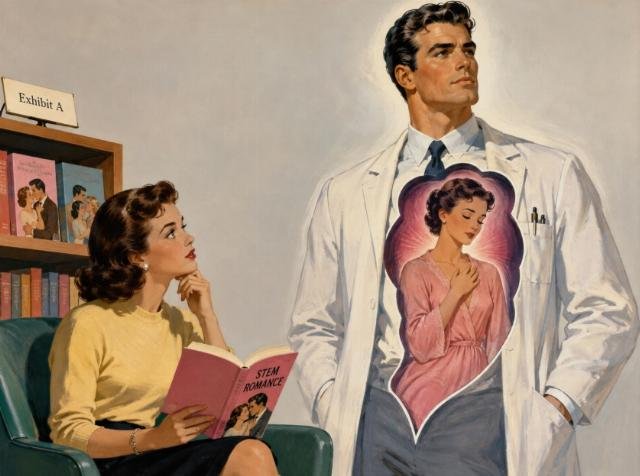
Jack: a female soul in a male body
The most troubling element, Widburg argues, is the hero Jack. On the surface, he has everything a romance hero should: height, muscles, a deep voice, protective instincts. But emotionally, he’s entirely feminine—intuitive, exquisitely sensitive, endlessly nurturing. The heroine is emotionally crippled; he alone has the unconditional love and insight to save her.
“There is scarcely a recognizably male romantic hero here,” Widburg writes. “Jack is a female emotional ideal stuffed into the body of a fantasy man.”
That matters, she says, because this is a widely read book telling young women that the ideal partner is essentially a leftist woman with big muscles. The French concept of vive la différence—the idea that men and women complement each other—has been replaced by a demand that men think, feel, and nurture exactly like women.
Widburg traces the shift back to Bridget Jones. Jane Austen’s heroines, she notes, had real character flaws they had to overcome; their growth came from moral struggle. Bridget Jones changed the formula—suddenly, the flaws themselves were what made the female character lovable, and the task was simply to embrace them.
The result, she says, is a generation of young leftist women reporting serious unhappiness and mental-health struggles, increasingly disenchanted with men even as they spend billions on romance novels. The books that feed their craving, Widburg concludes, are Trojan horses—”a female psyche wrapped in the male body of their dreams.”
Whether readers agree with Widburg’s diagnosis or dismiss it as another culture-war broadside, her essay has struck a chord. At a time when the romance genre is booming and conversations about gender are more polarized than ever, the question of what young women are being taught to want—and whether it’s even attainable—is one the best-selling books of the year are helping to answer, whether their authors intend it or not.
Source: www.americanthinker.com — https://www.americanthinker.com/blog/2026/08/a-hugely-popular-chick-lit-romance-reveals-a-simmering-hatred-for-men/