
When a Kenyan man named Mr. Bundi moved from his farming village to Nairobi in 2011 to become the first in his family to attend university, a friend pointed him toward an unusual online side hustle: writing essays for cheating college students overseas. It turned out to be a lucrative line of work. Over the next twelve years, The New York Times reports, Bundi estimates he wrote more than 2,500 essays — sometimes three in a single day — all while finishing his own public health degree.
His clients were studying engineering, medicine, and computer science at colleges abroad. Some were so trusting of his work that they handed over their school login credentials so he could track their assignments for them. For over a decade, this arrangement hummed along quietly, an underground economy built on the premise that enough students would rather pay than learn.
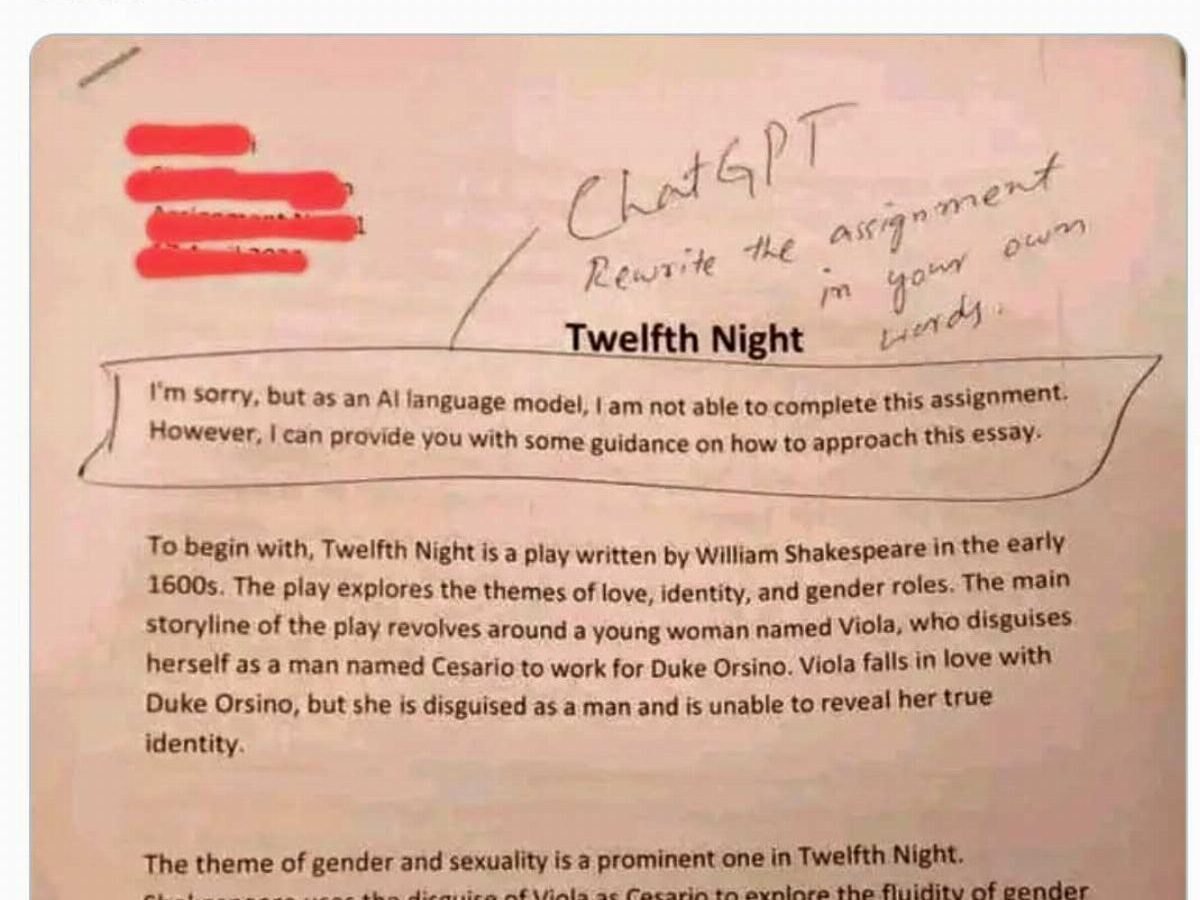
Then, in late 2022, OpenAI released ChatGPT. Students worldwide made a calculation that American Thinker writer Mike McDaniel describes as brutally simple: why pay a freelancer in Kenya when a chatbot can do the job for free? Essay work thinned out. Rates collapsed. Assignments dried up. According to the Times, the industry eventually shrank to almost nothing. “I never would have expected A.I. could do this,” Bundi told the paper.
McDaniel, a retired high school and college English teacher, treats the story with more than a little dark irony. He notes that Bundi was, in effect, a Kenyan doing a job Americans legitimately wouldn’t do — and doing it without breaking any immigration laws. There’s even a grudging respect in McDaniel’s telling: the man was industrious and evidently a capable writer. But the punchline, as he frames it, is that even the outsourced end of academic dishonesty wasn’t safe from automation.
For anyone who spent years grading papers, though, McDaniel’s real concern is closer to home. He recalls his own run-ins with plagiarism during his teaching career, including a student who lifted a friend’s research paper word for word — complete with an anecdote about the original author’s mother, whose full name the plagiarist hadn’t bothered to change. Back then, teachers had internet plagiarism-detection tools and, just as important, a practiced ear for when a student’s voice suddenly and miraculously transformed overnight.
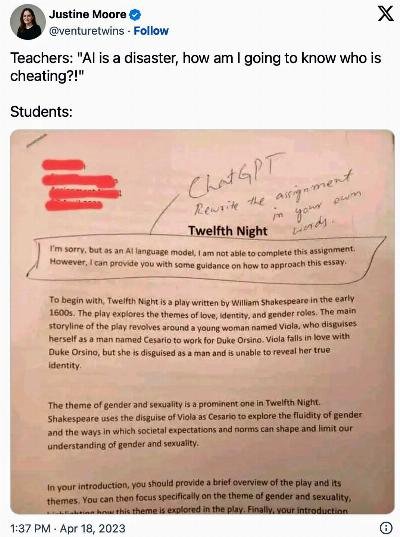
Ghostwritten papers were a known problem with known countermeasures. Teachers who didn’t want the hassle of confrontation sometimes just handed out a minimal passing grade, and most cheating students happily took it. It was a quiet, cynical equilibrium — kids learned nothing, but the system limped along.
AI, McDaniel argues, has broken that equilibrium in a more consequential way. It isn’t just cheaper than a Kenyan ghostwriter; it’s fast, tireless, and increasingly indistinguishable from student writing. The result has been a wave of cases that leave even experienced instructors scrambling.
Brown University and the Exam That Went Sideways
McDaniel points to a particularly stark example at Brown University. After a December 2025 mass shooting on campus, economics professor Robert Serrano advertised take-home exams for an upcoming class that normally drew about 30 students. Eighty-six enrolled. The midterm average came in at 96% — in a course that typically averages between 65% and 80%. Serrano had deliberately made the exam harder than usual, reasoning that students would have far more time to complete it. That extra difficulty didn’t matter; the scores went in the wrong direction anyway.
By the end of the semester, Serrano concluded that dozens of students had likely used artificial intelligence to earn perfect or near-perfect marks on the midterm. He responded by making the final exam in-person. More than a dozen students dropped the course, and even more failed it. According to McDaniel’s account, the administration’s response to the widespread cheating has been “meek,” and the episode has raised hard questions about how universities can — or should — respond to AI-enabled cheating when it happens at scale.
The Brown case illustrates something people outside academia might not grasp: the problem isn’t simply that students can cheat. It’s that the tools that once caught cheaters — plagiarism software, a teacher’s instinct for a sudden change in voice — are largely useless against AI-generated prose. A chatbot doesn’t leave a copy-paste trail. It doesn’t accidentally preserve the original author’s mother’s name. It writes in whatever register the student requests, and it does so instantly.
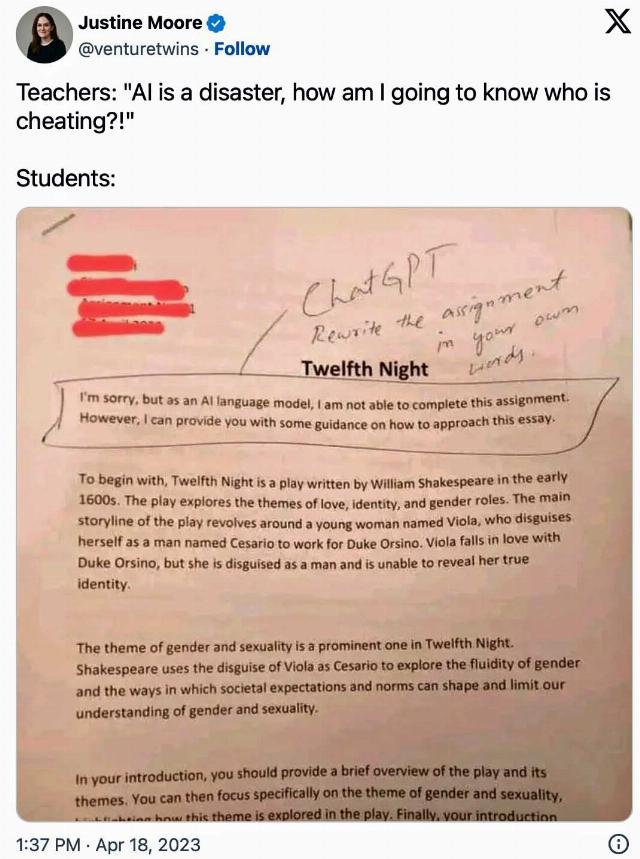
McDaniel’s prescription is blunt. Every new weapon in warfare eventually produces a counter-weapon, he writes, and AI academic countermeasures are emerging. But the real question, in his view, is whether administrators and politicians will let teachers deploy the equivalent of a nuclear response: failing grades, or even failing entire classes, when AI plagiarism is detected.
That’s a harder political fight than it might sound. Universities are under enormous pressure to keep retention numbers up and students satisfied. Faculty who hand out mass failures for suspected AI cheating can find themselves tangled in appeals, grievances, and bad press. Administrators, meanwhile, often prefer pilot programs and honor-code rewrites to the messier option of letting instructors hold the line. McDaniel’s implication is that this institutional timidity is what allows the cheating to continue — and what ultimately devalues the degrees of students who play by the rules.
What the Kenyan Story Really Exposes
It’s tempting to read Bundi’s story as a small curiosity, an ironic footnote to the AI boom: the one guy who lost his job to automation without ever having set foot in an American classroom. But McDaniel uses it to make a broader point about what AI has done to the incentive structure of higher education.
For years, the ghostwriting industry existed because the cost of cheating — in money, effort, and risk of getting caught — was high enough to keep it a marginal activity. AI collapsed that cost to near zero. The result isn’t just fewer essay-writing gigs in Nairobi; it’s a classroom environment where honest assessment becomes vastly harder, and where the gap between what a transcript claims and what a student actually knows can widen without anyone noticing until it’s too late.
McDaniel doesn’t pretend to have a comprehensive solution. His essay is more diagnosis than cure, and it leans on the reporting of others — the Times‘ profile of Bundi, Powerline‘s John Hinderaker on the Brown case — to make the stakes concrete. What he offers instead is a warning from the perspective of someone who spent decades in the classroom and got out just before the problem metastasized. His own retirement, he notes dryly, meant he never had to face students using AI not as a research aid but as a way to avoid doing any real, personal work at all.
That’s the part of the story that lingers. The Kenyan ghostwriter lost a job. A Brown professor lost control of a classroom. And somewhere in between, an entire generation of students is quietly learning that the fastest path through college might be the one where they learn the least.
Source: www.americanthinker.com — https://www.americanthinker.com/blog/2026/09/a-kenyan-tragically-loses-his-job-to-ai/