
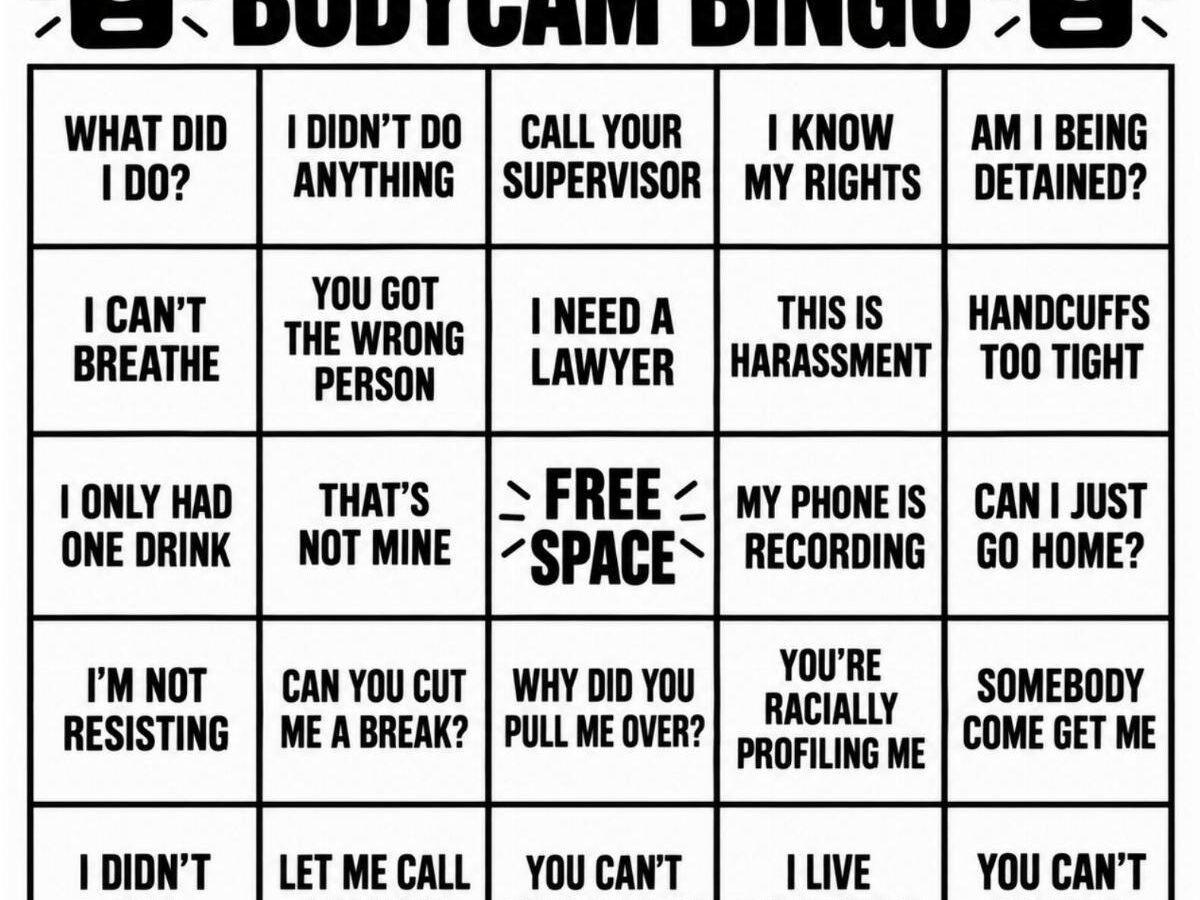
The call for universal police body cameras was supposed to be a progressive triumph. Instead, American Thinker’s Bill Ponton argues in a September 24, 2026 commentary, it has produced a sprawling online entertainment genre that the left never anticipated — and now the ACLU is reportedly trying to put the genie back in the bottle.
The Footage the Left Didn’t Expect
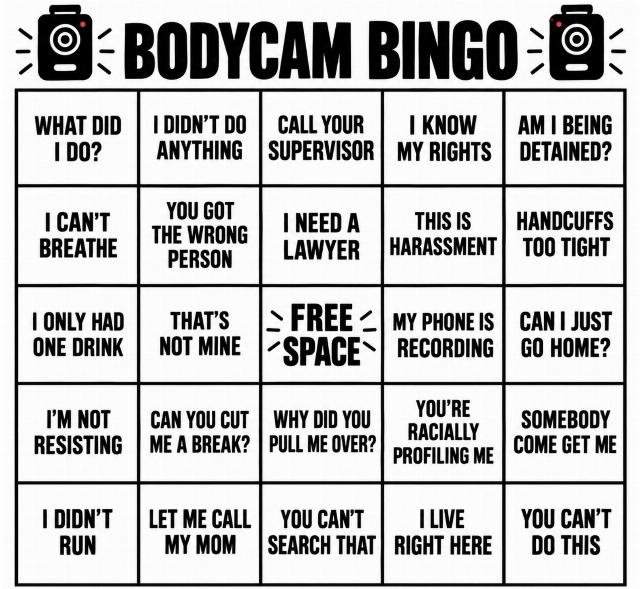
In his piece, titled “Bodycam Bingo,” Ponton contends that the anticipated wave of footage showing officers abusing Black citizens never materialized. What did materialize, in his telling, was the opposite: a large volume of recordings depicting civilians behaving badly during police stops — content that has since been repackaged into what he calls a YouTube genre known as “bodycam bingo.”
According to Ponton, the format involves narrators tallying recurring reactions during police encounters. He singles out one expression in particular — “I can’t breathe,” popularized by George Floyd — as the top item on the tally sheet, and says it has been repeated by many people taken into custody since Floyd’s death. He notes that his list of common reactions is only partial.
Whether or not one shares Ponton’s framing, the underlying observation is hard to dispute: body camera footage, once framed as an accountability tool, has become raw material for a monetized content ecosystem. Millions of viewers, he writes, now consume this footage as entertainment, and creators have built channels around curating and narrating it.
The ACLU’s Changed Position
The most consequential development, per the commentary, is the American Civil Liberties Union’s shift on the issue. Ponton writes that the ACLU was once a leading advocate for making body camera video available to the public — but now qualifies that support. In his account, the organization still wants body camera recording to continue, but with tight control over which recordings are released and who in the public receives access to them.
Ponton characterizes the ACLU’s recommended legislative changes as designed to cut off YouTubers’ access to bodycam content. He draws a comparison to a California law he says was recently passed to stop Nick Shirley, among others, from obtaining information about Medicaid fraud in the state. (The commentary does not detail the specific provisions of either the ACLU’s proposed changes or the California legislation, and this article is based solely on Ponton’s description of them.)
The shift, if accurately described, would mark a notable reversal for an organization that spent years arguing that public access to police video was essential to oversight. That argument rested on the premise that transparency benefits the public by exposing misconduct. The question Ponton’s piece raises — and it is a fair one regardless of one’s politics — is what happens when transparency produces material that its advocates find politically inconvenient.
Who Gets to See the Truth
There is a genuine policy debate buried here, even if Ponton’s piece is more polemic than analysis. Restricting public access to bodycam footage raises real questions about privacy — for bystanders, for victims, for officers — that deserve serious consideration. Body camera recordings often capture people in their worst moments, in their homes, in medical distress, in the middle of mental health crises. A reasonable person can believe both that recording should continue and that not every recording belongs on YouTube.
But Ponton’s framing is that the timing and motivation are suspect. Why, he asks implicitly, did the ACLU’s enthusiasm for public access cool precisely when the footage stopped serving the narrative its supporters expected? He notes that his own appetite for bodycam videos has been exhausted, yet he says he supports their continued spread because a growing viewership wants more — and because, in his words, the content bothers those on the left.
That is an admission of partisanship rather than a legal argument, and readers should weigh it accordingly. The stronger point in the commentary is structural: once transparency is established as a principle, its beneficiaries cannot be handpicked. A functioning commitment to open records either applies to footage that flatters your cause or it doesn’t.
The Monetization Question
Ponton’s claim that the content is “monetized online” and provides “entertainment to millions” points to a phenomenon that extends well beyond any single political faction. Police bodycam channels are a substantial genre on platforms like YouTube, where creators aggregate footage, add commentary, and accumulate ad revenue. The economics are straightforward: controversy draws clicks, and clicks draw dollars.
That dynamic creates uncomfortable bedfellows. Civil liberties advocates who pushed for release of footage on principle now find themselves competing for public attention with creators who package the same footage as spectacle. Law enforcement agencies, meanwhile, face the administrative burden of reviewing and redacting thousands of hours of video. And the public’s appetite for the material shows no sign of diminishing.
Ponton concludes his piece with an appeal to free expression, writing that the ability to speak our minds is more crucial to the republic than ever. It’s a standard closing for the outlet, and it sits somewhat awkwardly beside his admission that he’d rather not watch the videos himself. But the tension is real: the same openness that lets critics scrutinize police conduct also lets narrators turn that scrutiny into a scorecard.
What’s Actually at Stake
The debate over bodycam access is likely to intensify as states consider legislation governing release timelines, redaction requirements, and who can request footage. If the ACLU has indeed narrowed its position — as Ponton asserts — that shift will be cited by both sides: by critics who see inconsistency, and by supporters who see a reasonable recalibration in light of privacy harms that were underestimated a decade ago.
What the commentary does not provide is documentation of the ACLU’s specific recommended statutory language, the text of the California law it references, or data quantifying viewership of the bodycam genre. Readers who want to evaluate the policy arguments in detail would need to go to those primary sources. Ponton’s contribution is less a legislative analysis than a pointed observation about unintended consequences — and about how quickly a movement’s commitment to transparency can cool when the footage doesn’t cooperate.
The uncomfortable core of the argument is this: the camera does not care whose narrative it serves. It records what happened. For years, one side of the debate assumed that fact would favor its position. The proliferation of “bodycam bingo” channels suggests otherwise — or at least suggests that the raw record is messier, more ambiguous, and more useful to more people than any single faction anticipated.
Source: www.americanthinker.com — https://www.americanthinker.com/blog/2026/09/bodycam-bingo/