
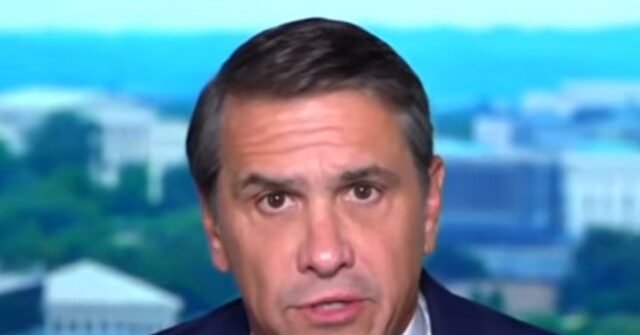
Attorney General Todd Blanche defended President Donald Trump’s restrictions on press access to the White House and Air Force One during an appearance on ABC’s “This Week” on Sunday, telling host Martha Raddatz that the president is “sick and tired of certain media outlets just refusing to report accurate news.”
Blanche’s remarks came after a federal judge issued a temporary restraining order putting Trump’s ban on multiple press outlets on hold, according to Breitbart, which published a transcript of the exchange. The attorney general framed White House access as a discretionary privilege rather than a constitutional right, while insisting the administration’s concerns extend beyond press criticism to what he described as national security implications.
The Air Force One Dispute
The interview grew tense early when Raddatz pressed Blanche over CNN’s exclusion from the press pool for the president’s weekend trip to Tennessee. CNN was scheduled to serve as the pool outlet for the trip but was denied access to Air Force One, leaving no television pool coverage of the journey.
“What is the justification for denying access?” Raddatz asked.
Blanche pushed back on the framing. “The president hasn’t denied access. That’s not the right way to describe it,” he said, adding that “it is a privilege to be in the White House for anybody” and that “the president knows that it’s the people’s house.”
Raddatz noted that CNN had been designated as the pool for that day and was specifically denied entry to the aircraft. Blanche responded that the White House routinely decides who travels with the president, describing the decision as “common” and asserting that “the president has every right to decide who gets to fly on his plane.” He said the matter involved national security “especially on Air Force One, and especially at the White House.”
When Raddatz asked whether the administration would screen reporters before boarding flights, Blanche objected sharply. “I did not say that. No, no, I did not say that,” he said, at one point telling the host, “You don’t get to put words into my mouth.”
Judge Skeptical of National Security Argument
Raddatz pointed to the judge’s temporary restraining order, noting that the court found no record evidence predating the lawsuit suggesting the revocation of the outlets’ hard passes was motivated by national security concerns. She quoted the judge stating that Trump focused instead on “the alleged lack of truthfulness and negativity of plaintiffs’ reporting” when he announced the ban.
Blanche declined to engage with the judge’s reasoning directly, saying the “litigation is ongoing” and that he wouldn’t discuss “specifics of what the judge said.” But he maintained the government’s position that “complete misinformation and the inaccuracy and the one-sided news out of certain organizations does become a national security issue.”
“What they say is exactly the issue when it comes to national security,” Blanche said, arguing that inaccurate reporting affects relationships with both foreign partners and adversaries. He accused CNN and other networks of broadcasting information that is “wholly and completely almost — almost 100 percent” disputed, though he did not provide the specific example Raddatz requested.
First Amendment Questions
The conversation turned to broader questions about the role of the press. Asked what the First Amendment means to him, Blanche said the law permits outlets to “report whatever they want,” but he returned repeatedly to the argument that White House access is conditional.
“It is the people’s house. It is a privilege and not a right to be there,” he said, adding that Americans should expect the news they consume to have “even a whiff of impartiality” and “a whiff of accuracy.” If that standard isn’t met, Blanche argued, “it is absolutely the president’s duty to make sure that the American people are hearing accurate news.”
Raddatz cited Trump’s own past comments calling on outlets to “diminish the Republicans and a Republican administration” — remarks she said showed the president’s focus was not on impartiality. Blanche rejected what he called selective quoting. “You just picked out seven words the president said,” he replied, calling the tactic “extraordinarily disingenuous” and pointing to “hours and hours” of the president’s commentary about mainstream media outlets.
Pressed on what criteria would govern future access to the White House grounds, the Oval Office, or Air Force One, Blanche demurred. “That is not — that is most certainly not my decision,” he said. “So I’m not going to even begin to try to justify that question with an answer.”
The exchange underscores the ongoing legal and political battle over press access to the president, with the temporary restraining order keeping the ban paused as litigation proceeds and the administration defending its actions both in court and in the media.
Source: www.breitbart.com — https://www.breitbart.com/clips/2026/09/27/ag-blanche-trump-sick-and-tired-of-certain-media-outlets-refusing-to-report-accurate-news/