

It has been twenty years since Al Gore’s An Inconvenient Truth became a global phenomenon, and according to commentary published by American Thinker, the anniversary is being marked not with vindication but with a scorecard. Writing for the outlet, Silvio Canto, Jr. points to a new book by Stephen Moore that revisits some of the documentary and book’s most memorable predictions, arguing that several of them never materialized.
Canto opens with a personal note of relief. “I’m so happy that I didn’t sell everything and look for a cave 1,000 miles from the ocean,” he writes. His point is that the coastal cities remain above water and the planet has not been cooked into uninhabitability — outcomes he argues were treated as near-certainties at the time of the film’s release.
Two decades of forecasts, revisited
The centerpiece of the piece is a set of claims-and-truths drawn from Moore’s work. According to Canto’s summary, Moore walks through several of the marquee predictions that accompanied the original presentation.
First on the list: the claim that Kilimanjaro’s snow would be gone within a decade. Twenty years on, according to Moore’s accounting, the mountain still has ice and snow — though its glaciers have shrunk. Next, the assertion that Glacier National Park’s glaciers would disappear by roughly 2020. According to Moore, cited by Canto, they have not disappeared; the timing was simply off. And then there is the projected sea-level rise of about 20 feet, which Canto dismisses in blunt terms as “pure trash.”
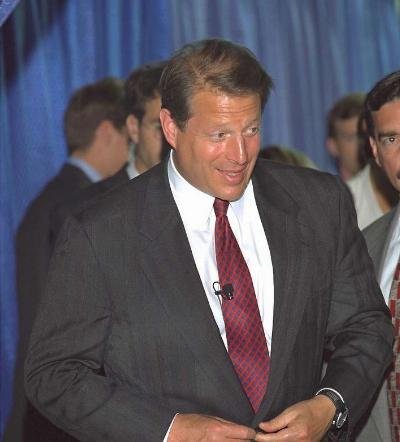
The tone throughout is derisive, and Canto makes no pretense of balance. “It was 20 years ago that Al Gore’s book ‘An Inconvenient Truth’ was published, and … well, it turns out that the truth was inconvenient — for Al and his band of apocalyptics,” Moore writes in the passage Canto quotes.
Canto frames the whole exercise as a matter of credibility. “Remember all these lies the next time that some clown is slowing down traffic about climate change,” he advises readers. It’s a line that captures both the substance and the style of the piece: conversational, combative, and aimed squarely at the activists who have picked up where the former vice president left off.
What Moore’s list does — and doesn’t — establish
It’s worth being precise about what the argument here is and isn’t. Moore’s claims, as relayed by Canto, are about the accuracy of specific forecasts made two decades ago — not about the underlying physics of a warming atmosphere. The glacier and snow-cap examples are the kind of granular predictions that skeptics have long used to argue that climate modeling overstates both the speed and severity of change. The sea-level figure of 20 feet functions the same way: it is presented as an extreme projection whose non-arrival by now undermines the credibility of the people who floated it.
Both Kilimanjaro and Glacier National Park have indeed been the subject of scientific debate for years. The former’s ice loss has been attributed by some researchers to changes in precipitation and humidity rather than temperature alone, and the park’s glaciers have receded substantially even as they have not vanished on the schedule one prediction implied. The point is not that the tools of measurement are useless, but that forecasting is hard, and confident timelines invite retrospective scrutiny.

Canto’s piece doesn’t linger on any of that nuance. Its purpose is rhetorical, and it succeeds on its own terms. The author states plainly that he loves the environment, and that what bothers him is the alarmism — particularly, he says, the effect it has on children. “We need convenient truths, not all this crazy stuff about polar bears that scared little children,” he writes, turning the title of Gore’s project back on itself.
The broader fight over climate messaging
The commentary lands in a long-running argument about how advocates talk about climate risk. The case for urgent action has generally rested on the consensus that warming is real and its consequences serious; the case against specific alarmist claims has rested on examples like these, where a dramatic deadline passed quietly and no one was held to account.
That asymmetry is what Canto and Moore are exploiting. The predictions that fail tend to be the vivid ones — the vanished snows, the flooded coastlines, the extinctions with dates attached — and their failure is memorable in a way that incremental data is not. If a glacier is smaller than it was but still there, that is a more complicated story than a disappearing glacier, and it is a much less frightening one.
Whether that dynamic should count against the general direction of climate science is a separate question, and one the commentary does not attempt to answer. What it does argue, forcefully and with a certain satisfaction, is that the people who made the most specific promises should be the ones answering for them.
For Canto, the anniversary is less a moment for reassessment than for vindication. The cave, as he notes with evident pleasure, was never necessary. Readers who share his skepticism will find confirmation in Moore’s list; readers who don’t will find a familiar set of talking points recycled for a milestone year. Either way, twenty years is long enough for a prediction to grow old — and long enough for the people who heard it to start keeping receipts.
Source: www.americanthinker.com — https://www.americanthinker.com/blog/2026/09/the-truth-got-gored/