
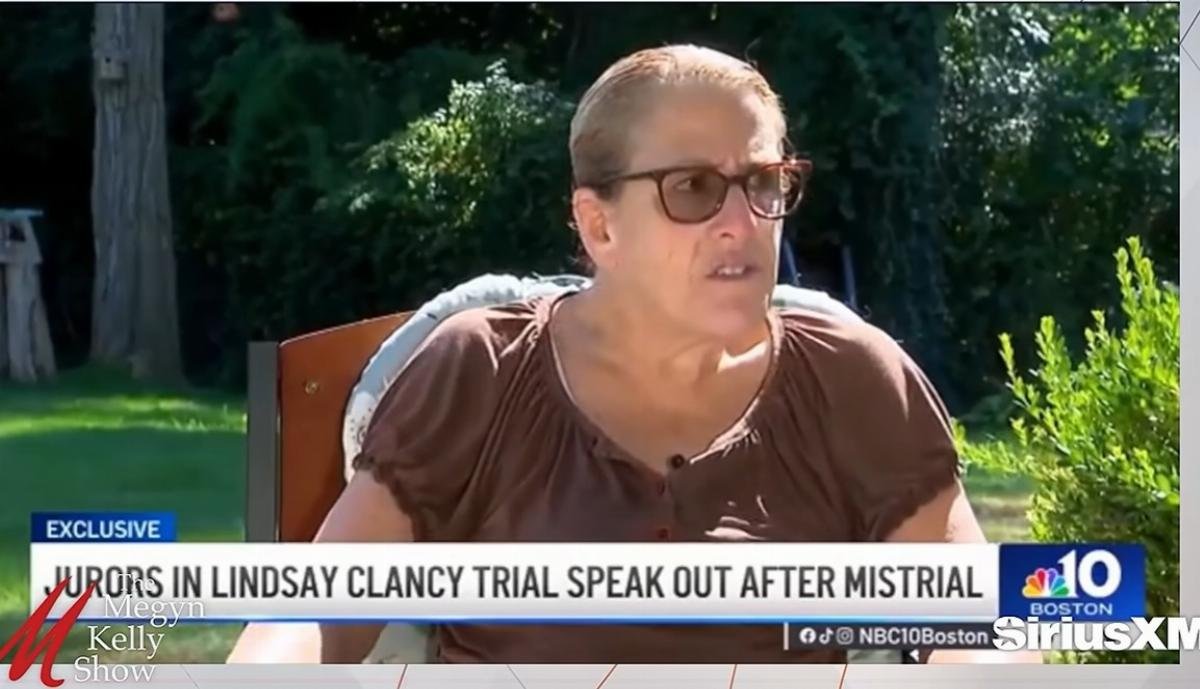
Three jurors from the Lindsay Clancy trial have gone public since the case ended in a mistrial, and the commentary site American Thinker is not impressed. In a piece published September 10, 2026, columnist Patricia McCarthy argues that their interviews amount to a self-indictment — evidence, in her reading, that the panel was stacked with people who had decided the outcome long before deliberations began.
The Clancy case, as McCarthy describes it, centered on a mother who killed her three young children and whose defense rested on a claim of postpartum psychosis. The jury deadlocked rather than returning a verdict, and the holdouts who wanted acquittal have since spoken to the press. McCarthy writes that watching them vent their frustration at the single juror who refused to vote not guilty was, in her words, stupefying.
The anonymity that cuts the other way
What gives the column its bite is a detail from a fourth juror — one who spoke only on condition of anonymity. According to McCarthy, that juror said the three who later went public were “biased from day one,” and that the not-guilty position was locked in before any real deliberation took place. It is a striking claim: the people who publicly presented themselves as open-minded fact-finders are described by a colleague as having arrived at the verdict in advance.
McCarthy leans hard on that alleged admission, treating it as proof that the trial was compromised from the moment the jury was seated. If the verdict was preordained, she reasons, then the weeks of testimony were theater — and the mistrial was less a failure of the process than a symptom of a panel that was never going to convict.
A broader complaint about jury selection
The column widens quickly from one case to a general indictment of how juries get picked. McCarthy asks how the prosecution ended up with jurors she considers predisposed to sympathize with the defense, and speculates that no jury consultant was involved. Had one been, she writes, the state would have recognized the risk in seating older nurses and teachers — people, in her framing, likely to identify with a mother facing infanticide charges rather than with the children she killed.
She also invokes Fox News host Jesse Watters, who joked that if he were a jury consultant he would have struck all three based on their hair. McCarthy calls the line funny and probably wise, then uses it as a springboard into a much harsher characterization: she describes the three women as the epitome of a certain kind of leftist, products of second-wave feminism, hostile to men and to the nuclear family, and entirely predictable in their sympathies.
It is worth being precise about what that passage is. It is not reporting. It is political stereotyping, delivered with a sneer, and readers will either share the assumption or recoil from it. What it is not is a legal argument — and McCarthy seems aware of that, pivoting quickly back to the specifics of the trial.
The courtroom personalities
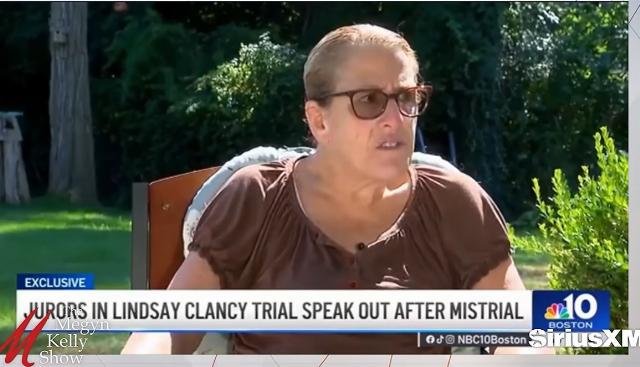
Her most concrete complaints concern the jurors’ demeanor in their interviews. McCarthy writes that they spoke about Clancy with genuine affection, as though she were a celebrity rather than a defendant, and that they were similarly enamored of defense attorney Kevin Reddington, whom they described as entertaining and compassionate. To McCarthy, that warmth is the tell: jurors who admire the defense lawyer and fawn over the accused were never going to weigh the deaths of three children dispassionately.
She is equally dismissive of Clancy herself. Far from a sympathetic figure, McCarthy depicts her as a privileged but calculating woman who planned how she would kill her children and who asked for a lawyer the moment she regained consciousness after a failed suicide attempt. That detail — the request for counsel, coming before grief or remorse in McCarthy’s telling — is meant to undercut the insanity framing at the heart of the defense.
The column’s central legal claim is blunt: no assertion of mental illness excuses the killing of one’s own children, and anyone who cannot see that is unfit to sit in judgment. McCarthy does not engage with how postpartum psychosis is treated in law, nor with the possibility that a jury could accept the defense’s medical evidence without endorsing the act. She simply rejects the premise, and from there the conclusion follows: the three jurors lacked the character to decide the case, and Clancy, in her view, deserves death or at minimum life in prison.
What the piece actually documents
Stripped of the invective, the column rests on a few factual anchors: that a mistrial occurred, that three jurors gave interviews, that a fourth spoke anonymously and accused the others of arriving biased, and that the three expressed sympathy for Clancy and admiration for her attorney. Everything else — the claims about their politics, their generation, their view of men — is inference drawn from appearance and manner, and McCarthy presents it as such, however confidently.
That is the piece’s real argument, and it is a familiar one on the right: that jury pools in high-profile cases are culturally captured, that acquittals or hung juries in sympathetic-defendant cases reflect the politics of the people in the box rather than the facts, and that the remedy is more aggressive screening by the prosecution. Whether that thesis holds in this case depends entirely on whether the anonymous juror’s account is accurate — and on whether a disagreement among jurors during deliberations really proves the outcome was fixed beforehand, or simply that twelve people saw the same evidence differently.
McCarthy does not entertain that second possibility. For her, the interviews settled the question. The jurors who spoke, she concludes, indicted themselves.
Source: www.americanthinker.com — https://www.americanthinker.com/blog/2026/09/omg-several-lindsay-clancy-jurors-spoke-and-unwittingly-indicted-themselves/