
The International Court of Justice is quietly preparing to rewrite one of international law’s most consequential definitions, and a new American Thinker editorial argues that the real target of that rewrite is Israel. The piece, by Susan Quinn and published September 18, 2026, contends that the ICJ and the Lemkin Institute for Genocide Prevention are working in parallel — one through jurisprudence, the other through rhetoric — to brand Israel a genocidal state and pave the way for its destruction.
A Lowered Threshold in Myanmar
The editorial points to Gambia v. Myanmar as the pivotal case. In that proceeding, the ICJ will decide whether Myanmar committed genocide against the Rohingya. Quinn acknowledges that “most observers would agree that Myanmar committed horrendous mass executions against the Rohingya” — but argues that is precisely what makes the case useful to those who want a new legal standard.
According to Quinn, the Myanmar judgment, expected in October, would establish a lower threshold for genocide before the court rules on South Africa’s pending case against Israel. That sequencing matters: the rule would change “first in the less-watched case against Myanmar rather than seemingly invent it for Israel,” she writes. The editorial frames this as the express goal of some advocates, who want the softer standard locked in ahead of the Israel ruling.
The stakes extend beyond any single case. Quinn notes that genocide is often the ICJ’s only practical jurisdictional hook in a war, because unlike the Genocide Convention, neither the Geneva Conventions nor other law-of-war treaties give the court jurisdiction. A lower bar would therefore open the door to genocide claims not just against Israel, but against the United States, other NATO members, and their officials. Quinn also points to the Trump administration’s push to dismantle the International Criminal Court, arguing the ICJ could pose an even greater threat to U.S. and allied security.
The Lemkin Name Fight
Central to the editorial is the claim that the Lemkin Institute has misappropriated the legacy of Raphael Lemkin, the jurist who coined the term “genocide” and spent his career defining it. Quinn argues Lemkin’s definition was narrow and deliberate, forged in response to the mass atrocities of the twentieth century — from antisemitic pogroms to the Ottoman destruction of the Armenians.
Quinn quotes Lemkin’s own formulation at length, noting that genocide does not necessarily require “the immediate destruction of a nation, except when accomplished by mass killings of all members of a nation.” Instead, Lemkin framed it as “a coordinated plan of different actions aiming at the destruction of essential foundations of the life of national groups, with the aim of annihilating the groups themselves.”
The Lemkin Institute for Genocide Prevention, founded in 2021, has applied the term very differently. Quinn reproduces statements from the organization, including a claim that “[t]he world has been shockingly passive over two and a half years of genocide” and a reference to Israel as an “out-of-control state” committing “crimes against humanity and/or war crimes across so many borders.” Another passage calls Israel “like all genocidal states” — “insatiable in its reiteration of genocidal atrocities.”
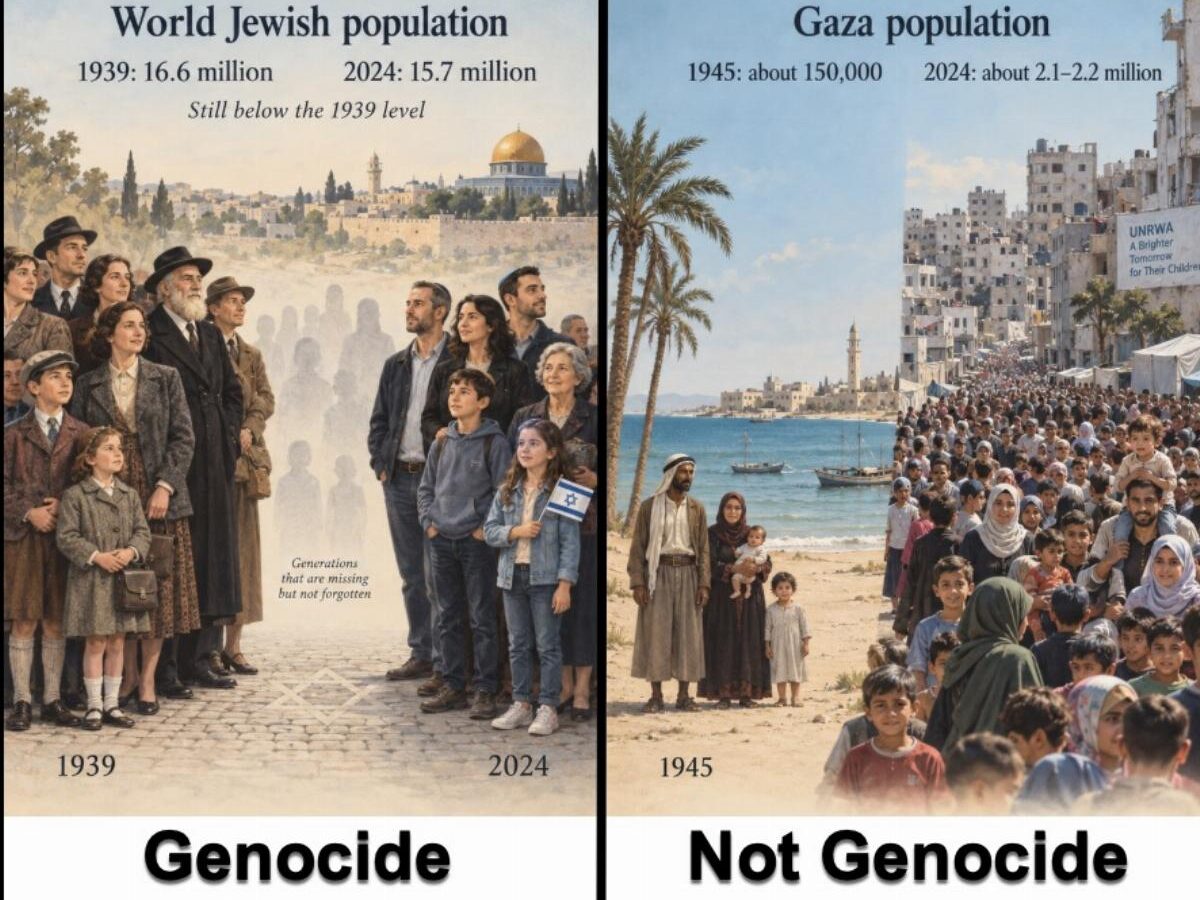
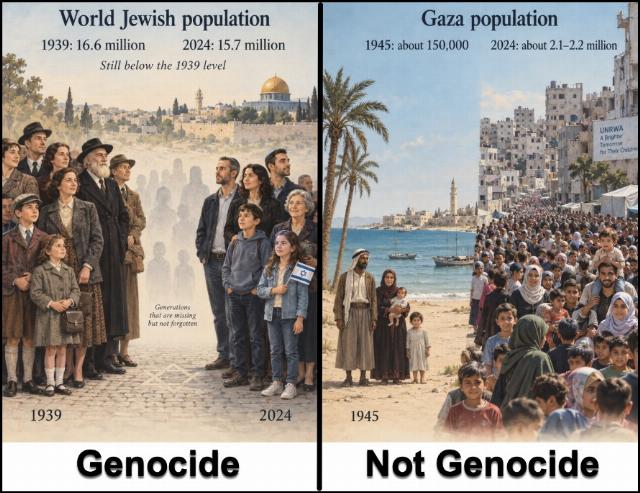
The editorial also highlights the Institute’s use of a social-media comparison between Gaza’s population in 1945 (80,000, per the post) and 2023 (2.2 million), juxtaposed against ancient Jewish and Christian populations across the Middle East that it says are now almost extinct due to ethnic cleansing.
The Family’s Legal Challenge
Quinn argues the Lemkin Institute acted without the authorization of Lemkin’s relatives. According to the editorial, on April 27, 2026, the European Jewish Association and Joseph Lemkin — described as Raphael Lemkin’s closest living relative and president of the Jewish Bar Association — filed a legal memorandum with the Office of the Governor of Pennsylvania and the Pennsylvania Bureau of Corporations and Charitable Organizations.
Quinn says the filing is a legal record rather than a political one. It asserts that the Institute has used the Lemkin name since its 2021 founding “without the knowledge, consent, or authorization of the Lemkin family,” and that this conduct violates Pennsylvania statutory law, Pennsylvania common law, and federal law, including the Lanham Act.
The memorandum’s more sweeping conclusion, as Quinn relays it, is that the Institute “systematically weaponized Raphael Lemkin’s coined term ‘genocide’ against the State of Israel” — in direct contradiction to Lemkin’s documented values, his Zionist writings, and his legal definition of the term.
The Argument at the Core
Quinn does not present the ICJ’s lowering of the genocide standard as an isolated legal development. She describes it as a first step in a staged strategy — one in which the Myanmar case establishes the rule, the Israel case applies it, and other states and officials become fair game afterward. The Lemkin Institute, in her telling, supplies the moral vocabulary while the court supplies the mechanism.
Whether readers accept that framing, the editorial identifies a real and contested question in international law: how broadly the crime of genocide should be defined, and whether a definition loosened in one case can be contained in another. Quinn’s answer is unambiguous — under the auspices of preventing genocide, she writes, these organizations are determined to destroy the state of Israel by any means necessary.
Source: www.americanthinker.com — https://www.americanthinker.com/blog/2026/09/the-icj-colludes-with-the-lemkin-institute-to-destroy-israel/
Source: www.americanthinker.com
Related coverage
- American Thinker Argues That a 2005 Dolphin ‘Wedding’ Marked the Start of Society’s Norm Collapse
- Paxton’s ‘Dirty Trick’ Exposes Talarico’s Church: Pastor Says Most Members Are Agnostic or Atheist
- Border Patrol Union Calls Talarico’s Border Claim a ‘#FakeNews Political Ad’ — and Dares Him to Produce the Video
- Reasonable Doubt or Reasonable Crime? A Legal Scholar Blasts the System in the Clancy Trial