
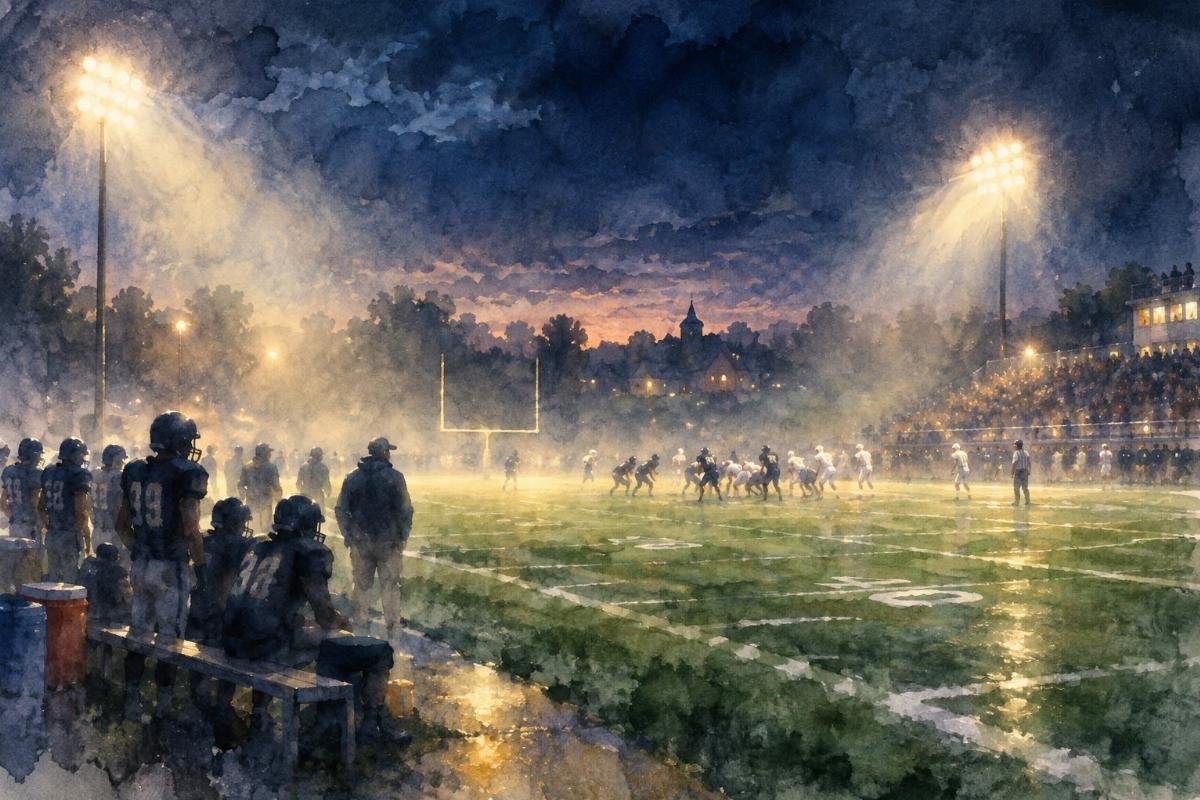
Friday nights in the fall once belonged to high school football. The stadium lights flickered on, the marching band played, and entire towns gathered to watch their kids become the stars of the evening. That long-held tradition is now under siege, according to a column published by American Thinker, which argues that college football has quietly commandeered Friday nights in pursuit of yet another revenue stream.
The writer, Greg Maresca, traces the shift through a personal scene: while traveling to Mill Hall, Pennsylvania, to broadcast a high school football game last Friday, he noticed SiriusXM was airing the Army–Temple matchup that had kicked off during rush hour at Lincoln Financial Field in Philadelphia. He describes the game as a “programming filler” — a college contest played in front of a crowd small enough to fit inside a high school stadium. In his telling, nobody asked for these games, few attend them, and the only real winners are the broadcast and streaming networks padding hefty collegiate athletic budgets.
The Roots of Friday Night Football
Maresca reaches back to September 28, 1892, when the first night football game was played under a crude setup of electric lights in Mansfield, Pennsylvania. The irony, he notes, is that the teams involved weren’t high schools at all: Wyoming Seminary, a prep school, took on Mansfield State Normal. The Friday night high school football institution that Americans came to know took shape generations later, across much of the country by the mid-20th century, when stadium lights, bands, and local crowds turned Friday into the heartbeat of towns. It was the one night of the week when kids were the stars and the community revolved around them.
For decades, the football calendar had an unwritten order: Friday belonged to high school, Saturday to college, Sunday and Monday to the pros. Everyone knew their lane and respected it. Maresca argues that college football is now violating that natural order, cannibalizing the high school game because television wants a seven-day buffet and every conference is happy to oblige.
College Football Everywhere, All the Time
The column points out that college football already dominates the Gregorian calendar. It owns Saturdays, spills into Thursday nights, and even creeps into Sundays to open the season. Add bowl season, playoff season, and the never-ending recruiting cycle, and the sport is, in his words, everywhere, all the time.
Two examples anchor his complaint. Penn State opened Northwestern’s new stadium on a Friday, an arrangement Maresca says forces fans to choose between supporting their local high school team and watching their college team — a choice, he writes, that no true fan of the game should have to make. Army, Temple, Northwestern, and Penn State, he concludes, should not be playing on any Friday.
When a major college program jumps into Friday night, Maresca writes, it siphons attention, crowds, and revenue away from the very level of football that needs it most. The dynamic is especially stark in smaller communities, where a high school game is not just entertainment but a civic ritual — a place where towns build identity and where the sport still belongs to the people rather than to the networks.
Traditions Die by a Thousand Exceptions
Maresca’s central claim is cultural rather than economic. Friday nights used to be sacred, he argues, and now they are just another time slot on a broadcast schedule. Traditions, in his framing, do not die with melodramatic announcements; they die with a slow, nonstop drip of exceptions until the traditional way becomes a ghost.
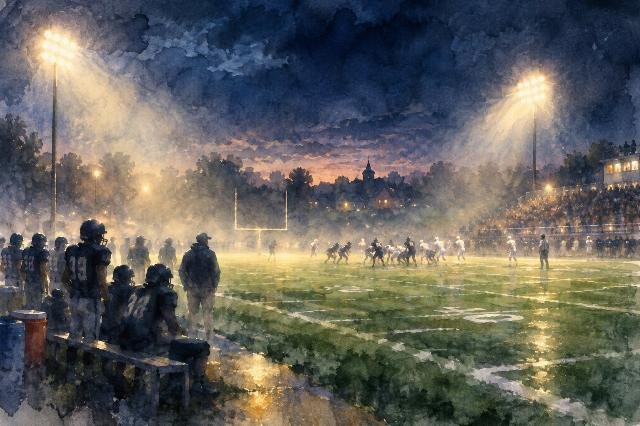
He makes the case that high school football is the purest version of the game — where the sport is learned, where no NIL deals or conference realignments or billion-dollar broadcast contracts intrude, and where kids simply play for their hometowns under the lights the way generations before them did. It is, he writes, the passing of a shared tradition from one generation to the next.
The piece closes with a warning and an appeal: college football should respect the foundation that grew the game, because once Friday nights are gone, they are not coming back — and the sport will be poorer for it. Friday night, Maresca insists, belongs to the high school players.
The Broader Debate
The column lands in a long-running argument about the expanding college football calendar. Conference realignment, television rights deals, and the College Football Playoff have steadily pushed the college game into more days of the week, and scheduling decisions are increasingly driven by what broadcasts best rather than what fits tradition. Critics of that trend echo Maresca’s concern: when the biggest brands take over Friday, the local programs that depend on gate receipts, booster support, and community attention are the ones squeezed.
Defenders of the arrangement would counter that Friday games give programs national exposure, accommodate television partners, and let fans who cannot travel on Saturdays see their teams. But for Maresca, the tradeoff is not worth it. The sport’s hierarchy — high school, then college, then pros — was not an arbitrary rule but a rhythm that protected the youngest and most local level of the game. Breaking it, he argues, is another crack in the foundation.
Whether or not one shares his nostalgia, the underlying tension is real: as college football grows into a year-round, seven-day enterprise, something has to give. Maresca’s answer is that it should not be Friday night — not the one night that still belongs to the kids.
Source: www.americanthinker.com — https://www.americanthinker.com/blog/2026/10/friday-night-heist/