

In a commentary published this week, American Thinker writer Eric Utter offered a starkly nostalgic reading of American immigration history—and a hard-line prescription for the present. The piece, dated October 17, 2026, argues that the country’s earlier arrivals were “virtually all” Christians from Europe who came seeking opportunity rather than assistance and who embraced the idea of being American. That shared attachment, in his telling, is what carried the nation through even the Civil War and on to its 250th anniversary observances now underway.
Utter’s central claim is that “in the last several decades, that has all changed.” He writes that the majority of recent immigrants entered illegally, which he says should have been treated as a disqualifying red flag from the outset. He singles out arrivals from the Middle East and Sub-Saharan Africa, along with many crossing the southern border, contending they are neither Christian nor motivated by hard work, and that many “despise” the country that admitted them.
A blunt prescription
The proposed remedy is equally blunt: do not let them in, and if they do get in, send them back. Utter argues this would protect what he calls “indigenous Americans” from being taken advantage of and would reduce fraud, crime, and what he terms the transfer of wealth. The piece does not offer data or sourcing for those assertions; they are presented as the author’s conclusions rather than findings from cited research.
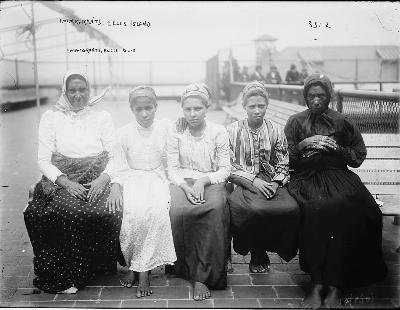
Utter then pivots to a rhetorical move that runs through much of the essay: he invokes the language of immigration advocates themselves. If migrants are described by their supporters as “beatific and enriching,” he writes, then admitting them exposes them to the racism, misogyny, xenophobia, and white supremacy that those same advocates insist is rampant in America. He frames the contradiction—lobbying or rioting for admission while condemning the country as bigoted—as absurd.
That thread leads him to birthright citizenship. Utter characterizes the left’s position as holding that a child born here the day after a mother’s arrival is automatically a full citizen with every right attached. He contrasts that with what he says happens to a straight, white, Christian citizen whose family came in the 1700s and who has served in the military and lived as an exemplary citizen—someone he says the same leftists would label a “colonizer,” “bigot,” or “xenophobe.”
The audience question
What seems to animate the piece most is not policy mechanics but the politics of stigma. Utter writes that he finds it remarkable anyone cares what a leftist calls them, and argues the only proper response to such “projections” is to mock or dismiss them—or better, to show that the accusations describe the accusers more accurately than the accused.

He closes by tying the argument to speech, writing that the ability to speak one’s mind is now more crucial than ever to the republic, and the piece ends with the outlet’s standard appeal for reader donations to support its staff and keep its ideas heard.
What the essay is and isn’t
It is worth being clear about the genre here. This is an opinion column, and it reads like one: sweeping historical generalization, sharp characterizations of political opponents, and a proposed solution stated in a single sentence. It does not engage with immigration statistics, economic research on fiscal impacts, or crime data, and it does not address the legal and logistical questions that any mass exclusion or removal policy would raise. Readers looking for empirical grounding will not find it in the piece.
What the essay does supply is a compact statement of a strain of argument that has become more prominent on the right: that the character of immigration—who comes, from where, and with what attitude toward the country—matters more than the numbers, and that cultural assimilation, not economic contribution, is the proper test. Utter’s version adds a pointed twist, arguing that the people most vocal about American bigotry are the least entitled to decide who gets to become American.
The historical framing is also doing heavy lifting. By locating national unity in the shared Christianity and gratitude of earlier European arrivals, the piece implicitly treats those traits as the glue of the republic—and treats their absence as a form of unraveling. Whether that account survives contact with the actual history of American immigration, which included plenty of religious minorities, radical politics, and less-than-grateful arrivals, is a question the column does not entertain.
For readers on the left, the essay will read as a familiar bundle of grievances dressed up as history. For readers on the right, it may read as a plain-spoken refusal to apologize for the obvious. Either way, it is a useful specimen of how the immigration debate is now argued: less about border metrics than about who counts as belonging, and who gets to say so.
Source: www.americanthinker.com — https://www.americanthinker.com/blog/2026/10/immigration-then-and-now/