
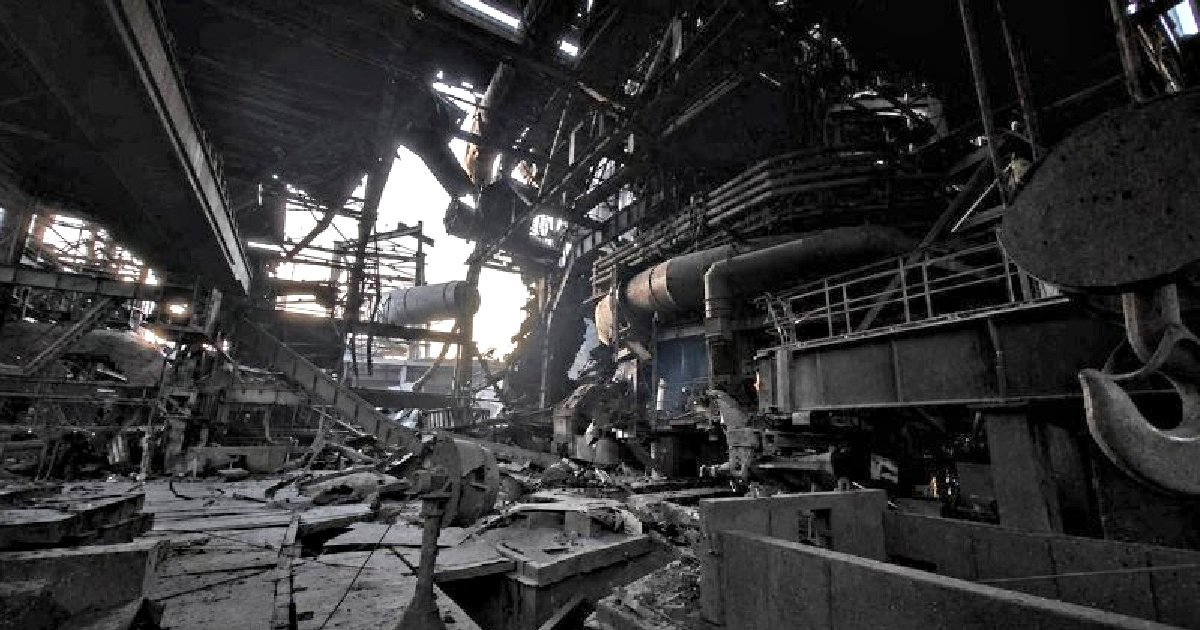
ArcelorMittal confirmed Friday that it is halting operations at its Kryvyi Rih steel plant in central Ukraine, ending production at the country’s largest operational steel facility after a wave of Russian missile strikes that the company says caused fatalities, injuries, and heavy damage to its production lines.
The Luxembourg-based metals giant said five employees were killed in the attacks and that it expects to book roughly a $1 billion impairment charge as a result of the shutdown, according to reporting by The Wall Street Journal and The Gateway Pundit. The plant, located about 400 kilometers southeast of Kyiv, produced long steel rods and beams for construction and also operated an iron ore mine.
A person close to the company told reporters that the facility had been struck four times in five weeks, adding that “you reach a point where it is neither safe nor economically sustainable to continue.”

Ukraine’s steel industry shrinks again
The closure marks another blow to a sector that has been steadily eroded since Russia’s full-scale invasion. Ukraine lost control of Azovstal and Ilyich — formerly its two largest steel plants — during the 2022 siege of Mariupol, leaving Kryvyi Rih as the last major operational facility of its kind. The Gateway Pundit had previously reported on warnings from mining executives that Russian strikes were pushing the industry toward collapse.
Kryvyi Rih carries symbolic weight as well as economic value: it is the hometown of Ukrainian President Volodymyr Zelenskyy. According to the outlet’s reporting, Russian government Telegram channels have specifically named the city as a target multiple times over the past month.
The strikes on the plant are part of a broader Russian campaign against Ukrainian economic infrastructure. The Gateway Pundit reported that Russian attacks have gone beyond power generation and energy distribution to hit shopping malls, warehouses, and distribution hubs, disrupting major Ukrainian retailers, publishing houses, pharmaceutical groups, and Nova Poshta, the country’s largest private postal carrier. Supermarket shortages have begun to appear in Kyiv, though so far they remain sporadic.
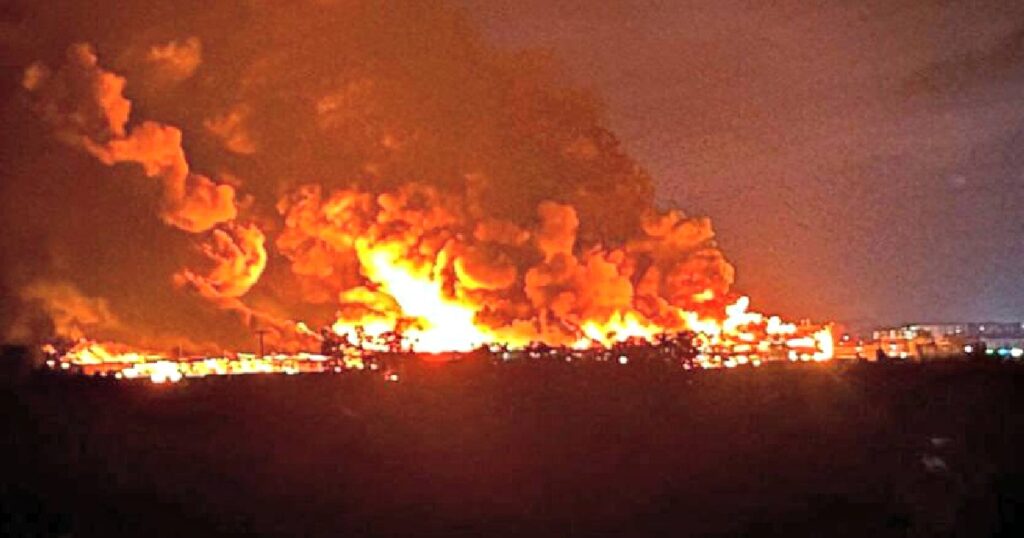
Jet-powered drones become a leading threat
Behind the missile strikes, a newer weapon is playing an increasingly prominent role. Ukraine’s air force says Russia has dramatically scaled up its use of jet-powered variants of the Shahed-Geran drone family — a design that was a rarity on the battlefield just 18 months ago.
Col. Yuriy Ignat, the chief spokesperson for Ukraine’s air force, told national broadcaster TSN on Wednesday that the Kremlin has launched 7,700 turbojet drones into Ukraine to date. The numbers have climbed sharply through the summer: 350 jet-powered drones in June, 1,500 in July, and 2,850 in August, with 1,900 launched so far this month, according to Ignat’s figures.
By current estimates, roughly half of all Russian long-range drone attacks now involve these faster weapons. Agence France-Presse reported in September on the havoc they are causing for Ukraine’s stretched air defenses, noting the drones fly several kilometers high and approach the speed of a commercial airliner, making them far harder to intercept than the propeller-driven models that defined earlier phases of the war.

The ramp-up in production suggests Moscow has secured expanded access to components that Ukrainian intelligence has repeatedly said can only be obtained on the global market — a claim that points to continued gaps in Western export controls.
A search for cheap countermeasures
Ukraine’s military has yet to field a low-cost, mass-producible answer to the jet-powered drone threat. The problem is particularly acute for targets far behind the front lines, where air defense coverage is thinner and the drones’ speed shortens the window for interception.
The strikes have also drawn international attention, with AFP and other outlets documenting the impact on civilian infrastructure and the strain on Kyiv’s air defense network. Turkish President Recep Tayyip Erdogan, meanwhile, has publicly criticized Ukrainian attacks in the Black Sea, telling Zelenskyy that such operations are “inexplicable” — a reminder of the diplomatic tensions simmering alongside the military campaign.
For ArcelorMittal, the decision to halt Ukrainian operations is a financial and strategic retreat from a country that was once a significant part of its European production footprint. For Ukraine, the loss of the Kryvyi Rih plant removes a key source of export revenue and construction material at a moment when the economy is already under severe pressure from repeated strikes on energy and logistics infrastructure.
Source: www.thegatewaypundit.com — https://www.thegatewaypundit.com/2026/09/as-tgp-anticipated-week-ago-ukraines-largest-steel/
Source: www.thegatewaypundit.com
Related coverage
- Sánchez Defiant Despite Polls: Vows Socialist Upset in Snap Election ‘Like U.S. Midterms’
- Elon Musk Announces Tesla’s Cybertruck Production to End by Mid-2027
- White House Lockdown After Driver Crashes Near Lafayette Square, Brawls With Secret Service
- Trump Nominates Rep. Wesley Hunt as Ambassador to Saudi Arabia Two Months Before Midterms