
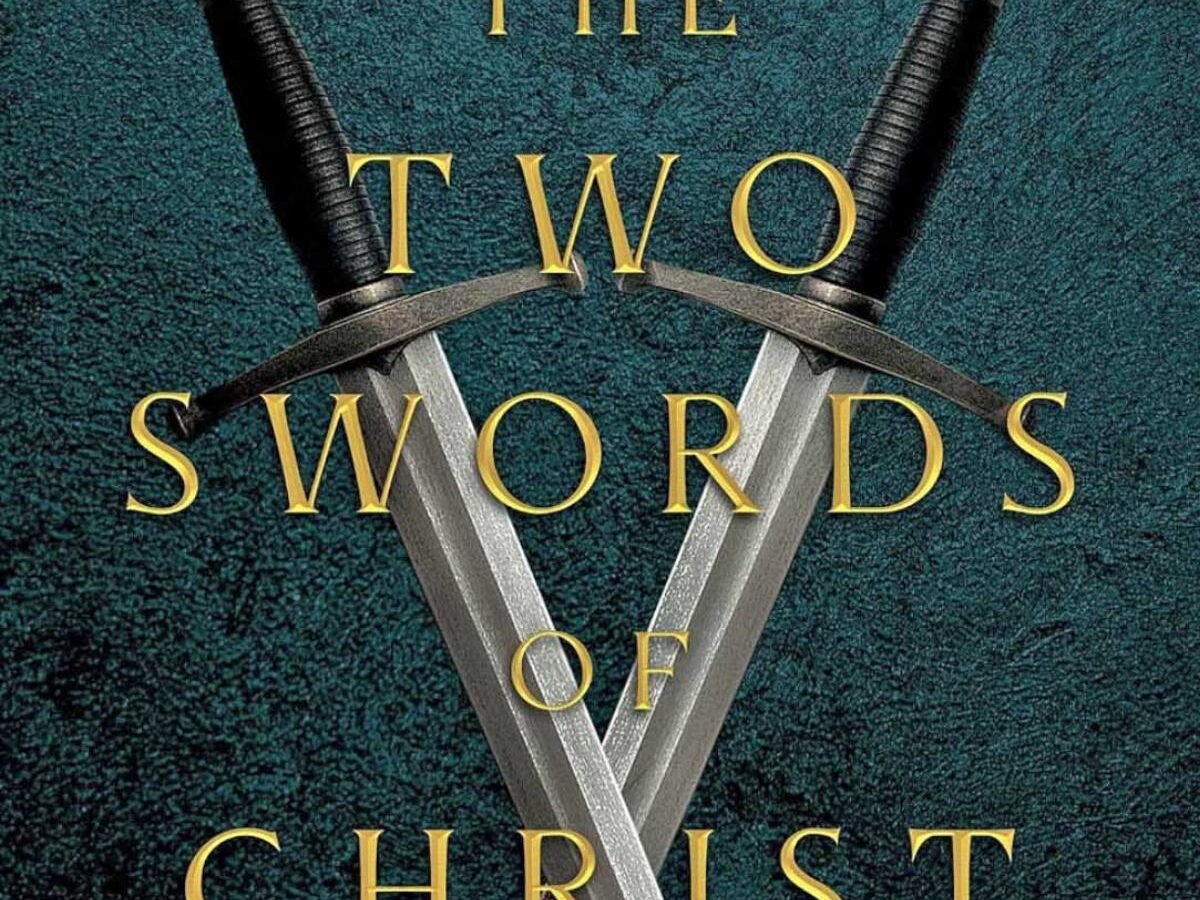
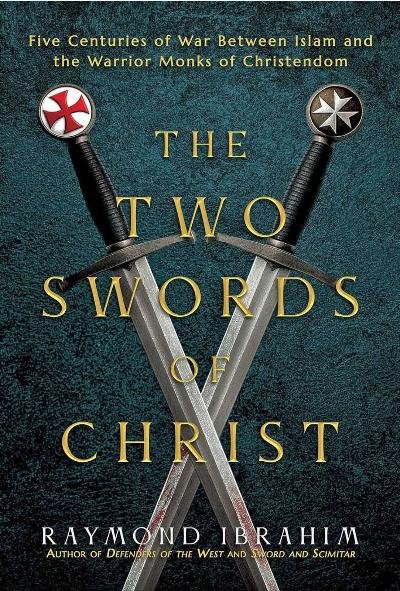
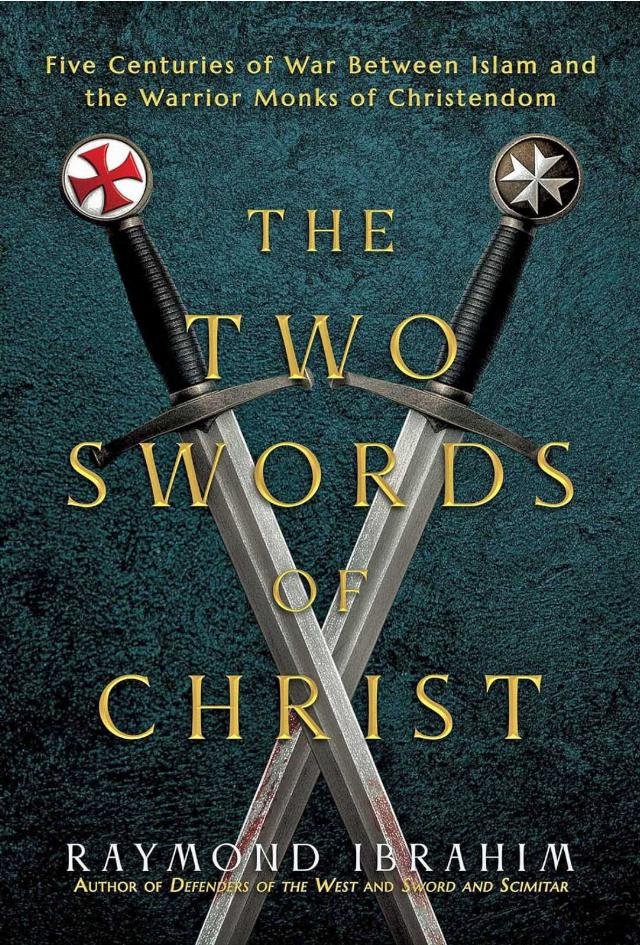
Sept. 9, 2026 — In an era when the Crusades are often framed as a precursor to Western imperialism, historian Raymond Ibrahim’s latest book, The Two Swords of Christ: Five Centuries of War Between Islam and the Warrior Monks of Christendom, offers a counter-narrative, presenting the medieval Christian military orders as defenders of the faith, engaged in a just and necessary struggle.
In a review published by American Thinker on Sept. 9, 2026, author Terry Scambray describes the book as “another noble chapter in the history of Christendom,” arguing that Ibrahim’s historical work “clarifies the present.” Scambray points to Iran’s nuclear ambitions as one current example, asserting that a history lesson from Ibrahim would educate Pope Leo XIV about the threat to the Vatican, which, despite walls built in 852 to keep out Muslim invaders, could not stop modern ballistic missiles.
Ibrahim’s book, which draws its title from Jesus’ words to his disciples — “he that hath no sword, let him sell his garment, and buy one” — grapples with the question of whether “Christian soldiers” and “Warrior Monks” are contradictions in terms. Drawing from the Christian “just war” tradition, Ibrahim argues that faith and force are not opposites, and that Scripture itself provides a basis for defensive military action.
The review highlights the book’s protagonists: the Knights Templar and Knights Hospitaller, who initially aided Christian pilgrims to the Holy Land but were eventually compelled to fight against Muslim forces as Islam expanded through conquest. “The example of these Knights – whose blend of Christian piety and martial discipline remains unmatched – proves otherwise,” Ibrahim writes, referring to the notion that faith and force are incompatible. He contends these knights hark back to “a time of moral clarity, conviction and courage.”
Much of the book is a war diary, replete with vivid descriptions of battles. Scambray quotes Ibrahim’s account of the Battle of Hattin, from the Muslim perspective on their leader Saladin, describing fires set to dry grass that sent smoke and flames into the faces of the military friars and their horses, and scenes of the battlefield littered with “limbs of the fallen cast naked on the field of battle, scattered in pieces… heads cracked open, throats split, spines broken.” The review also details the aftermath for survivors, including women and children stripped naked, whipped, and forced to run to slave markets, with clergy particularly targeted for torture.
Yet, the knights won notable victories. Scambray recounts the 1177 battle in which Saladin, with a force of thousands, found Jerusalem undefended and ventured into Crusader territory. A counterattack by the Templars under leaders like Odo of St. Armand, using crossbows and spearmen, shattered enemy forces, and Saladin escaped to Cairo with only 3,000 of his original 26,000 men. Despite the Christian victory, Saladin launched a propaganda campaign in Egypt to trumpet his own victory, though his army was left ravaged.
Ibrahim also relays the story of St. Francis of Assisi, who in 1219 engaged in an “interfaith dialogue” with the sultan al-Kamil. After being beaten and dragged before the sultan, Francis, when asked why Christians were invading his lands, quoted Jesus: “If your right eye causes you to stumble, gouge it out and throw it away.” He argued the Crusades were necessary retribution for Saracen conquest and warned the sultan that if he remained Muslim, God would damn him. The sultan, according to one source, responded, “I could never do that. My people would stone me,” but allowed Francis to return to the Crusader side.
Scambray notes that Christoph Maier, an expert on St. Francis, has written that Francis was not opposed to violence in the war between Christians and Muslims and considered those who died in it holy martyrs. This leads Ibrahim to conclude that St. Francis has more in common with the Christian military orders than with his namesake, the late Pope Francis.
Beyond the historical narrative, Ibrahim seeks to rebut claims of the Knights Templar’s nefarious activities, citing medieval historian Jonathan Riley-Smith, who noted that former members never substantiated such tawdry claims, and that the order was “invariably transparent in its affairs.”
Ibrahim, who is fluent in Arabic, previously authored The Al Qaeda Reader, in which he showed that Osama bin Laden, writing for an Arab audience, admitted the real reason for 9/11 was to conduct jihad against infidels, not revenge for U.S. policies or climate change. His earlier works include Crucified Again, on Islam’s ongoing persecution of Christians, and Sword and Scimitar, chronicling fourteen centuries of attacks on Christians.
Scambray, a frequent contributor to American Thinker, concludes that as Muslim immigration increases under the banner of “diversity and inclusion,” Ibrahim provides an “indispensable guide” to what he calls this “invasion” and the bleak future he predicts.
The review is unabashedly sympathetic to Ibrahim’s thesis, and it has already sparked commentary among readers, some of whom applaud the book for correcting “distorted history,” while others caution against oversimplifying a complex historical period. Nonetheless, The Two Swords of Christ is positioned as a significant contribution to the ongoing debate over the legacy of the Crusades and its relevance to contemporary geopolitics.
Source: www.americanthinker.com — https://www.americanthinker.com/articles/2026/09/book-review-the-two-swords-of-christ-five-centuries-of-war-between-islam-and-the-warrior-monks-of-christendom/