
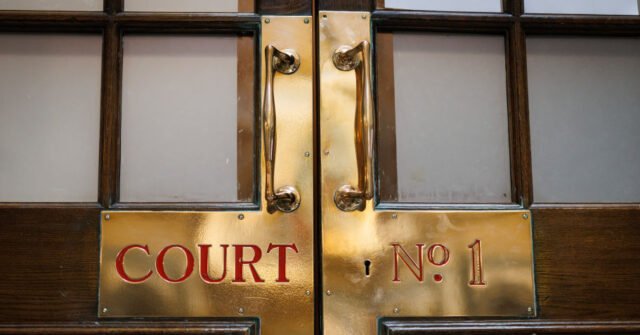
Courts across England and Wales will reserve specially adapted courtrooms for rape and serious sexual offence cases under a government plan aimed at clearing a backlog that leaves thousands of victims waiting more than a year for a trial date. The initiative, reported by The Times and covered by Breitbart London, will set aside one courtroom in every Crown Court specifically for these cases, backed by what ministers describe as a multi-million-pound budget.
The average rape case that reaches the Crown Court now takes 424 days to complete, according to the Times report cited by Breitbart. For victims, that figure represents not just a legal statistic but a year or more of limbo — often longer when delays compound before a case formally enters the system.
Private Entrances and Fixed Trial Dates
Under the plan, courthouses would provide sex crime victims with a dedicated private entrance and separate waiting areas, so they are not sharing public corridors or rooms with defendants, witnesses, or other court users. Court staff — judges included — would receive specialist training for handling these proceedings.
Rape trials would also move off the general waiting list and onto fixed-date schedules, giving cases a guaranteed slot rather than leaving them to queue behind other matters. Six dedicated rape courts are due to open in 2027, with the government saying every Crown Court in England and Wales should have its own dedicated courtroom within two years.
The announcement lands against a backdrop of persistent delay in the criminal justice system. Years of underinvestment, increasingly complex cases that run longer, and a rising number of offences being detected and prosecuted have all pushed wait times upward, according to the government’s framing of the problem. Critics of the status quo argue that these waits discourage victims from reporting in the first place, and that some withdraw their complaints after growing demoralised by the process.
Backlog May Not Shrink Overall
There is a significant caveat buried in the structure of the plan. While new money is attached to converting existing courtrooms into dedicated spaces, the total number of courts and total sitting time appear to remain unchanged. That means the overall caseload across the system is unlikely to fall meaningfully — other categories of crime would simply be de-prioritised in favour of sexual offences.
In other words, the policy reorganises the queue rather than shortening it. Rape cases move forward; the cases behind them may not.
Other routes to reducing delays exist — opening more courts more often, or running courtrooms around the clock — but those options carry higher costs, and the government has competing spending priorities, the source material notes.
Conservatives Welcome Idea, Demand More Sitting Days
Conservative justice spokesman Nick Timothy offered qualified support, welcoming the concept while pressing the government to expand court capacity more broadly. Timothy said tackling delays in criminal rape trials was long overdue, calling it a disgrace that victims had been withdrawing their cases because proceedings took too long.
He then turned to the political fight over jury trials. Timothy argued that rape trial delays had been Labour’s main justification for its plan to remove the right to jury trial in a substantial share of cases. If resources could be found to accelerate rape trials, he asked, why was the government persisting with what he called an attack on an ancient right? Labour, he said, needed to get courts sitting throughout the year, end the delays and clear the backlog rather than undermine the right to trial by jury.
The comparison is likely to shape how the policy is received. The source material notes that the specialist rape courts will probably draw considerably more enthusiasm than Labour’s previous high-profile proposal to tackle waiting times — removing jury trial rights for a considerable proportion of cases — which proved divisive.
A Political Test on Crime and Courts
The dedicated courts scheme sits at the intersection of two politically charged issues: how the state treats victims of sexual violence, and how it manages a justice system widely seen as overwhelmed. Supporters can point to tangible changes — separate entrances, trained staff, guaranteed trial dates — that address the practical experience of reporting a rape and seeing a case through to court. Whether the reallocation of courtroom space delivers faster justice across the board is a separate question, and one the government’s own numbers do not clearly answer.
For now, the commitment is measurable: six courts in 2027, full coverage within two years, and a target of moving rape cases off a waiting list that currently stretches to well over a year. Whether that shifts the wider backlog — or simply changes whose case moves first — will become clearer as the courtrooms come online.
Source: www.breitbart.com — https://www.breitbart.com/europe/2026/09/21/what-crimewave-britain-gets-special-rape-courts-to-clear-the-case-backlog/