
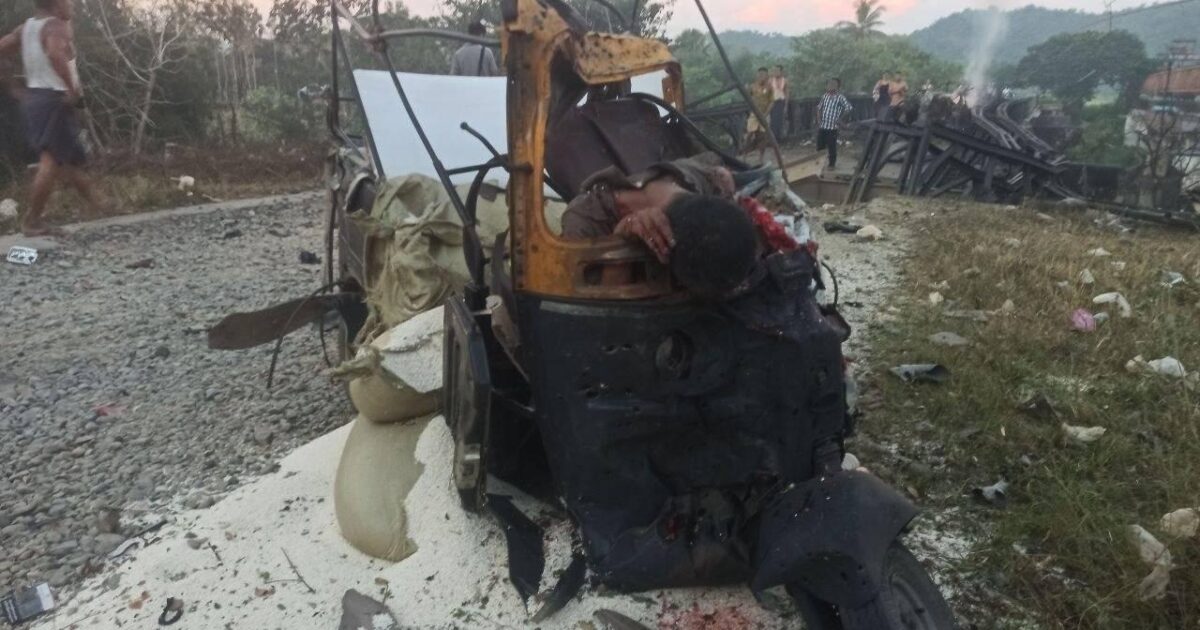
At least 12 civilians, including a week-old baby, were killed in a series of airstrikes carried out by Burma’s military junta in Rakhine State on November 1, according to reports from local sources and ethnic armed groups. The attacks targeted a temporary maternity clinic and a vital highway bridge, marking another escalation in the military’s campaign against civilian infrastructure.
Maternity Clinic and Bridge Bombed
Two fighter jets dropped four cluster bombs near a temporary maternity clinic in Mrauk-U, killing five people and wounding nine, including medical staff, according to the Arakan Army (AA). Among the dead was a newborn girl who was set to be discharged the following day. Her twin survived the attack. “The baby was crushed and killed when the building collapsed from the blast,” an aid worker told Reuters.
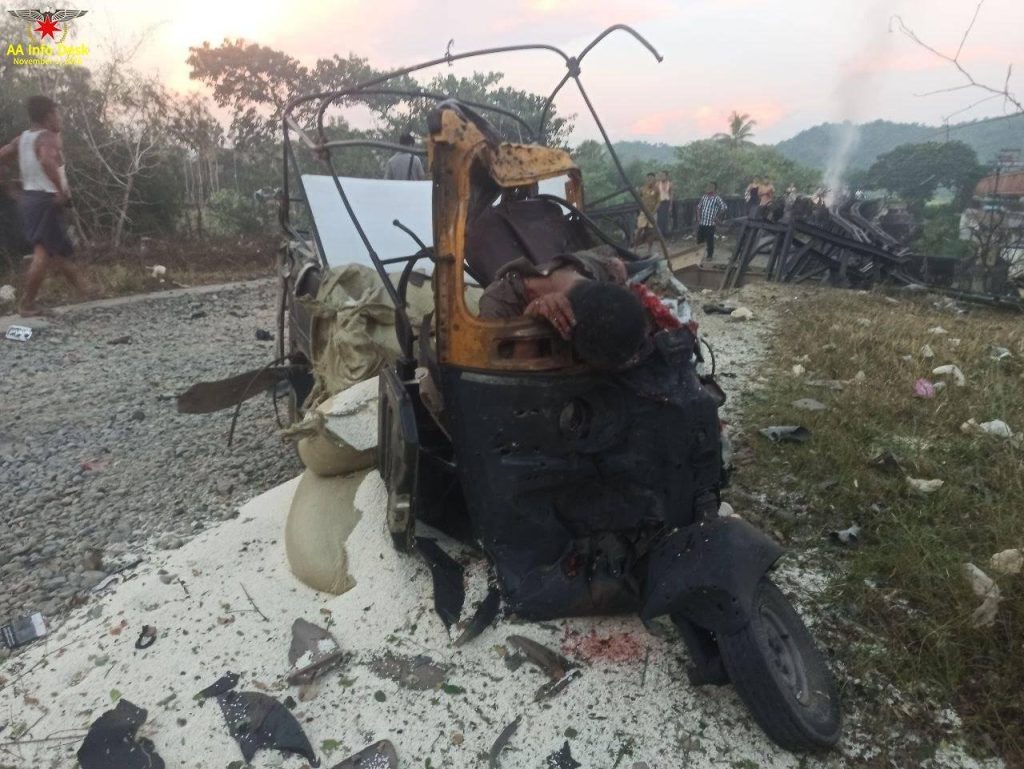
Just two minutes before the clinic strike, another jet bombed the Yoe Chaung Bridge in Kyauktaw Township, killing seven pedestrians and wounding at least seven others. The 420-foot bridge, a critical link on the Yangon–Sittwe Highway, was left “completely wrecked and impassable,” a local resident told Development Media Group (DMG). The destruction has severed a key transportation route for civilians and aid.
Wider Wave of Attacks
Earlier that same day, two additional airstrikes wounded civilians in Pauktaw and Kyaukphyu townships, bringing the total number of injured to at least 32. The attacks have left pregnant women in the region fearful of seeking medical care. “As airstrikes keep happening, I am terrified to go to the hospital,” one expectant mother told DMG.
The November 1 strikes follow a pattern of military assaults on civilian sites. In December 2025, a junta airstrike on Mrauk-U Hospital killed 33 people, and just weeks before the latest attack, bombings on displacement camps left at least 58 dead.
International Fuel Supply Fuels Atrocities
The junta’s air campaign relies heavily on imported jet fuel, with Iran emerging as a key supplier. According to Reuters, two U.S.-sanctioned tankers delivered approximately 175,000 tons of Iranian fuel in 2024-2025, earning Tehran an estimated $123 million. Shipments have continued into 2026, with some cargoes falsely labeled to evade scrutiny.

UN investigators and human rights groups accuse the military of deliberately targeting civilians, with at least 1,728 killed in airstrikes since late 2024. “This fuel is literally fueling mass atrocities,” said UN Special Rapporteur Tom Andrews.
Calls for Sanctions Go Unheeded
Despite appeals from the exiled National Unity Government and 235 civil society groups, only Canada has imposed a full ban on aviation fuel exports to Burma. The U.S. House passed the BRAVE Burma Act in February 2026, which could lead to sanctions on foreign companies supplying the military, but broader international action remains stalled.
As the junta intensifies its air campaign, civilians in Rakhine State face mounting peril, with hospitals, bridges, and displacement camps repeatedly in the crosshairs.
Source: www.thegatewaypundit.com — https://www.thegatewaypundit.com/2026/11/burma-junta-bombs-maternity-clinic-bridge-rakhine-state/
Background and context
The latest developments around Burma Junta Airstrikes Kill 12 Civilians, Including Newborn, in Rakhine State Attacks come amid a broader debate over politics, institutional accountability, and the policy choices that shape everyday life. Understanding the immediate facts is only the first step; the wider impact depends on how officials, institutions, and the public respond in the days and weeks ahead.
FedFront’s coverage focuses on verifiable details, identifiable sources, and the practical consequences of political decisions. Readers should review official statements, primary documents, and court or agency records before drawing final conclusions about any disputed claims.
Why it matters
Stories like this can influence legislation, regulatory enforcement, public trust, and the balance of power between government institutions. Even when the immediate headline fades, the underlying policy, legal, or political questions often continue to shape future decisions.
What to watch next
- Official responses, statements, or policy changes
- Legislative, regulatory, or court action
- Follow-up reporting and independent verification
- Public reaction and broader political fallout
FedFront will continue monitoring this story and update coverage as new information becomes available.
Source: www.thegatewaypundit.com
Related coverage
- Trump Tells Ohio Rally Sherrod Brown Sought $750K Earmark for Group That Hosted Drag Queen Story Hour
- Sanders Predicts Dems United on Defunding Iran War, Warns of Possible Government Shutdown Without Deal
- Rep. Adam Smith Calls Trump and Musk ‘Fascists’ Over Reported Starlink Slowdown for Ukraine
- Obama to Campaign for Michigan Democrat Abdul El-Sayed on Oct. 24 as Rogers Poll Shows One-Point Race