
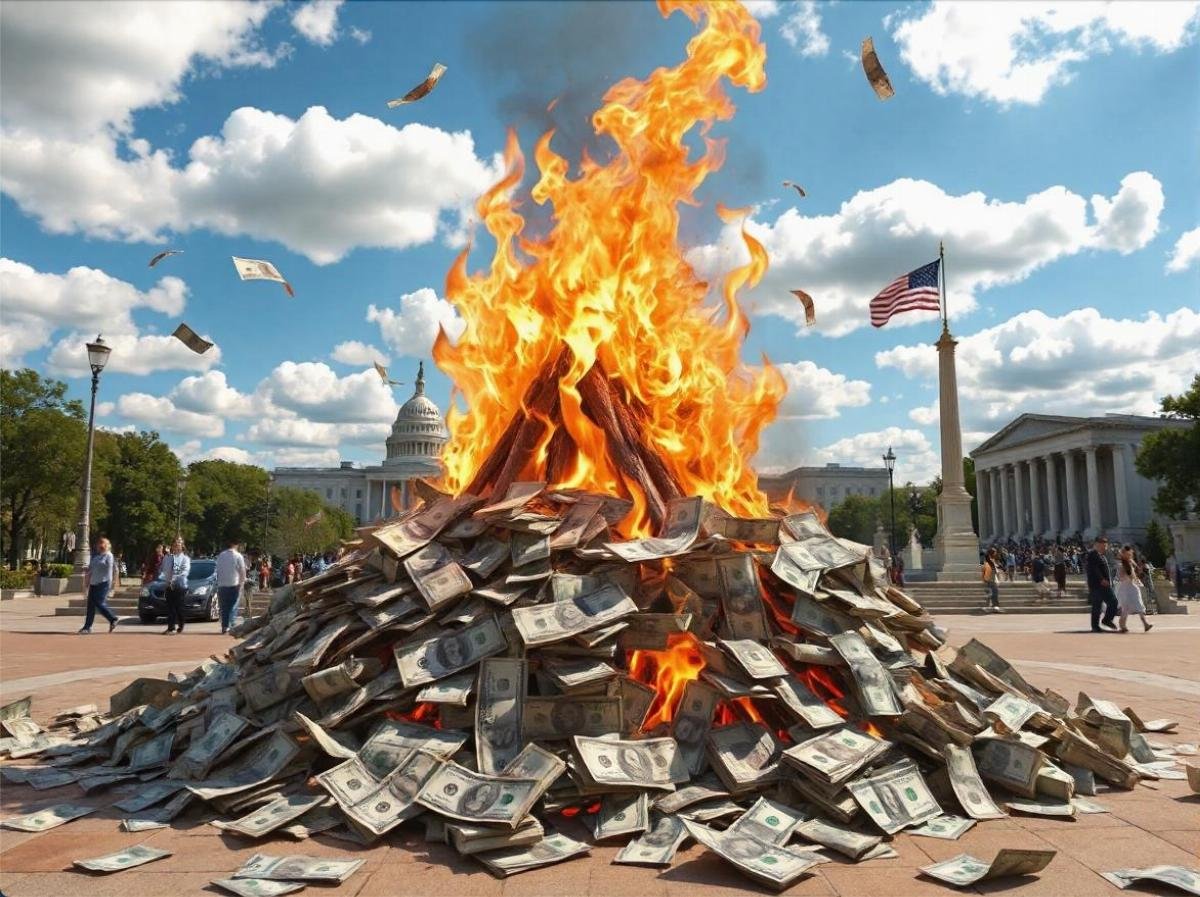
Ask most Californians whether government ought to do more, and the reflex is often yes. A problem persists, so another dollar moves from private production into the public budget. That reflex is exactly what Jim Cardoza wants voters to interrogate, and in a piece for American Thinker he lays out the case for withholding the next dollar until the last one is accounted for.
Cardoza’s framing is deliberately blunt: taxes are compulsory, and compulsion is why public spending should face a higher burden of proof than private spending. He doesn’t dispute that a functioning society needs government to do a short list of things well — courts, policing, firefighting, and basic infrastructure among them. The error, as he sees it, is the separate premise that a dollar automatically does more good once it leaves private hands.
That premise is where the argument gets interesting, because it isn’t really about ideology so much as incentives.
Four ways to spend a dollar
Cardoza leans on Milton Friedman’s classic taxonomy of spending: your money on yourself, your money on someone else, someone else’s money on yourself, and someone else’s money on someone else. The first category disciplines both price and quality. The second still disciplines price, though the buyer can only guess whether the recipient is satisfied. The third cares about quality but has little reason to economize. The fourth — other people’s money spent on other people — carries almost no pressure to control either price or quality.
Most public funds, in his telling, fall into that fourth bucket. The absence of feedback is the quiet problem. When schools disappoint, the answer is a tax increase. When roads deteriorate, it’s a bond. When housing is unaffordable, it’s another subsidy. Agencies grow, contractors organize, and failure gets reclassified as underfunding. “More revenue,” he writes, is not an analysis — it’s a habit.
California as the test case
To make the abstraction concrete, Cardoza points to California, where proposals to tax accumulated wealth sit alongside the familiar menu of sales-tax increases, parcel taxes, bonds, assessments, and fees. Each measure arrives on its own, attached to firefighters, schools, libraries, parks, roads, or encampment clearance. That packaging, he argues, is political marketing rather than budgeting.
His central exhibit is high-speed rail. California voters approved the project in 2008 on estimates of $33 billion to $45 billion, with service promised by 2020. Construction started late. By 2026, according to Cardoza, the state has spent billions on land takings and Central Valley structures while the opening date keeps slipping. The first operating stretch, from Merced to Bakersfield, is now aimed at 2033. Official plans put a “right-sized” San Francisco-to-Los Angeles system at roughly $126 billion, with the original design above $230 billion. Whatever one thinks of the project’s merits, that is not the system voters were sold.
Fraud, Cardoza adds, isn’t just a talking point. In 2026, California’s attorney general charged 21 people in a Medi-Cal hospice scheme that allegedly billed about $267 million for services never provided — stolen identities, straw owners, empty companies. His point isn’t that enforcement exists; it’s that eligibility and billing were loose enough for shell entities to bill nine figures before anyone raided them. Separate investigations have targeted waste and self-dealing in homelessness programs, including the Los Angeles Homeless Services Authority, and audits have warned for years that the state spends heavily on homelessness without consistent outcome tracking.
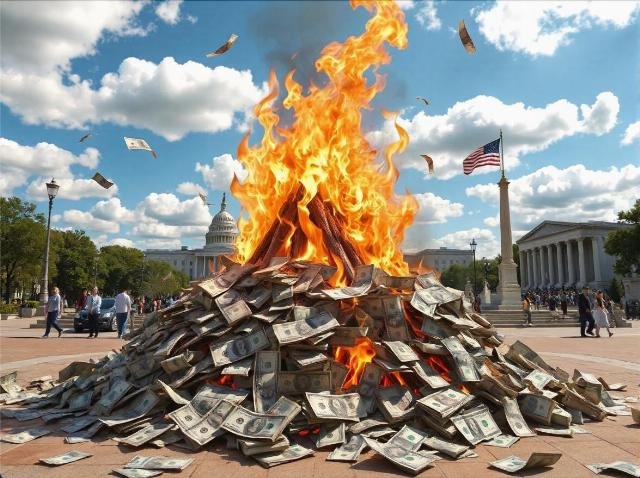
Cardoza is careful to say these aren’t arguments against treating sick people or housing the destitute. They are arguments against writing a larger check to systems that cannot demonstrate what the last check purchased.
The billionaire tax and the exit option
The same logic, he suggests, applies to a wealth tax aimed at California’s richest residents. Most voters can tell themselves the bill belongs to someone else. But large fortunes, Cardoza notes, aren’t idle cash sitting in a vault — they’re claims on companies, factories, equipment, securities, real estate, and new ventures, and that capital finances expansion, research, and payroll. Moving it into the public budget has consequences beyond inconveniencing the wealthy, not least because wealthy taxpayers can leave.
Several already have, he writes. Alphabet co-founders Larry Page and Sergey Brin decamped to Florida and Nevada; Peter Thiel went to Florida; Travis Kalanick and David Sacks to Texas. Others — Mark Zuckerberg, Jan Koum, Andy Fang, and Don Hankey among them — were reported to have moved or taken steps to cut California residency before a January 1, 2026, deadline. Some of their companies stayed. Their tax domicile did not.
Then there’s the machinery of spending itself. Politicians, Cardoza argues, respond to different incentives than investors do. Reelection rewards visible programs; programs create constituencies; agencies protect budgets; contractors chase contracts; public-employee organizations lobby; industries seek subsidies and rules that favor incumbents. What emerges is often a coalition of government and its vendors rather than a tight focus on the basic services voters believe they’re buying.
The test he proposes
Cardoza’s closing question is not whether a given ballot measure names a popular cause. It’s whether the government already holding the purse can be trusted with a larger one — what was promised, what was spent, what was accomplished, what failed, and which agencies grew after they failed. Private firms generally obtain money through persuasion; government obtains it by law. That difference, he argues, is precisely why tax increases deserve harsh scrutiny unless it can be shown that existing funds are prioritized and working.
It’s a demanding standard, and parts of it are easier to state than to satisfy — outcome tracking for homelessness programs, for instance, has been a known gap for years. But the underlying ask is modest: before handing over the next dollar, find out what happened to the last one. Whether or not one shares Cardoza’s politics, that question is difficult to argue against, and it is rarely the one voters are asked.
Source: www.americanthinker.com — https://www.americanthinker.com/articles/2026/09/don-t-give-government-another-buck/