
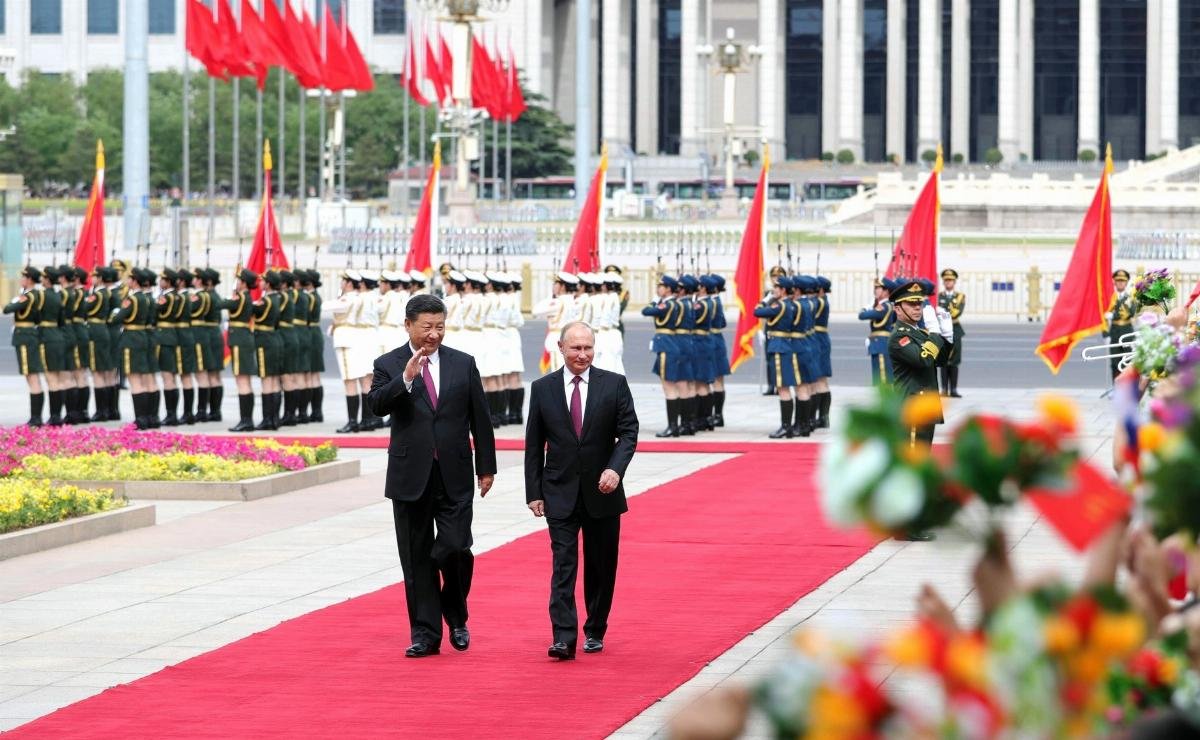
When Hudson Institute senior fellow Ken Moriyasu asked whether deepening U.S. ties in Central Asia would deter Beijing from moving on Taiwan or instead push China to speed up its military buildup and lean harder on Russia, he was pointing at a problem American strategists have wrestled with for decades. Writing in American Thinker, Mario Alexis Portella takes that question and runs with it, arguing that the answer may lie less in what Washington does in Central Asia than in how it handles Moscow.
The core of Moriyasu’s case, as Portella describes it, is that China’s expanding economic and strategic footprint across Eurasia could let Beijing absorb the shock of a failed Taiwan invasion by reducing its dependence on sea routes that the U.S. Navy could cut. A stronger American presence among the Central Asian states, the thinking goes, would complicate Beijing’s calculations and make military action look less attractive.
Portella doesn’t dispute the logic so much as flag its cost. If Chinese leaders read an expanded U.S. role in Central Asia as strategic encirclement, the likely response isn’t retreat — it’s acceleration. More military preparation, more stockpiling of critical resources, and deeper cooperation with Russia. And Russia and China already share a basic interest in limiting American influence, with joint military exercises, energy trade, and defense-industrial ties binding them tighter. Pressure applied to one, in other words, may end up consolidating the partnership Washington is trying to loosen.
The Nixon Precedent, and Its Limits
The alternative Portella offers comes from 1972. Richard Nixon’s opening to China exploited a Sino-Soviet split that had turned violent in border clashes in 1969. Nixon and Henry Kissinger weren’t looking for an ally bound by shared values; they were looking to shift Moscow’s strategic assessment by dealing with one rival rather than treating both as a single bloc. The mere fact of contact with Beijing changed the board.
Portella is careful to say the current situation isn’t a replay. Since Russia’s full-scale invasion of Ukraine in 2022, Moscow and Beijing have built a far closer relationship, with China providing substantial economic support and both governments pushing back against pieces of the U.S.-led order. But he insists the two are not identical. Russia has its own reasons to resist excessive dependence on Beijing, whose economic weight grows more consequential by the year, and Moscow retains longstanding interests in Central Asia where Chinese commercial expansion can collide with Russian influence.
Those frictions, in his view, are where opportunity lives. He suggests selective engagement with Moscow — nuclear risk reduction, arms-control talks, regional security questions, and narrowly defined economic cooperation. The goal isn’t to flip Russia into an American ally overnight, but to offer it alternatives to a relationship with China that grows more lopsided with each passing year.
A Sanctions Waiver and a Diesel Deal
Portella points to recent events to show both what transactional diplomacy can do and where it falls short. On October 16, President Donald Trump signed an executive order waiving significant sanctions, restrictions, and tariffs under the newly enacted Lindsey O. Graham Sanctioning Russia and Iran Act, citing the national interest and leaving the waivers in place until further action seemed appropriate.
The order followed Trump’s announcement of an agreement with Vladimir Putin under which Russia would release diesel supplies to global markets to ease fuel-price pressure. The deal drew criticism from lawmakers in both parties and from Ukrainian President Volodymyr Zelenskyy, who argued that easing restrictions could benefit Moscow while its war on Ukraine continues.
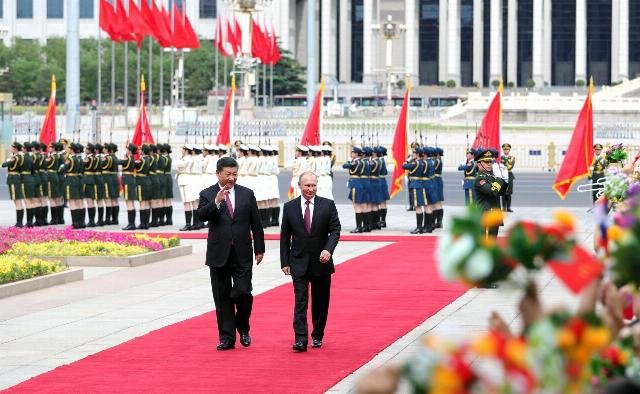
For Portella, the episode is instructive precisely because it cuts both ways. Negotiations over energy supplies might open doors elsewhere, but a commercial agreement is not evidence of strategic realignment, and a sanctions waiver doesn’t prove Russia wants to decouple from China. Relax economic pressure without extracting meaningful concessions, he warns, and Washington isn’t creating a geopolitical opening — it’s simply surrendering leverage.
Ukraine as the Foundation
Any approach to Moscow, Portella argues, has to rest on an honest read of the war in Ukraine. With Ukraine short on manpower, he sees reason to doubt its ability to secure a decisive military victory. That leads him to a conclusion some readers will find uncomfortable: the U.S. should pursue diplomacy that protects Ukrainian sovereignty and aims at a negotiated settlement, rather than continuing a war without a realistic path to winning. At the same time, Washington must not reward Russian aggression or accept a Russian sphere of influence over the former Soviet republics.
He applies the same principle to Central Asia. The states of the region should be free to choose their own political, economic, and security arrangements. Rather than pressuring them to align exclusively with Washington, Moscow, or Beijing, the administration should promote their independence through investment, energy diversification, infrastructure development, and diplomatic cooperation.
What Deterrence Still Requires
None of this, Portella concedes, substitutes for the fundamentals. A stronger American hand in Central Asia might help deter China, but it can’t replace genuine military readiness and cooperation with Indo-Pacific partners. The larger risk is letting strategic competition become a contest that hands Moscow and Beijing stronger reasons to stand together.
His reading of Nixon is that the 37th president never turned China into a trusted partner. He saw strategic value in the divisions between rivals and used diplomacy to shift the balance of power. Whether Washington can recover that kind of flexibility is, in Portella’s telling, the real question — one that will be answered by whether the U.S. can hold a credible deterrent around Taiwan, sustain its engagement in Central Asia, and conduct carefully conditioned diplomacy with Moscow all at once.
The aim, he writes, should not be choosing Russia over China. It should be making sure Beijing and Moscow stop concluding that their interests are best served by acting together against the United States.
Source: www.americanthinker.com — https://www.americanthinker.com/articles/2026/10/deterring-china-without-alienating-russia/