
Before there was X, before there was Facebook, before there was even a village green to gather around, there was Cain and Abel. And according to Paul O’Brien, writing in American Thinker, that first act of fratricide was at least straightforward — mano a mano, no advance insult to Abel’s reputation. Today, O’Brien writes, Cain would have “declared war on Facebook, dragged him through the mud on X, and his followers would have done the rest.”
O’Brien’s essay, published August 14, 2026, is a meditation on cancel culture’s origins, its escalation, and what he sees as the proper response to it. It is not a defense of the practice, nor a call to violence. It is, in his words, a reminder that “the instant battle is spiritual.”
From Boycotts to Bloodsport
O’Brien acknowledges that political correctness and wokeness paved the way for cancel culture, but he insists that what we have now is something qualitatively different from the boycotts of earlier generations. “If you’re on the century side of 50, it’s not your father’s boycott,” he writes. It is not a critique or a pointed op-ed. It is, he argues, “typically a campaign of hostile publicity, sometimes sadistic in its reach — into employment, finances, and even relationships, in addition to ‘mere’ reputation.”
The practitioners, he suggests, are not interested in accountability so much as revenge. “Schadenfreude is their addiction,” he writes.
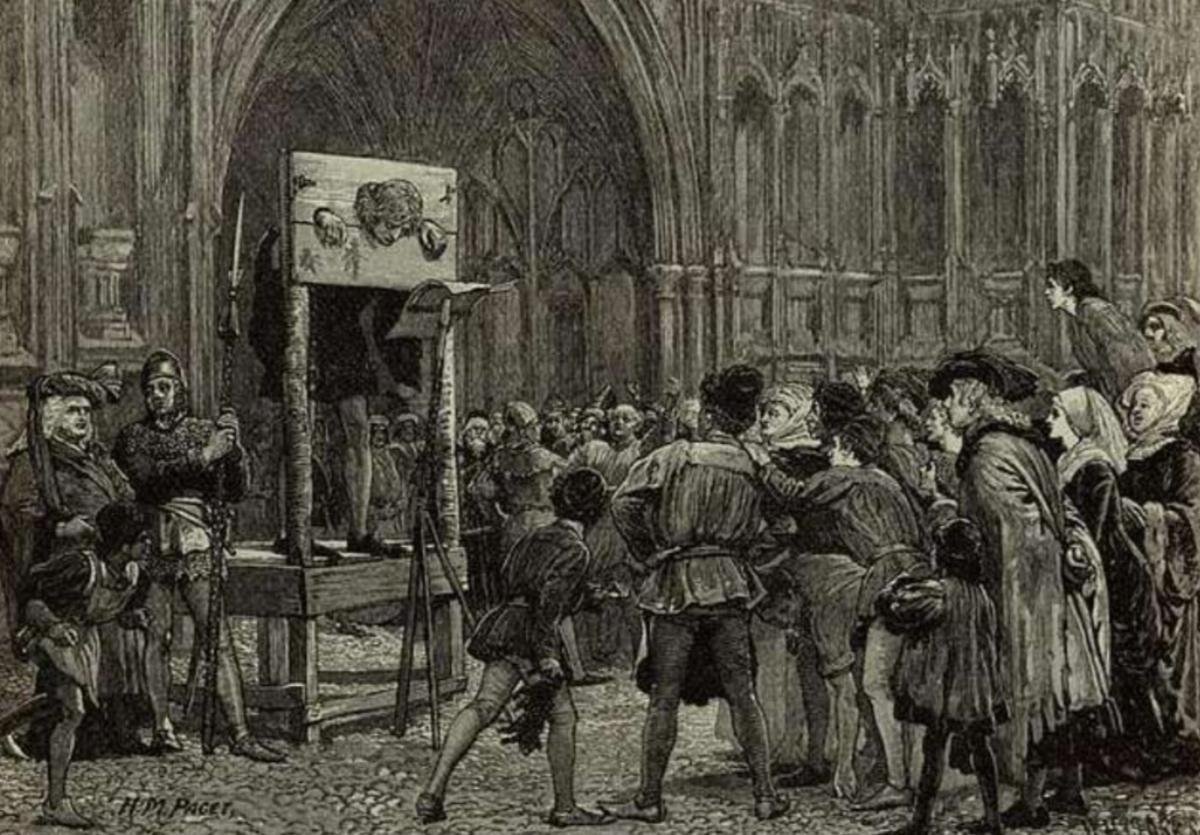
Public shaming, O’Brien notes, has never been about rehabilitation. The stocks and pillories of earlier centuries were designed to demoralize, disgrace, and humiliate — and to send a message to anyone watching. “Get with our program or this is your fate,” he paraphrases. Today, the internet is the village green, social media platforms are the market square, and canceling, doxing, and swatting are the “cruel devices of modern social torture.”
A Legion of Victims — On Both Sides
O’Brien is careful to note that neither side of the political aisle is chaste. “For every JR Rowling there has been a Dylan Mulvaney,” he writes, adding that the anti-Bud Lite campaign was, if anything, more effective than any of the left’s efforts.
But the practice took a particularly disgraceful turn, he argues, when it gained institutional heft — specifically when government actors did the bidding of political partisans to “persuade” media outlets and social media platforms to suppress speech opposing the approved narrative. He points to the Twitter Files as a potential turning point in an American reawakening, even if that reawakening has not yet fully materialized.
O’Brien is dismissive of the argument that Twitter, as a private actor, was within its rights to stifle speech. “Free speech is in our DNA, and we don’t surrender based on legalities,” he writes. “Studying the American tableau — even merely absorbing its most consequential moments by cultural osmosis — informs any objective observer that we find that stifling speech is unethical.”
Campus Chaos, Quieted
O’Brien observes that news coverage of Antifa’s disruptions of conservative speakers on college campuses has subsided — but not because the disruptions have stopped. He cites statistics kept on such activities showing that 2026 has seen an uptick in deplatforming. The diminished coverage, he suggests, is due to normalization and fatigue: “Dog Bites Man” isn’t news, and the story “has been done to death.”
He speculates that the establishment left may also be getting jittery, having learned through surveys and focus groups that normal people don’t respond well to video of “wanton lunatics shouting down speakers.”
The Problem of Politeness
O’Brien admits that his own optimism about a reawakening has been met with skepticism from readers of this publication. He recalls a liberal friend from 40 years ago — “back when we were permitted to have friends across the political spectrum” — who predicted that his side would prevail because O’Brien’s side is “pathologically polite.” The friend called him a “paragon of virtue” and “our department’s moral compass,” while predicting that the “arrogantly dishonest colleagues” would outlast them both. O’Brien cringes. “He was correct on the job front,” he writes. “The jury remains out on the bigger picture.”
A smart editor recently reminded O’Brien that politeness and forbearance are not required when dealing with people who want to kill you. But he tempers that with the biblical admonition not to repay evil with evil. “Self-preservation and vengeance are different animals,” he writes. “We’re obliged to the former and the latter belongs to the Lord.”
Fighting From the Knees
So what is required? Vigilance, courage, boldness — but how, when the opposition bangs drums, steals the microphone, and shuts down traffic to prevent an audience from forming?
O’Brien acknowledges the gut response is to fight back, but he argues that neither revolution nor civil war is upon us — absent an attack on Fort Sumter, fighting must mean something else. “It is imperative that we understand that the instant battle is spiritual,” he writes.
He offers a personal testament: a tee-shirt bearing the lyric “This is how I fight my battles,” which prompts strangers to ask how. His answer: “From my knees.” He cites Washington, Adams, Madison, Lincoln — each of whom called upon the people to pray in times of war — as well as Eisenhower’s Order of the Day on the eve of D-Day, and even Patton. “They all understood what — actually, Who — is needed in a time of great conflict,” he writes.
And if we’re canceled for it, O’Brien concludes, “let us wear that like a badge of divine protection, like the mark of Cain.”
Source: www.americanthinker.com — https://www.americanthinker.com/articles/2026/08/cancel-culture-and-the-mark-of-cain/