
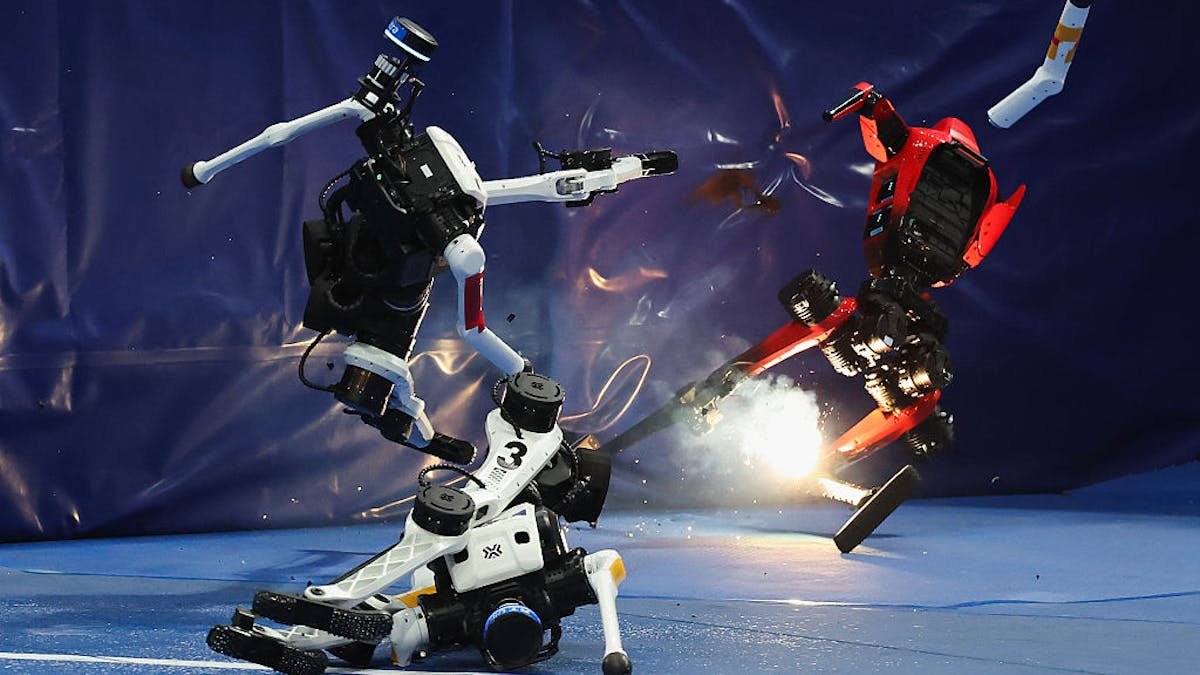
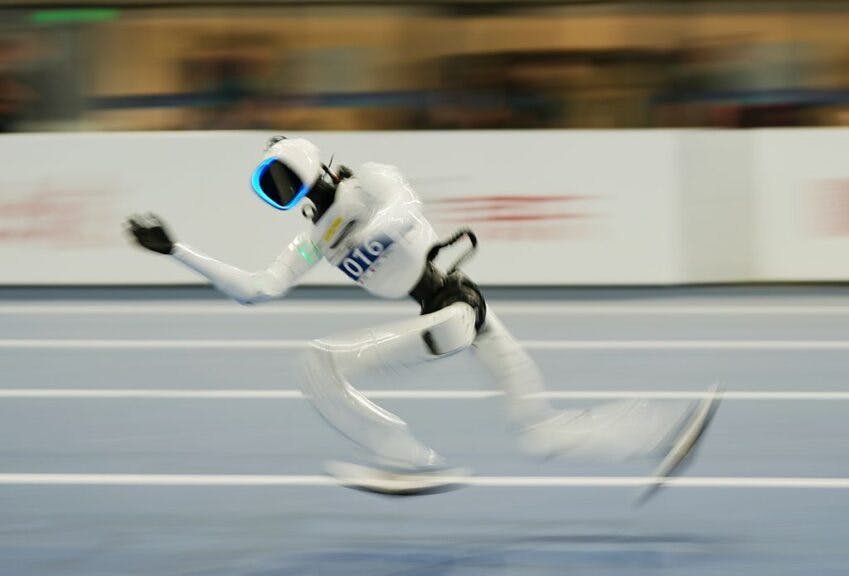
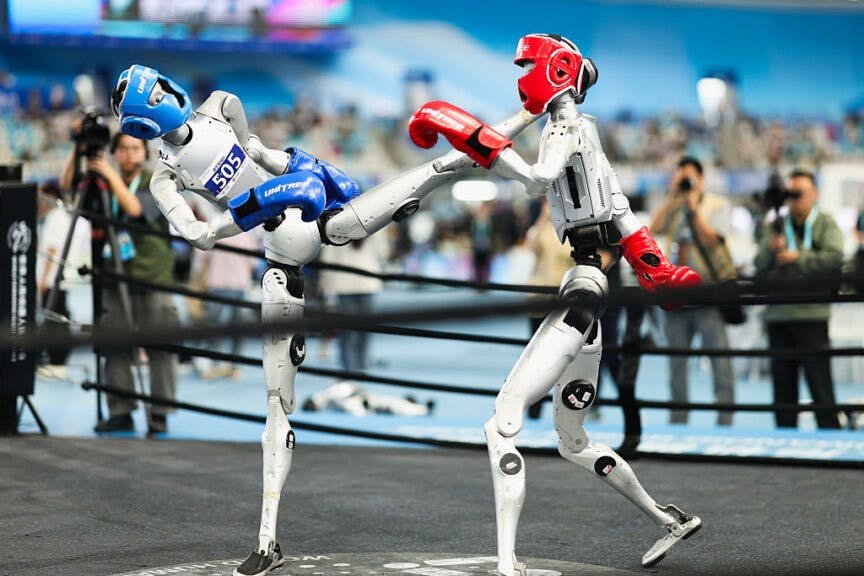
Humanoid robots that dazzled crowds with sprinting, boxing, and street dance routines at a recent competition could soon be retasked for something far more lethal: the battlefield. According to a Reuters report, China’s official military newspaper has urged the development of combat capabilities in the very robots that performed at the World Humanoid Robot Games—signaling a new push to integrate advanced robotics into the People’s Liberation Army’s future arsenal.
The games, held recently, showcased machines capable of remarkable feats. Some robots completed the 100-meter dash in times faster than Usain Bolt’s world record, while boxing matches demonstrated potential for hand-to-hand combat scenarios. The same machines, Reuters notes, could be reprogrammed with a different strategy in mind: war.
Beijing’s Accelerated Robotics Drive
Reuters based its conclusions on a sweeping review of more than 100 Chinese military procurement notices, academic studies, patents, official publications, government records, and defense-company materials. The review found that Beijing has dramatically ramped up robotics research and development aimed at eventual military use.
China’s dominance in the civilian humanoid robot market is already well established. According to BofA Global Research, Chinese developers and manufacturers account for roughly 95% of humanoid robot shipments in 2025. That industrial base, the report suggests, provides a springboard for military applications.
Global Race Toward Robot Warfare
The move is not unique to China. The United States military has also been testing unmanned ground vehicles (UGVs) in integrated combat formations. Video from a recent U.S. Army exercise—Pegasus Charge 3 with the 1st Cavalry Division—shows at least five FireAnt unmanned ground vehicles being carried into operations by M2A4 Bradley infantry fighting vehicles. The FireAnt robots, each weighing about 27 kilograms, were filmed riding on the Bradleys’ side racks, a setup that could turn armored vehicles into motherships for expendable ground robots.
Meanwhile, robotics and autonomous systems have already become decisive in recent conflicts, including the fighting involving Iran and the war between Russia and Ukraine. A recent report indicated Russia has employed an experimental navigation system that relies on artificial intelligence to steer drones toward targets in Ukraine.

In that case, human operators could program a drone’s navigation system to target a generalized location—like a specific building, a military base, or even a gas station—and the AI would then fine-tune the strike once the drone was within range.
Civilian Casualty Concerns
But this shift carries profound risks. Analysts and ethicists warn that AI is far less capable than humans of distinguishing civilians from combatants. An autonomous system—whether embedded in a drone or a humanoid robot—could make deadly errors without meaningful oversight. And without a human operator in the loop, stopping an errant machine in real time becomes vastly more difficult.
The call from China’s military press to weaponize humanoid robots, set against parallel developments in the United States and elsewhere, underscores a broader trend: the race to build autonomous soldiers is accelerating, even as the ethical and operational implications remain unresolved.
For now, the robots that once competed for gold in sprinting and boxing are being eyed for a different prize—military superiority. The question is whether the world is prepared for the consequences.
Source: www.dailywire.com — https://www.dailywire.com/news/china-readies-vast-army-of-humanoid-military-robots
Source: www.dailywire.com
Related coverage
- Maine Democrat Troy Jackson Admits Billionaires Fund His Campaign Two Days After Denying It
- Big Ten’s Playoff Hopes Crumble as SEC Reasserts Dominance in College Football
- Fed Set to Hike Wednesday as Breitbart Warns It May Be the Wrong Moment
- Trump Says Maricopa’s 3,126 Misprinted Ballots Weren’t an ‘Error’: ‘They Got Caught’