
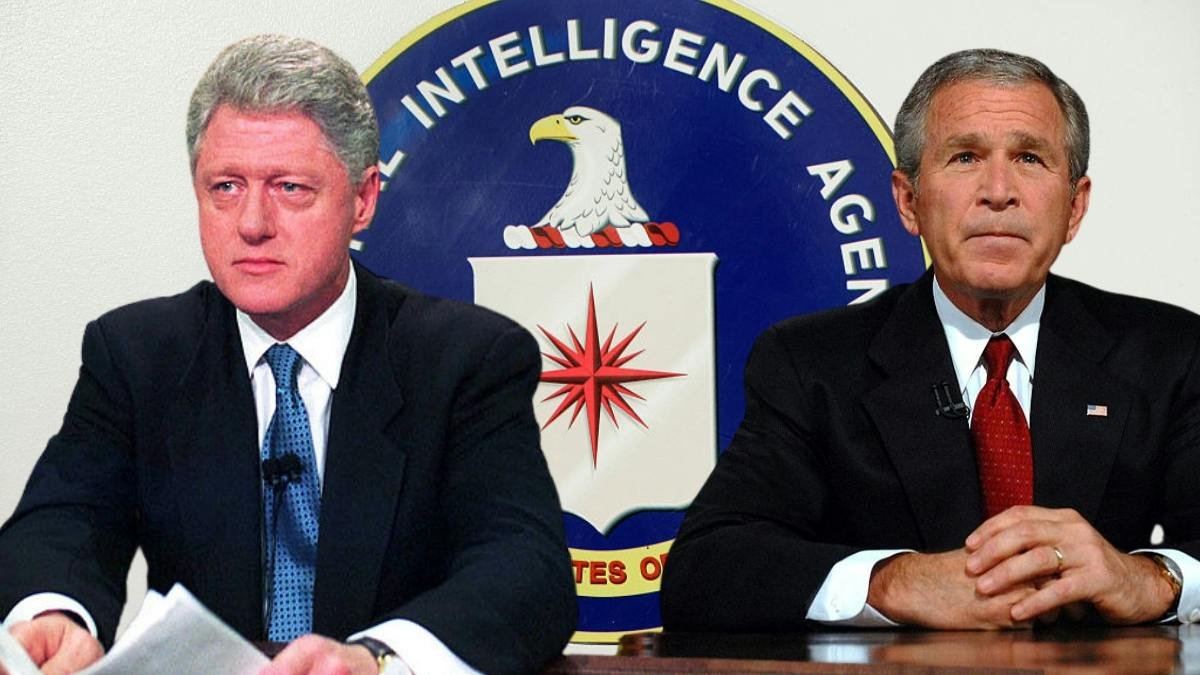
The CIA on Friday released 71 President’s Daily Briefs covering the period from February 1998 through September 12, 2001, the agency’s largest single public disclosure of intelligence products related to the September 11 attacks. Among the newly declassified documents is a warning delivered to President Bill Clinton’s administration three years before the attacks: that Osama bin Laden’s al-Qaeda might try to fly an explosives-packed plane into an American city.
According to the released material, as reported by The Daily Wire, a September 10, 1998, briefing titled “Bin Laden’s Location and Intentions” warned that al-Qaeda “may fly an explosive-packed airplane into a U.S. city.” The analysts who wrote it did not know the specific shape the eventual plot would take — the targets, the timing, or the fact that hijackers would seize multiple commercial airliners. But the document makes clear that the possibility of an airborne attack on a U.S. city was on the intelligence community’s radar more than three years before it happened.
A pattern of warnings
The 1998 briefing was not an isolated alarm. A month earlier, in July 1998, a report told Clinton that reporting from several sources indicating bin Laden intended to attack the United States was “plausible.” A 1999 assessment examined whether the sheer volume of potential al-Qaeda targets being reported might itself be part of a deliberate deception campaign — one of the analytical tradecraft dilemmas that the CIA now says complicated the picture.
By October 2000, another briefing stated that bin Laden was “committed to striking U.S. targets,” while acknowledging that the agency could not identify which targets or when an attack might come. Then, on July 24, 2001 — roughly six weeks before the attacks — a briefing told President George W. Bush that an “expected imminent bin Laden-sponsored terrorist operation” had been postponed, while cautioning that preparations for other attacks could still be moving forward.

The release also includes the August 6, 2001, briefing titled “Bin Ladin Determined to Strike in US,” which had already been made public and which warned that bin Laden had spent years preparing operations against the United States. The newly declassified material places that famous document in a longer context, showing it was one entry in a sustained stream of assessments about al-Qaeda reaching the highest levels of government.
Why the warnings didn’t become prevention
The CIA framed the release as a window into the difficulty analysts faced in separating meaningful signals from incomplete, contradictory, and sometimes unreliable reporting. Before September 11, counterterrorism was not the intelligence community’s dominant priority; analysts often knew what bin Laden wanted to do without knowing where or when he would try to do it.

Agency officials also pointed to what they described as “warning fatigue” — the concern among intelligence officers about repeatedly alerting policymakers to potential attacks without enough concrete detail to explain how the threats might be stopped. The 9/11 Commission later concluded that U.S. intelligence had issued numerous warnings about al-Qaeda but failed to grasp the scale and immediacy of the danger, describing the failure in part as one of “imagination,” compounded by problems in collection, information sharing, and the government’s response. The newly released documents do not fundamentally change that verdict.
The CIA said the release contains more than 100 pages of analysis now available to the public for the first time. “Today, [CIA] Director John Ratcliffe declassified 71 President’s Daily Brief products in commemoration of the 25th anniversary of the September 11th terrorist attacks,” the agency said, calling it its “single largest release of declassified CIA PDB products related to 9/11.”
Ratcliffe, in the release, wrote that “Twenty-five years ago, the 9/11 attacks struck a blow to our Nation, but they did not break us,” adding that “Generations of CIA officers have since dedicated their careers to securing justice for our fallen Americans and ensuring al-Qaida would never again harm our country.” He said the disclosure was meant to honor both the Americans killed in the attacks and CIA officers who died later in the war on terrorism.
What a PDB is — and why it matters
The President’s Daily Brief is among the most closely guarded intelligence documents produced for the White House, delivering analysis on threats and national security matters to the president and a small number of senior officials. Its contents are rarely disclosed, and never before at this scale for the 9/11 period.
For historians and families of victims, the papers offer something more granular than the broad conclusions of the 9/11 Commission: a paper trail of what presidents were actually told, in the moment, as the al-Qaeda threat built through the late 1990s and into the summer of 2001. The documents show a government that was, in plain terms, warned — and that still could not translate those warnings into a specific enough picture to act on before the morning of September 11.
Source: www.dailywire.com — https://www.dailywire.com/news/cia-releases-never-before-seen-intelligence-on-9-11-terror-attacks